City Ex-Port
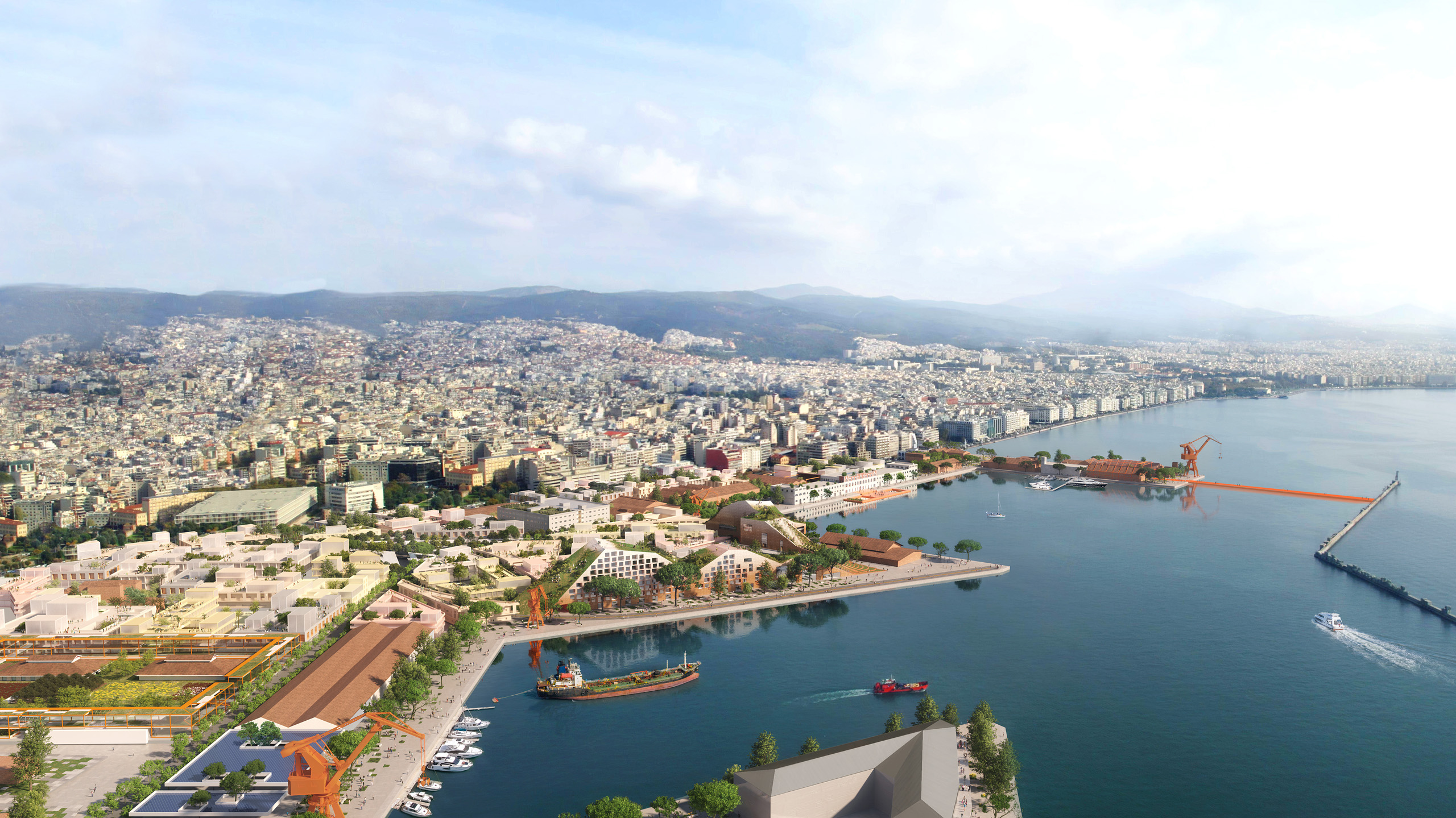
MVRDV’s study for the development of the Non-Core Port Area of the Port of Thessaloniki provided a comprehensive strategy for turning a former industrial zone into a vibrant new city district, based on the principles of combining history and innovation. The privatisation of the port provided the necessary impulse to capitalise on the prime waterfront location of the port’s underused areas; within this framework, the study outlined a vision for a district that not only brings in businesses, but also provides added cultural value for the people of Thessaloniki, and strengthens the identity of the city itself.
- Location
- Thessaloniki, Greece
- Status
- Design
- Year
- 2019–2022
- Surface
- 347000 m²
- Client
- Thessaloniki Port Authority S.A.
- Programmes
- Hotel, Mixed use, Offices, Cultural, Bar-restaurant, Master plan, Public space
- Themes
- Transformations, Urbanism
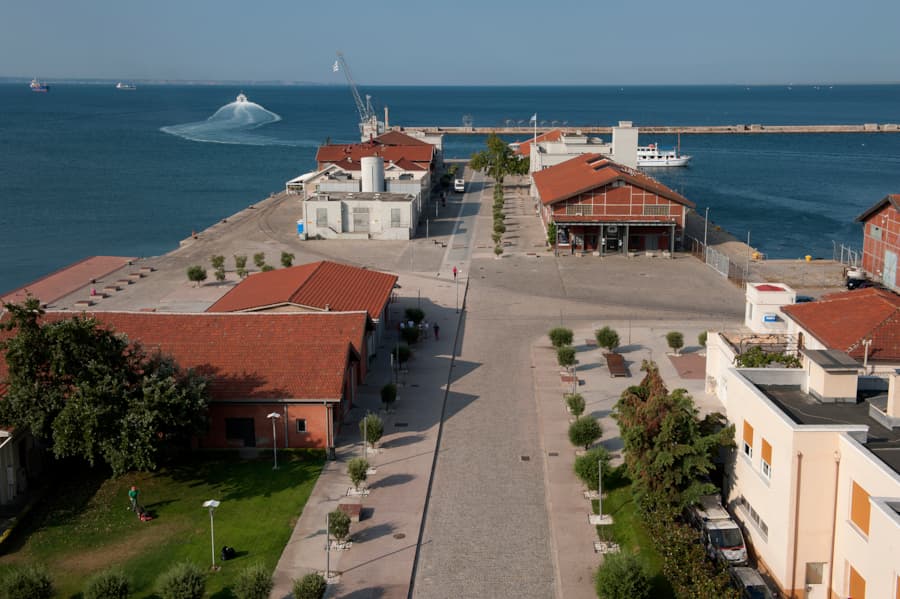
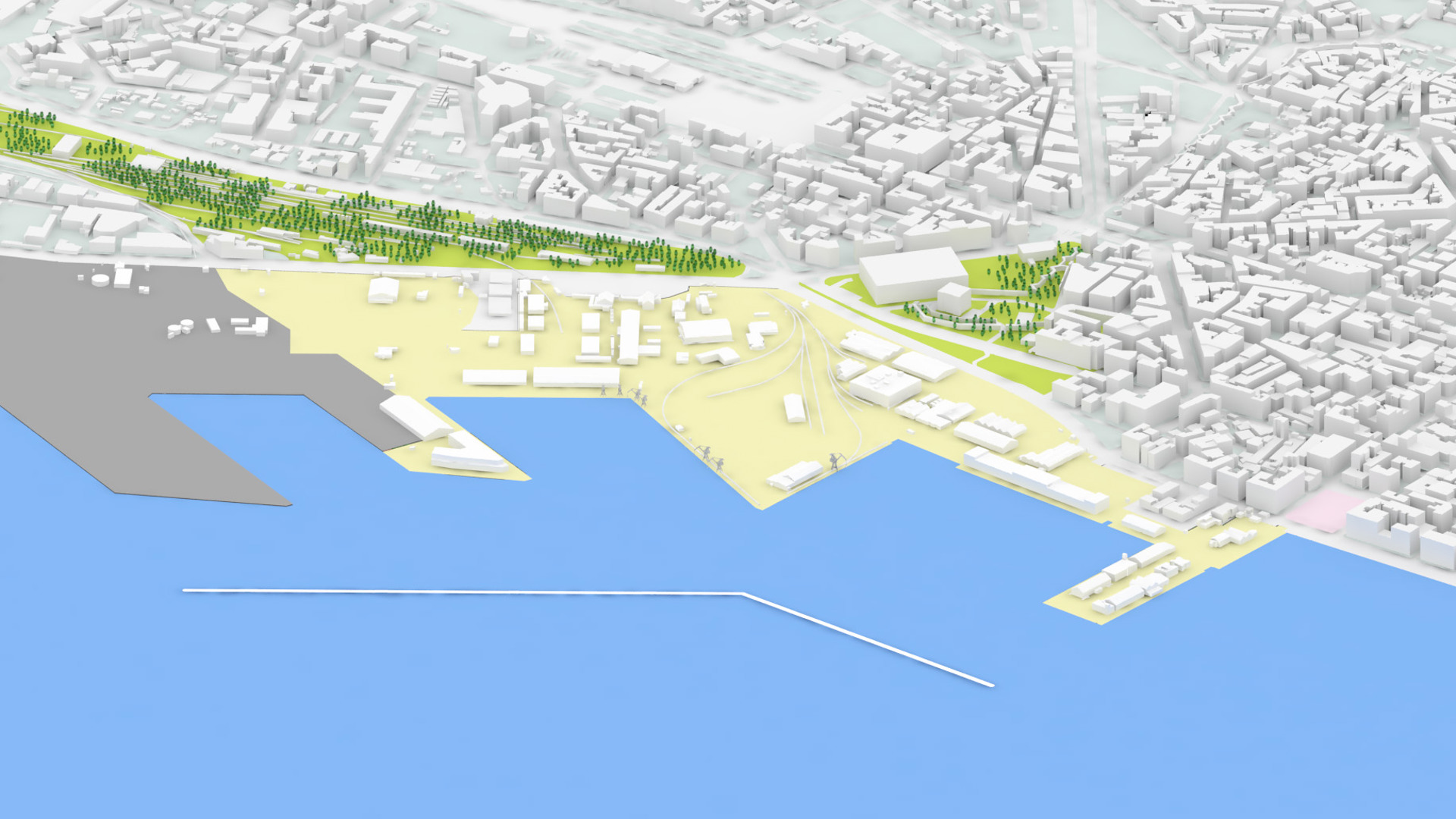
The Port of Thessaloniki has been continuously active for over 2,300 years, gradually shifting westward over the millennia as the city and its shipping needs grew. Today, the port area comprises six piers, with only the three to the West – the largest and most recently constructed piers – still actively handling shipping. Piers 1, 2, and 3 therefore find themselves as a former industrial zone in search of a new identity.
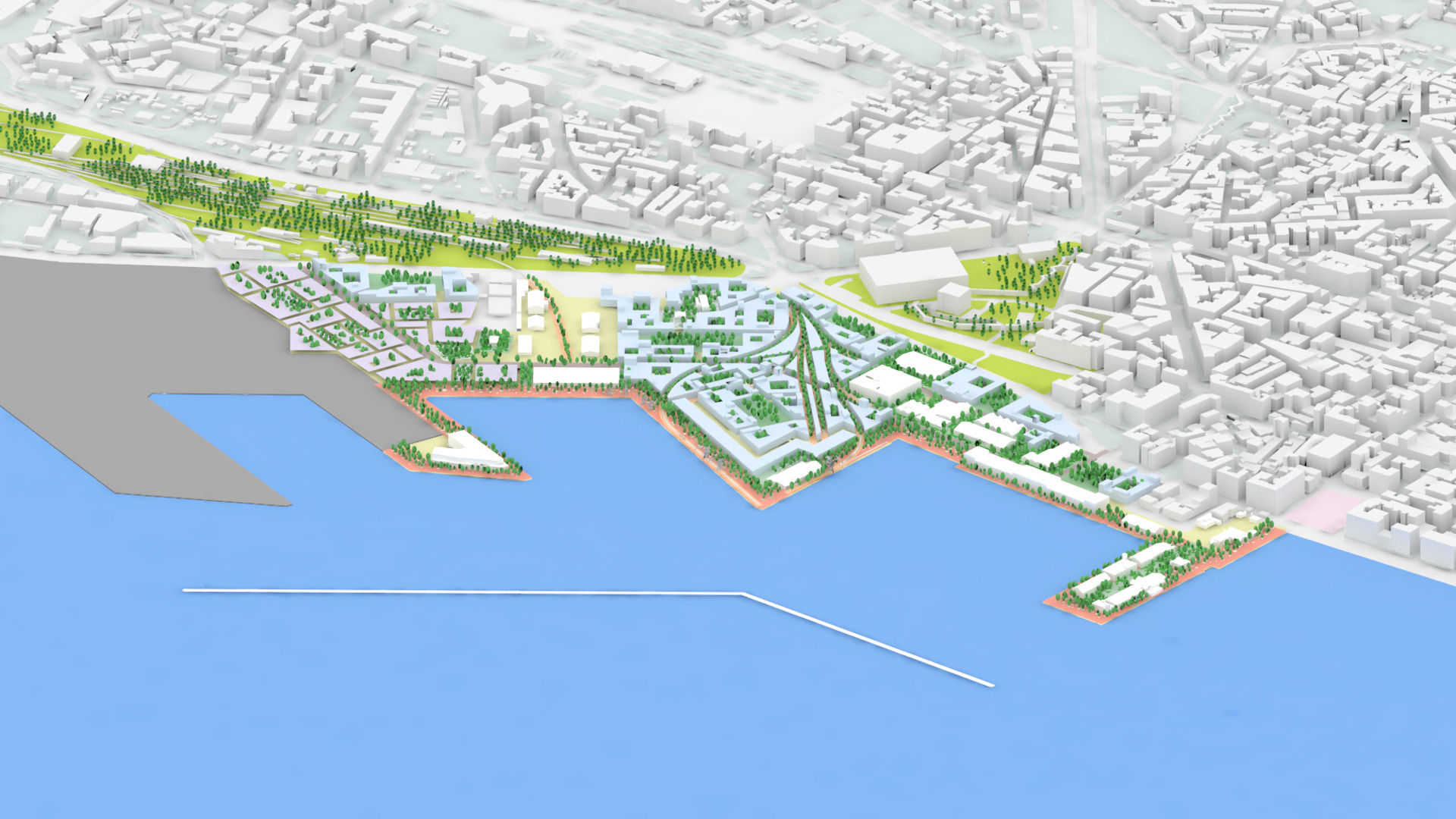
The study by MVRDV envisioned this part of the port as a digital business district, with a focus on innovation and digitisation. Taking advantage of the port’s strategic location, it becomes an ideal location to establish a new “live-work-play-learn” district, becoming an attractive destination in the city thanks to a combination of historic identity, innovative atmosphere, and waterfront access.
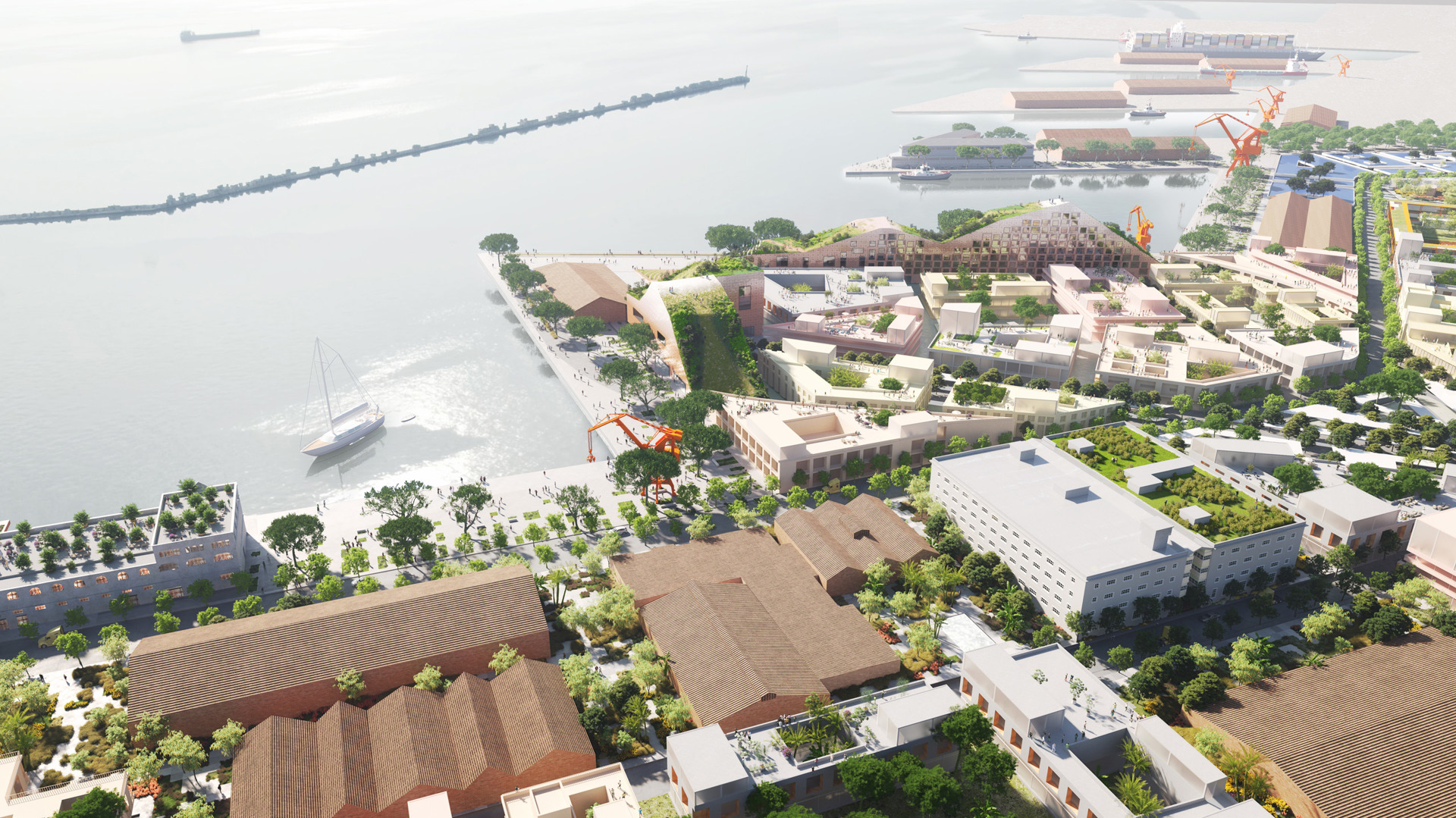
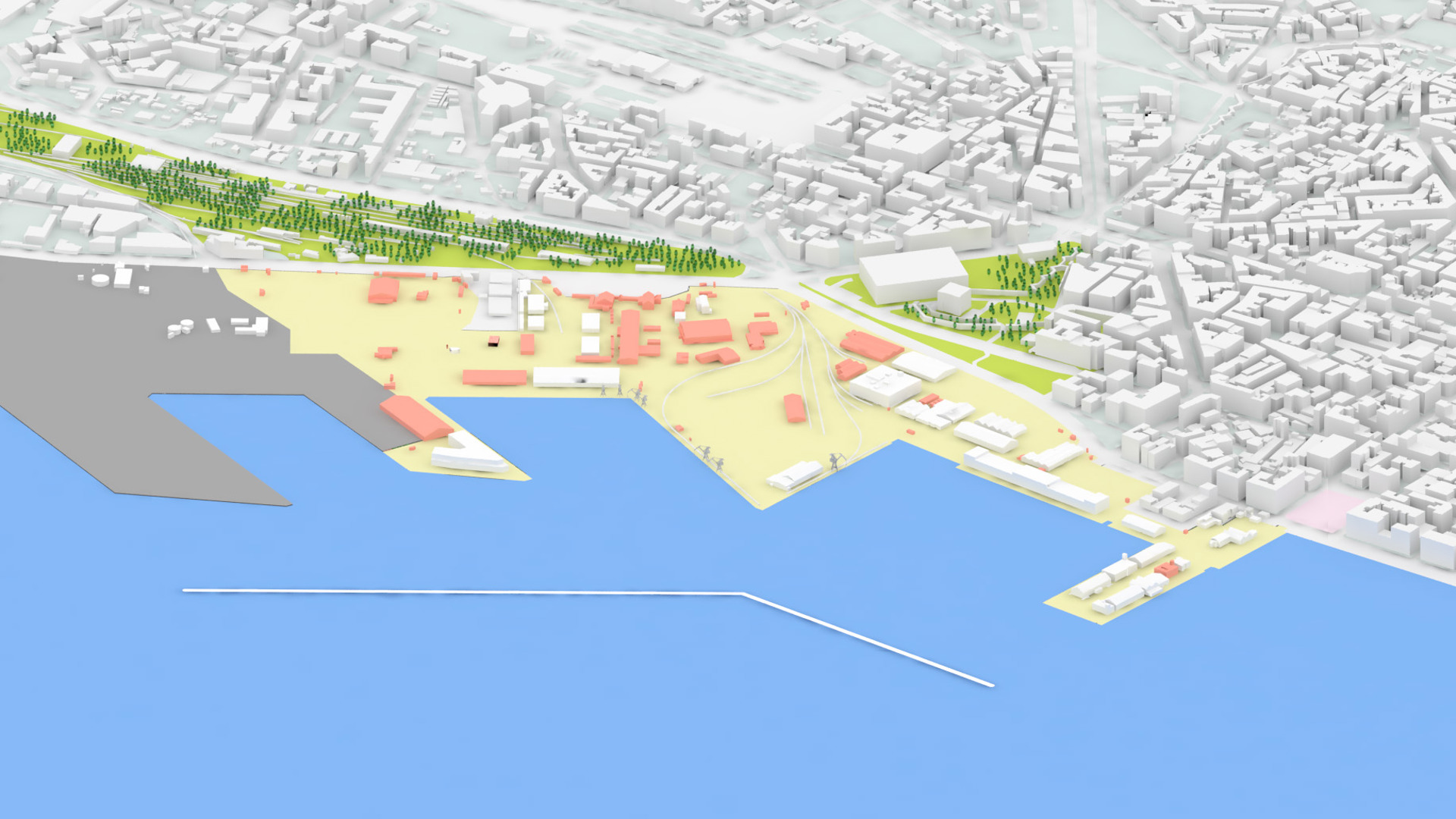
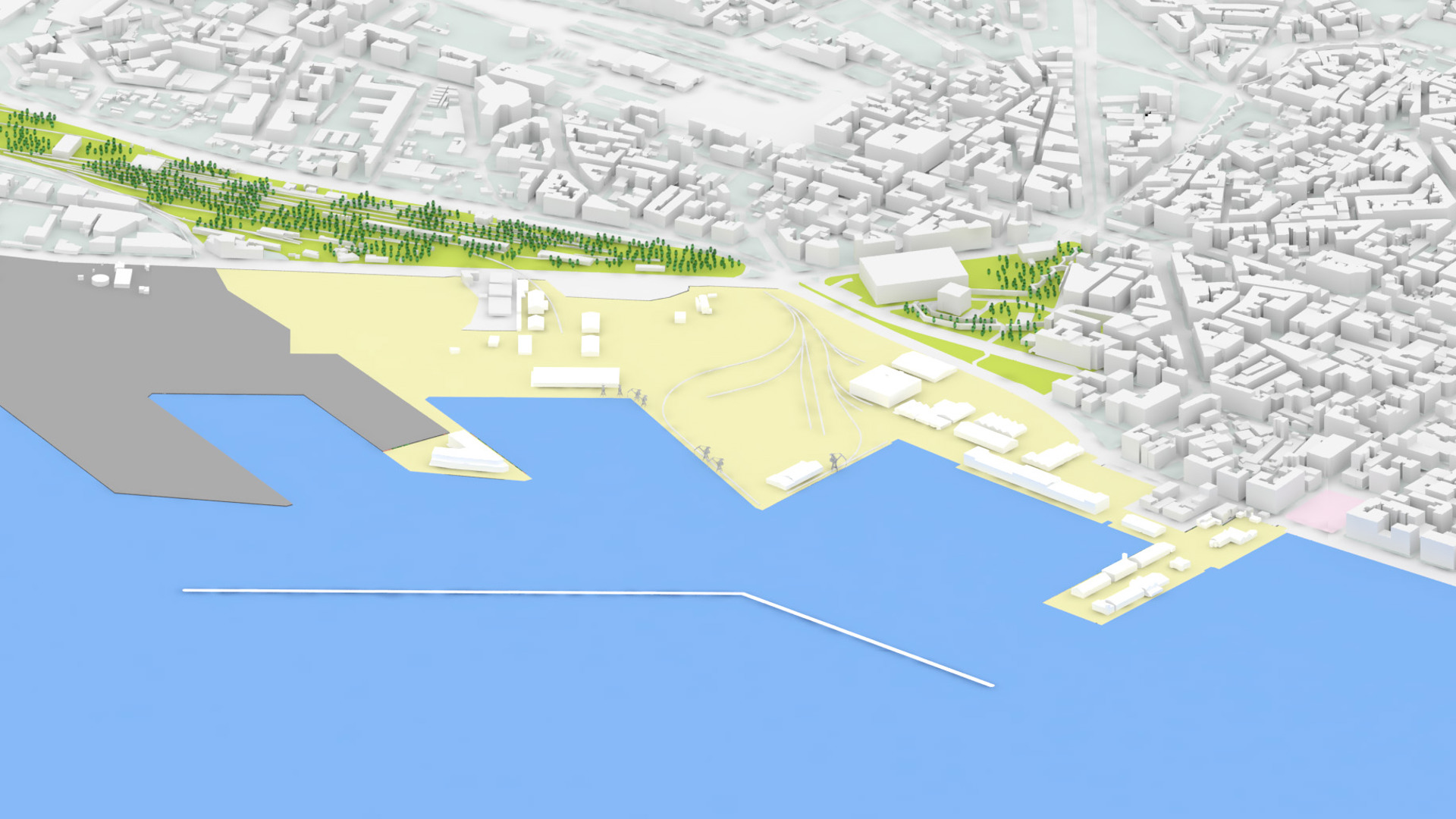
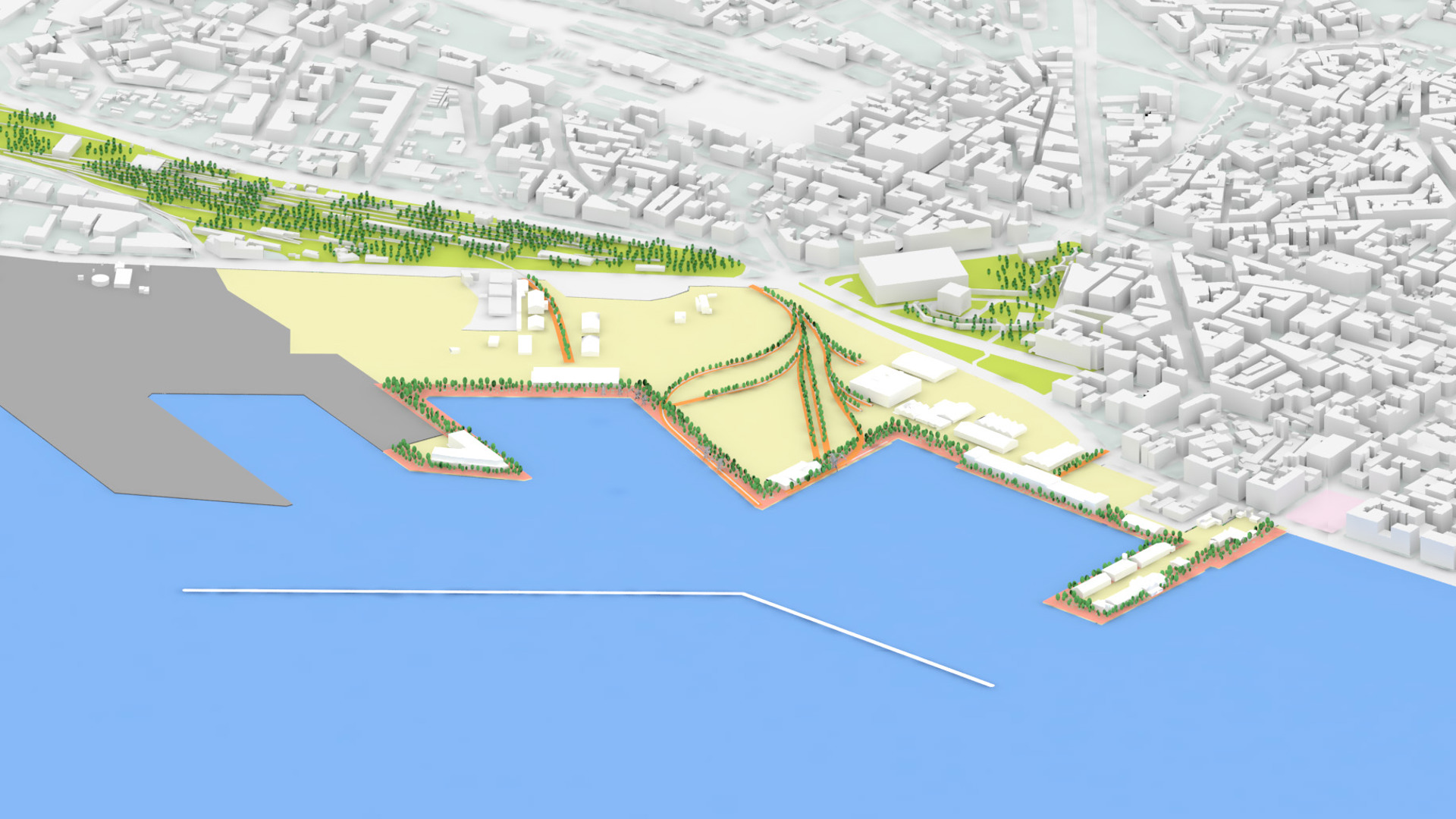
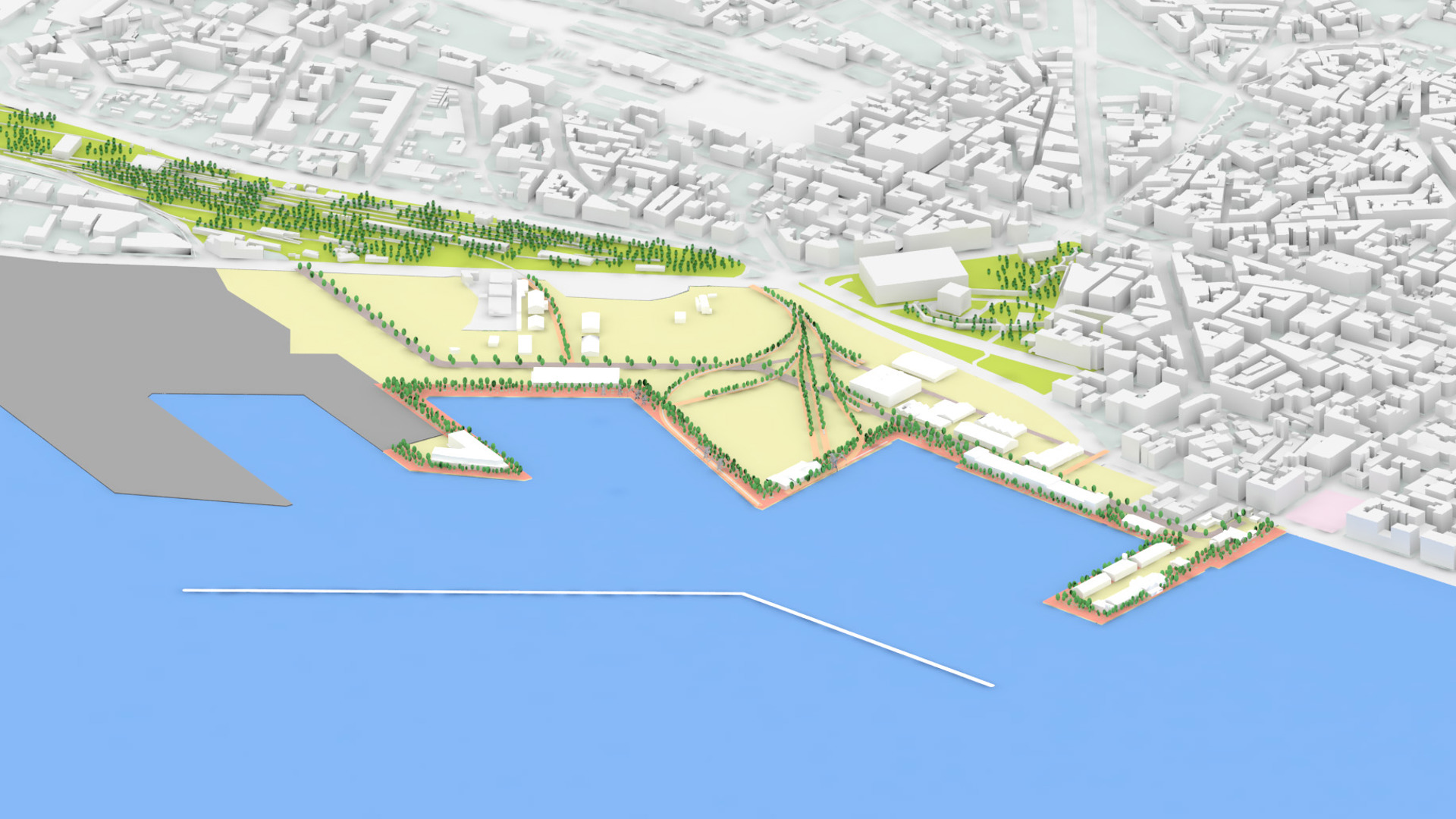
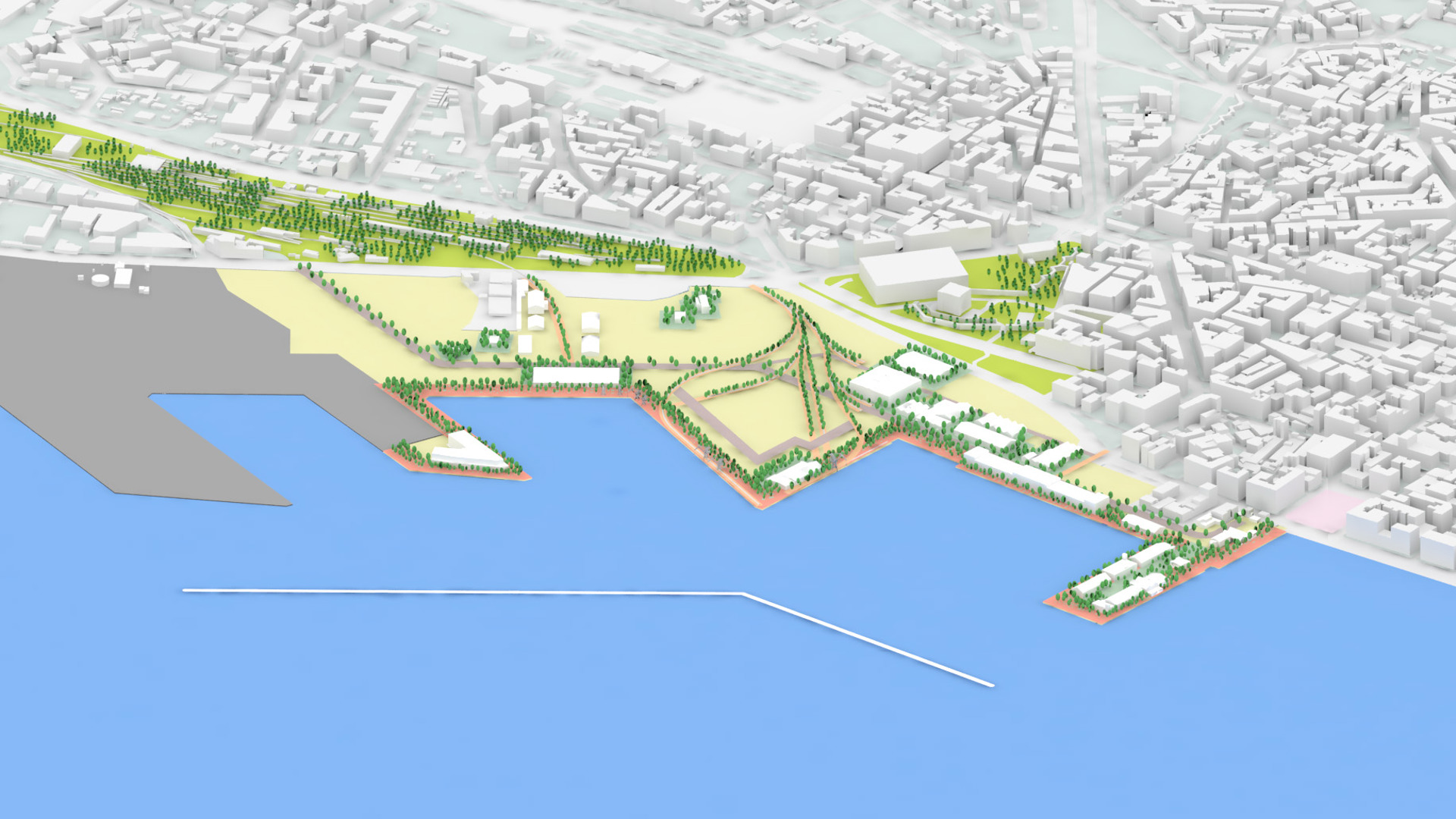
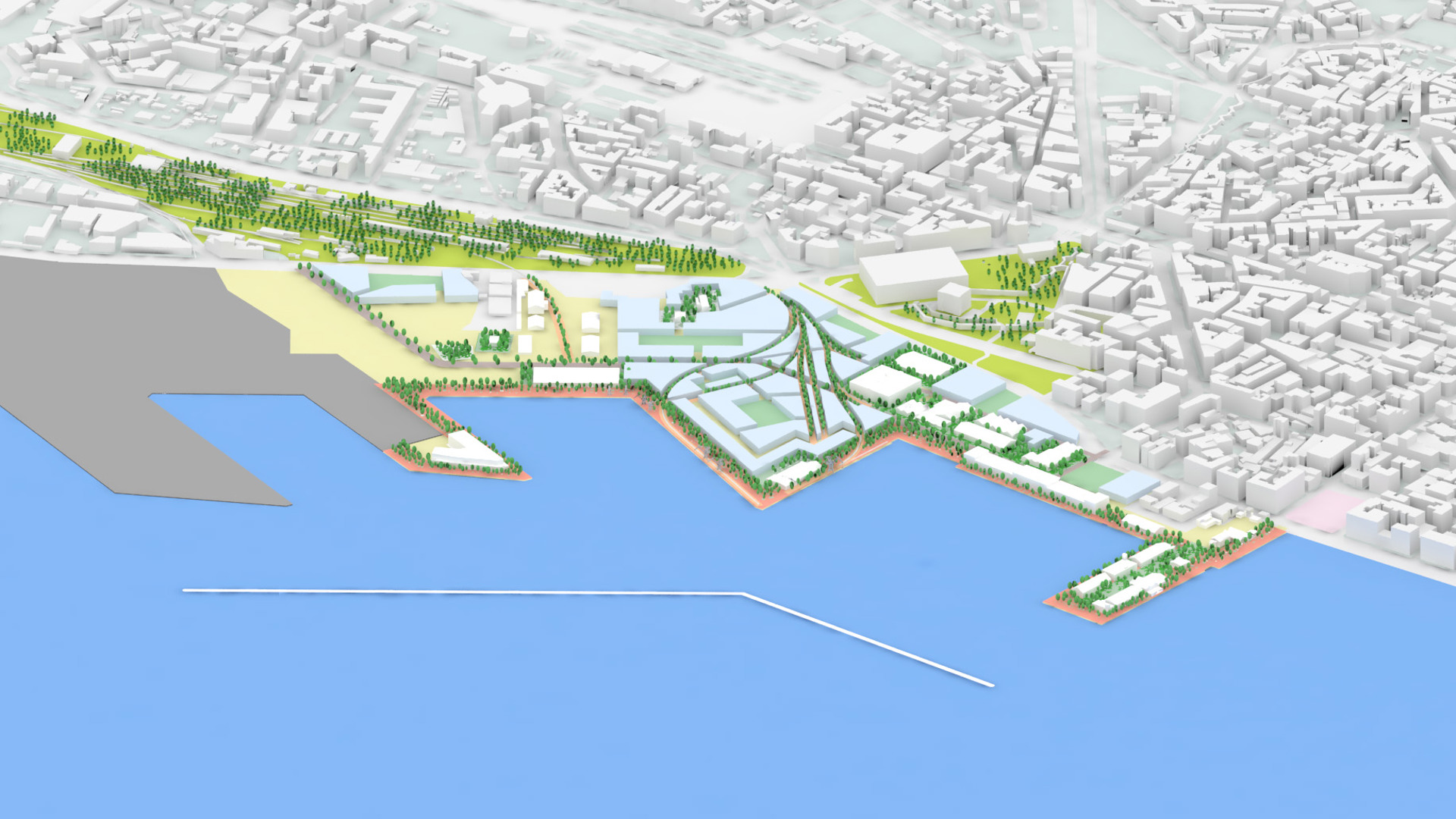
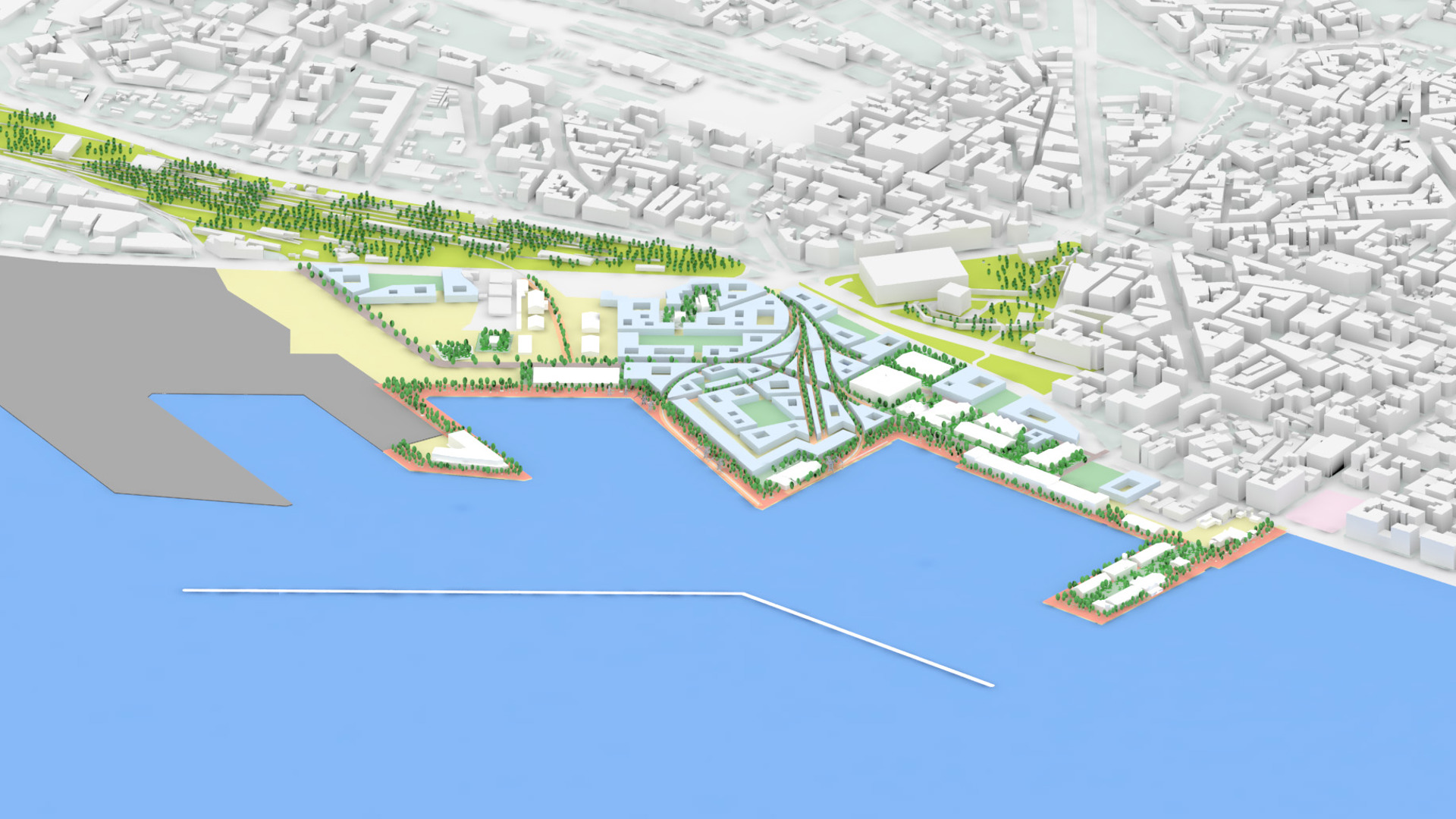
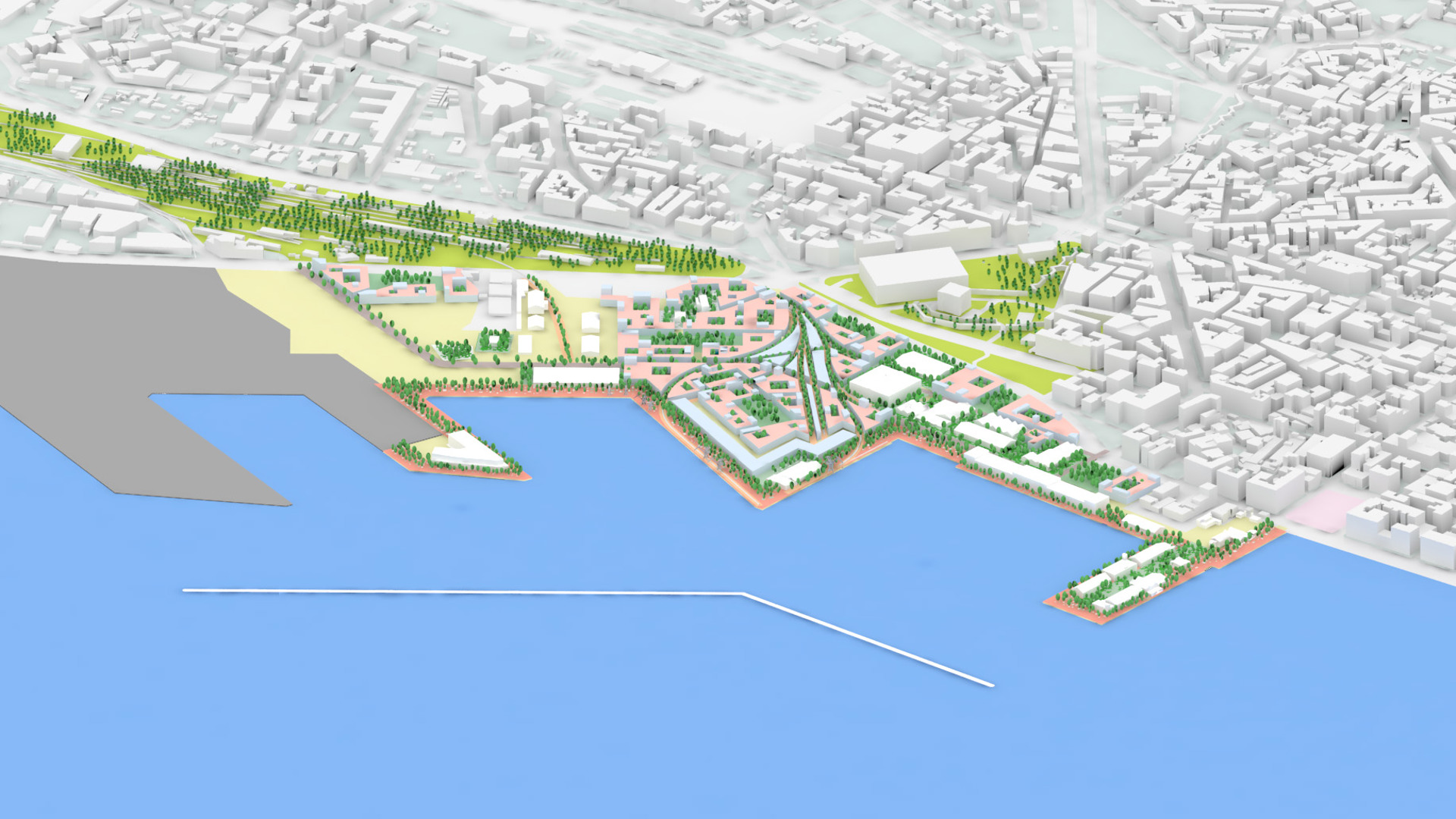
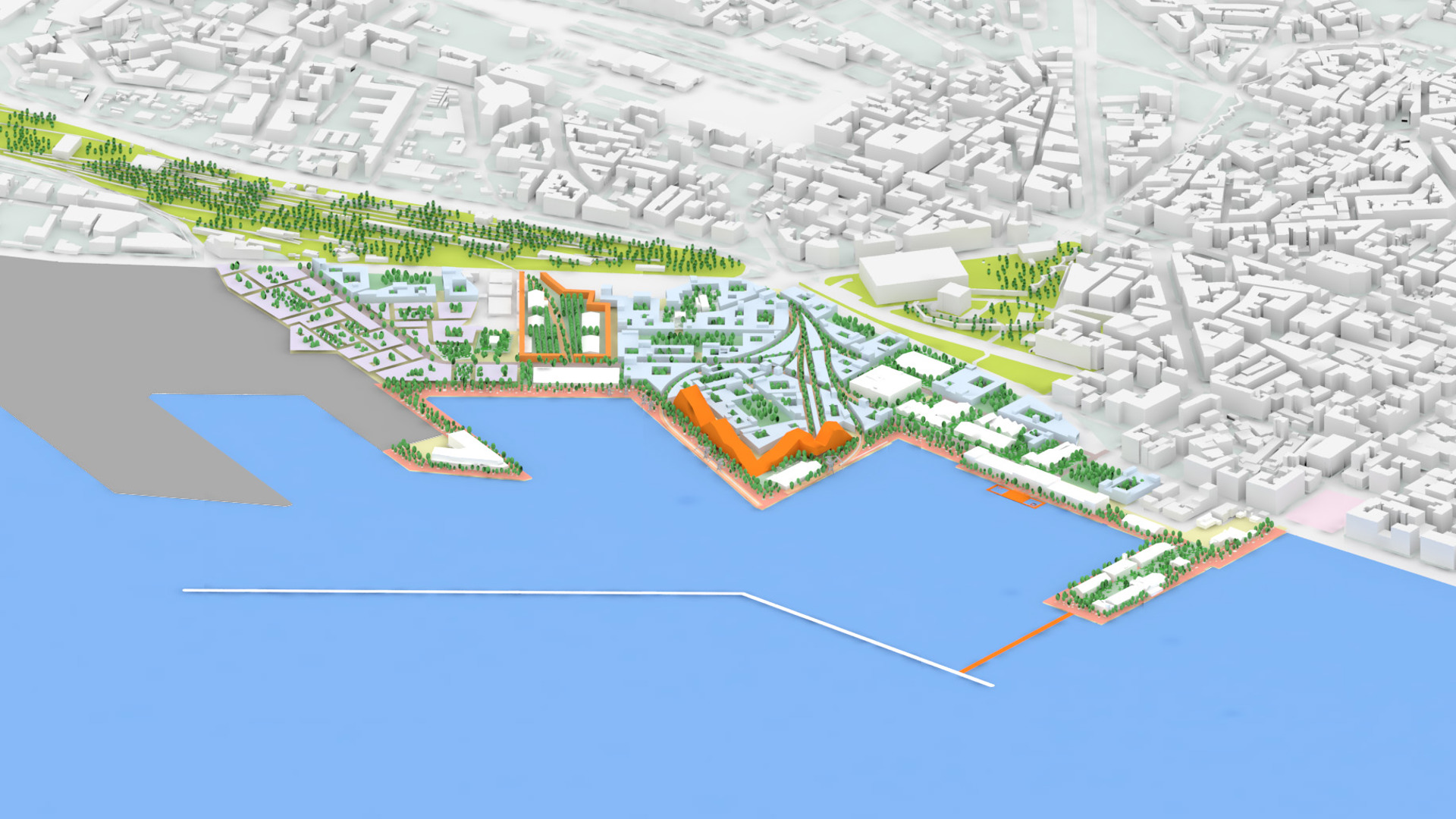
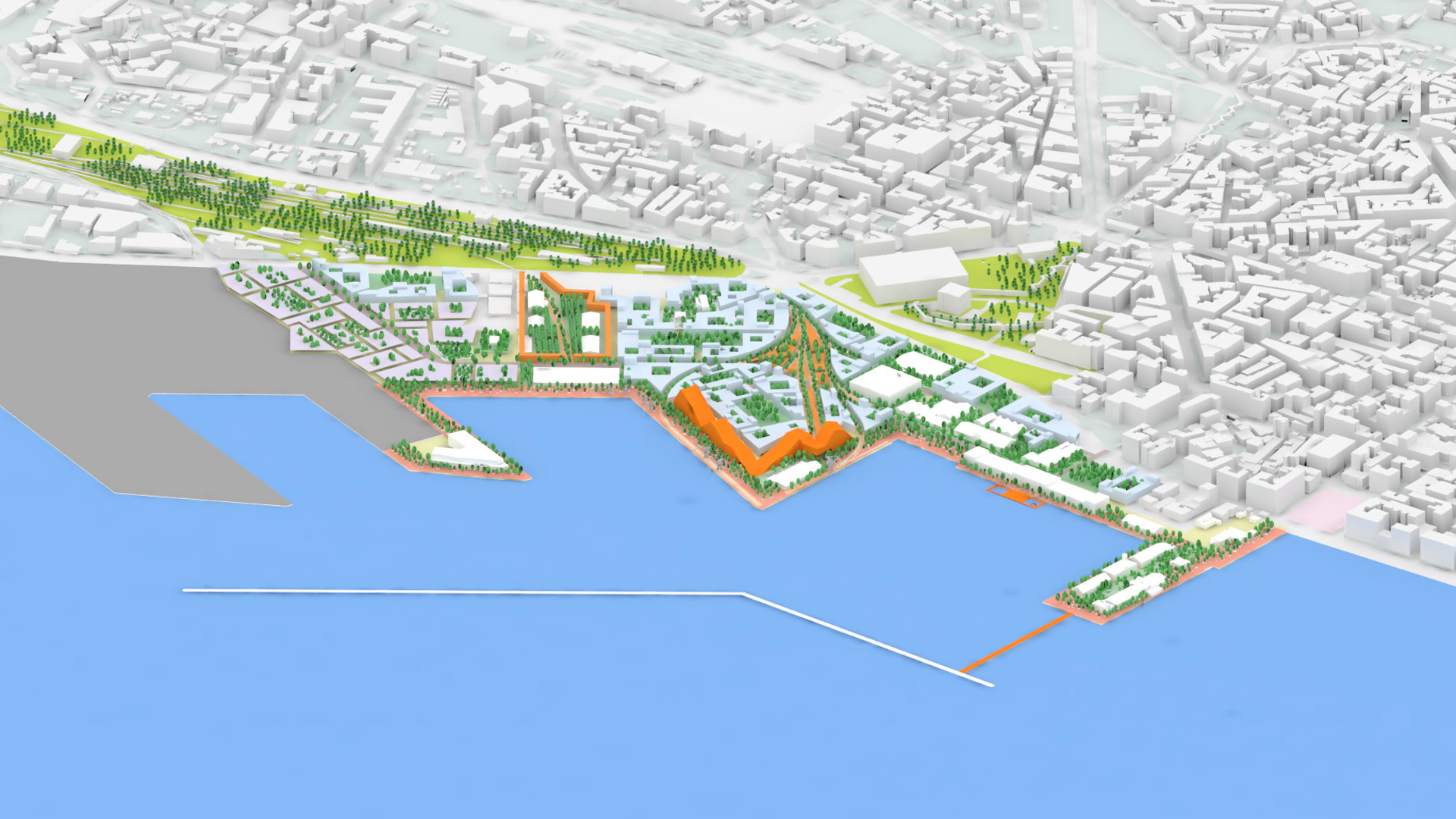
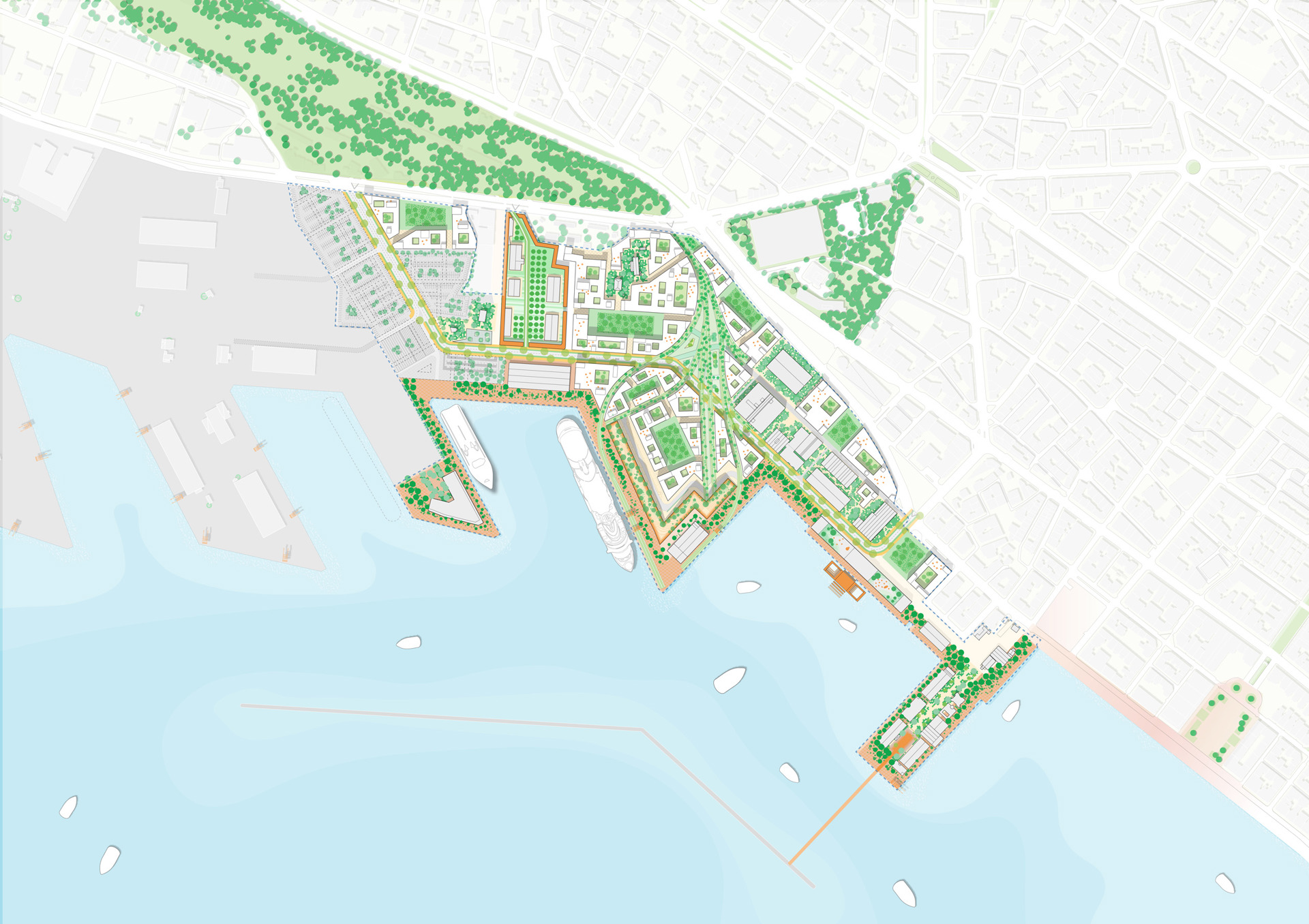
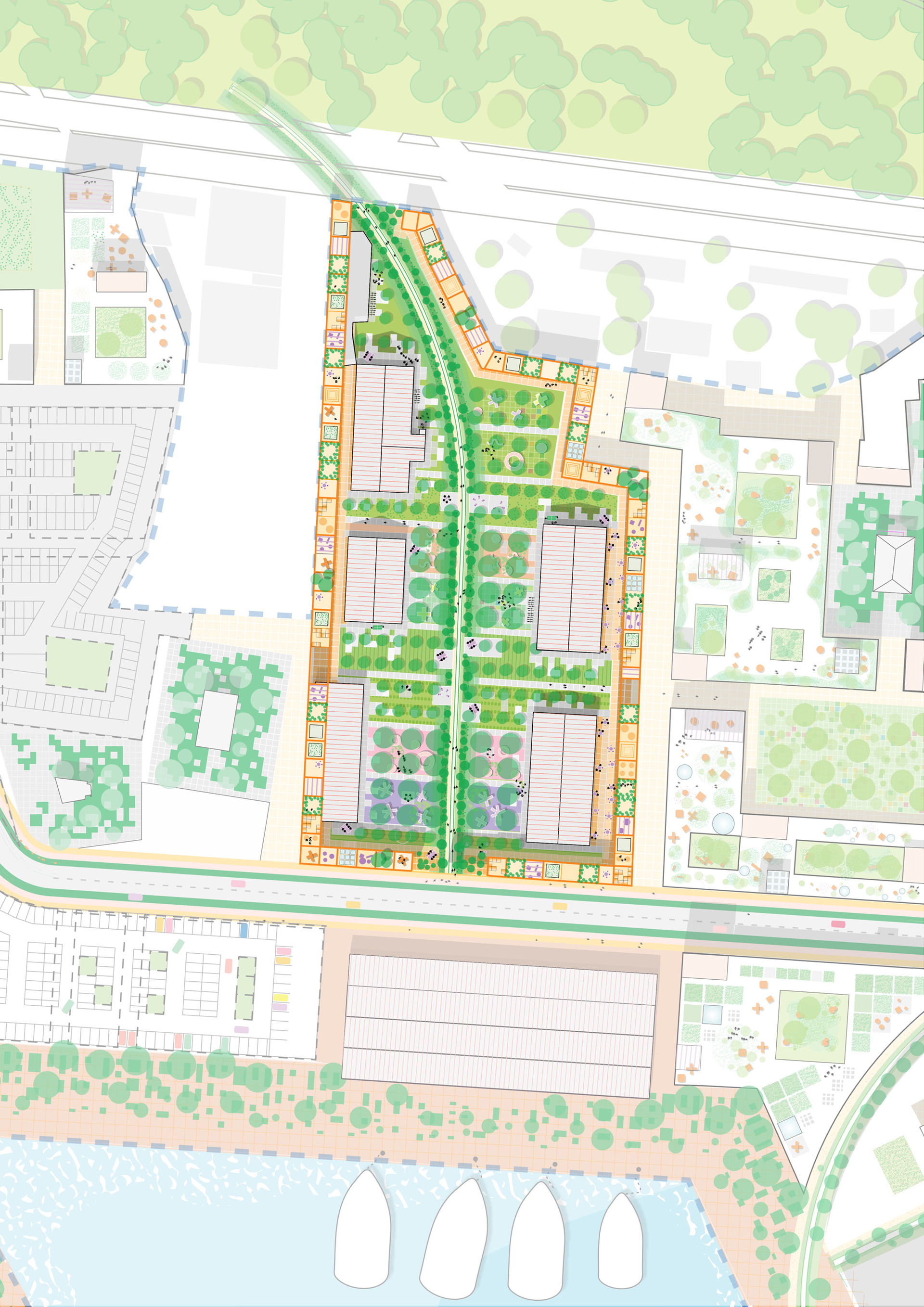
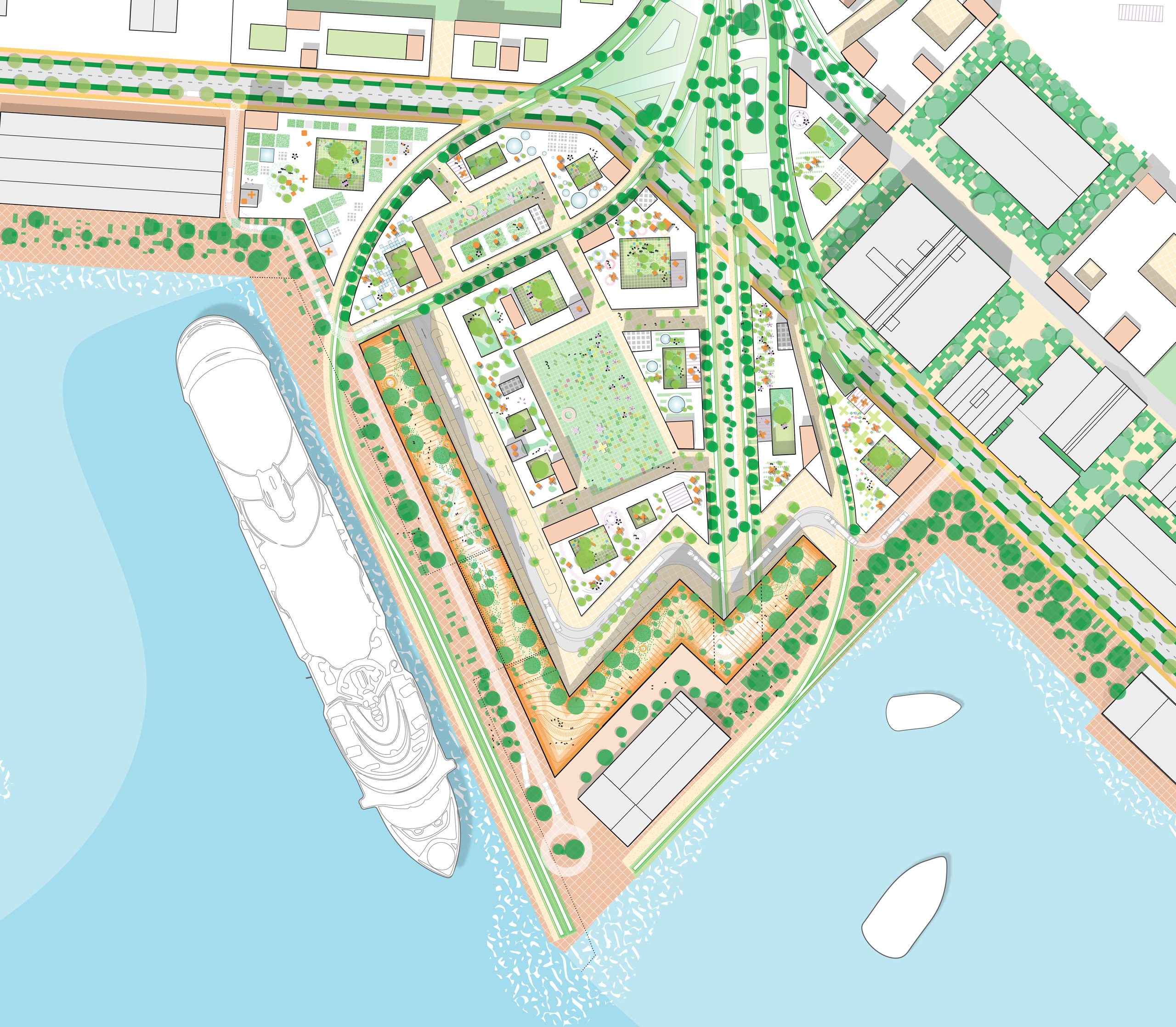
In the study, the form of the new district is derived from the existing historic layout. The first step of the design was to establish which buildings were in good enough condition to be kept, with a total of 65,000 square metres of floor area ultimately preserved. Another determining element is the tangle of disused railway tracks that carve a path into the heart of this area, which the proposal preserves as streets and public spaces. Together, these features define a varied grid of courtyard blocks – with many different building sizes helping the district to attract a variety of digital businesses, from start-ups to established international companies.
News
MVRDV Selected by the Port of Thessaloniki to Revitalise the Waterfront
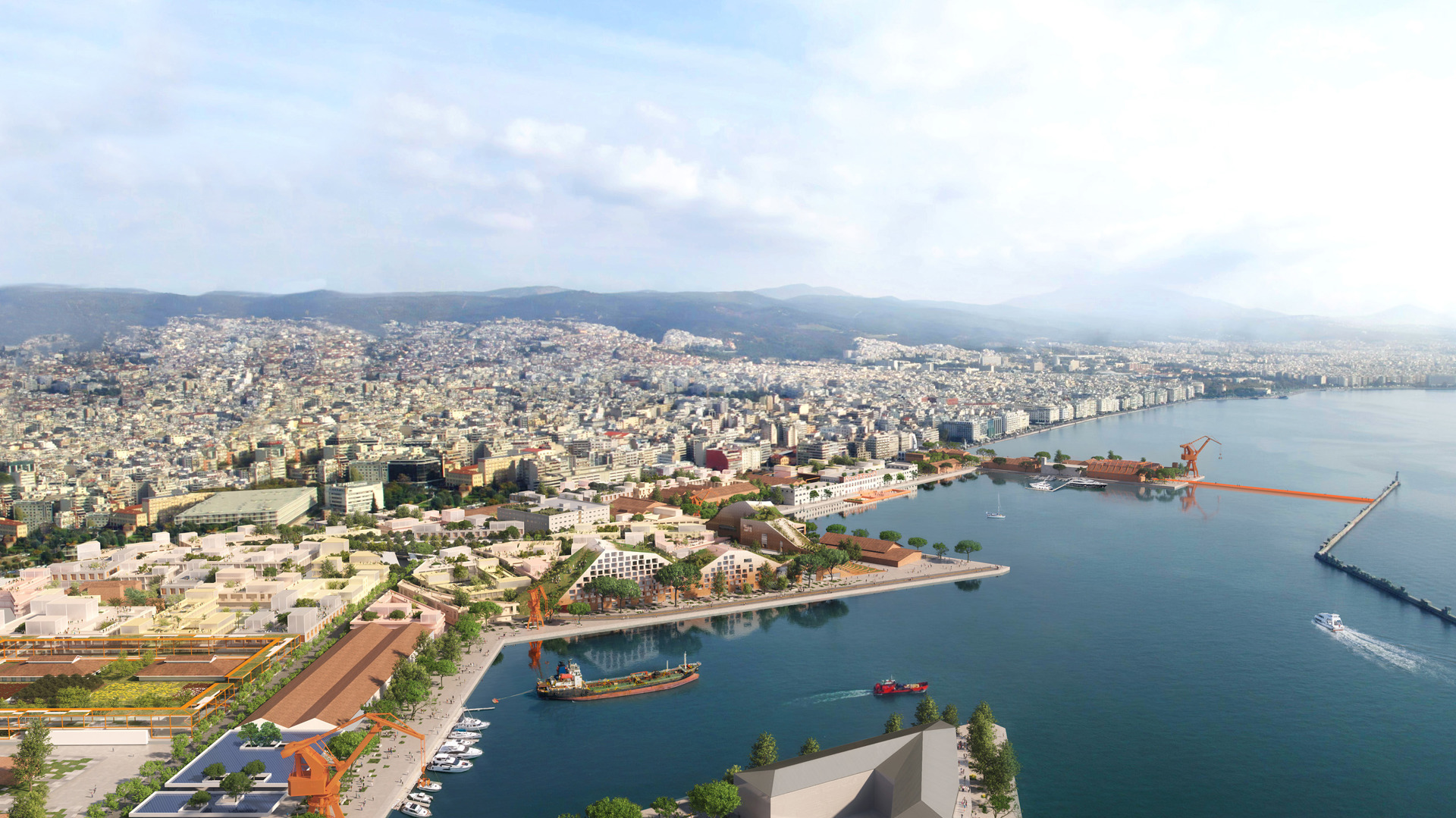
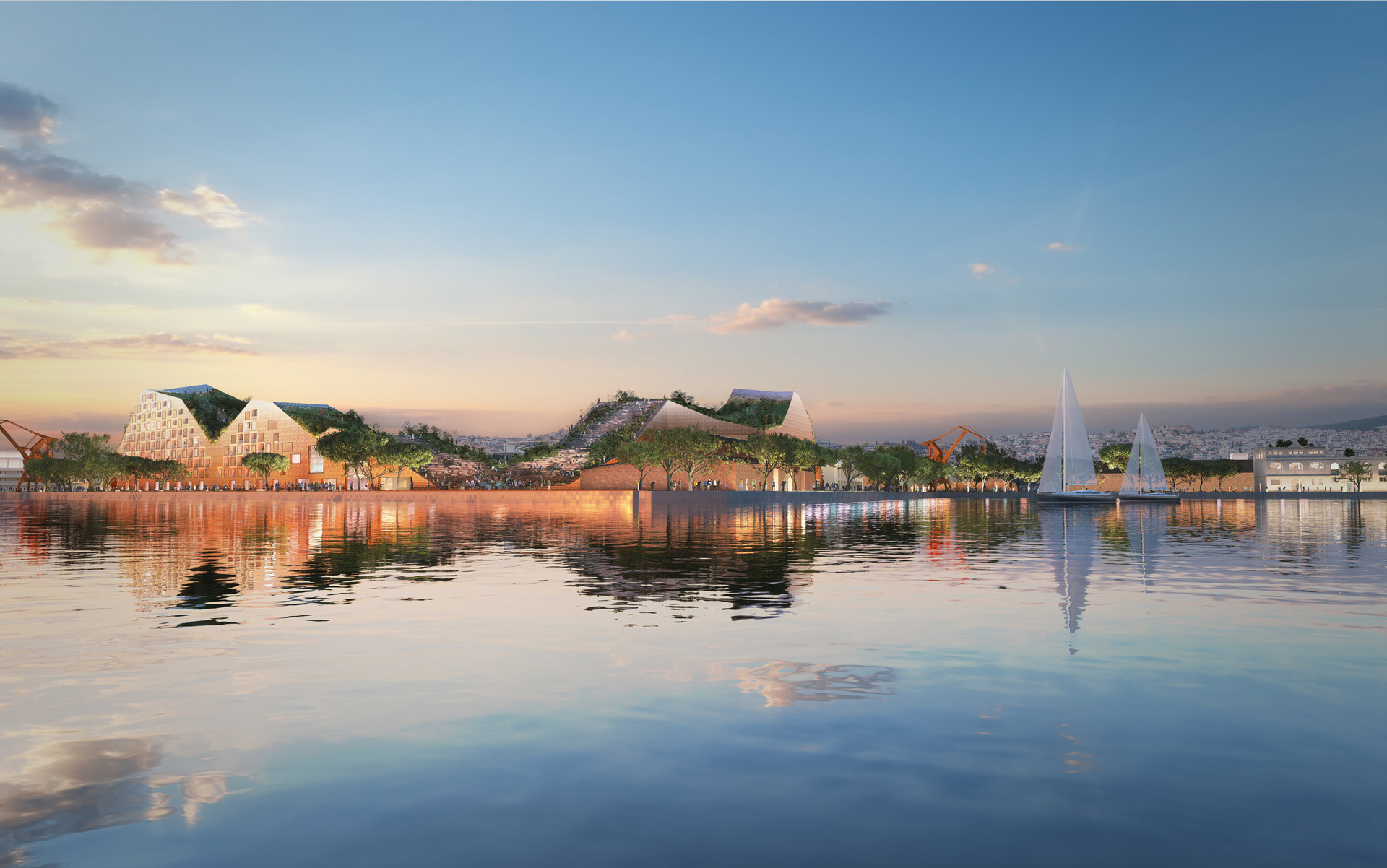
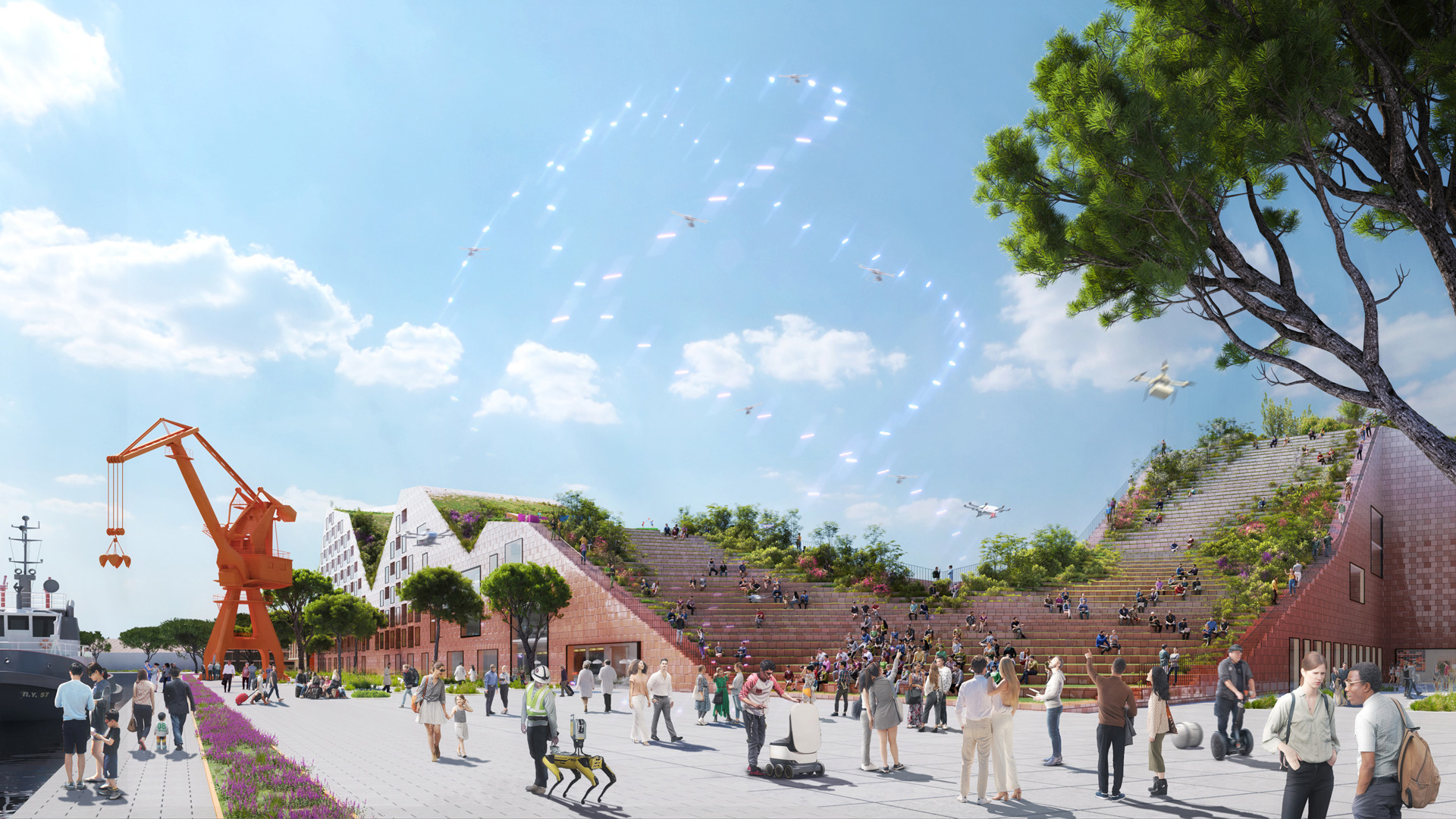
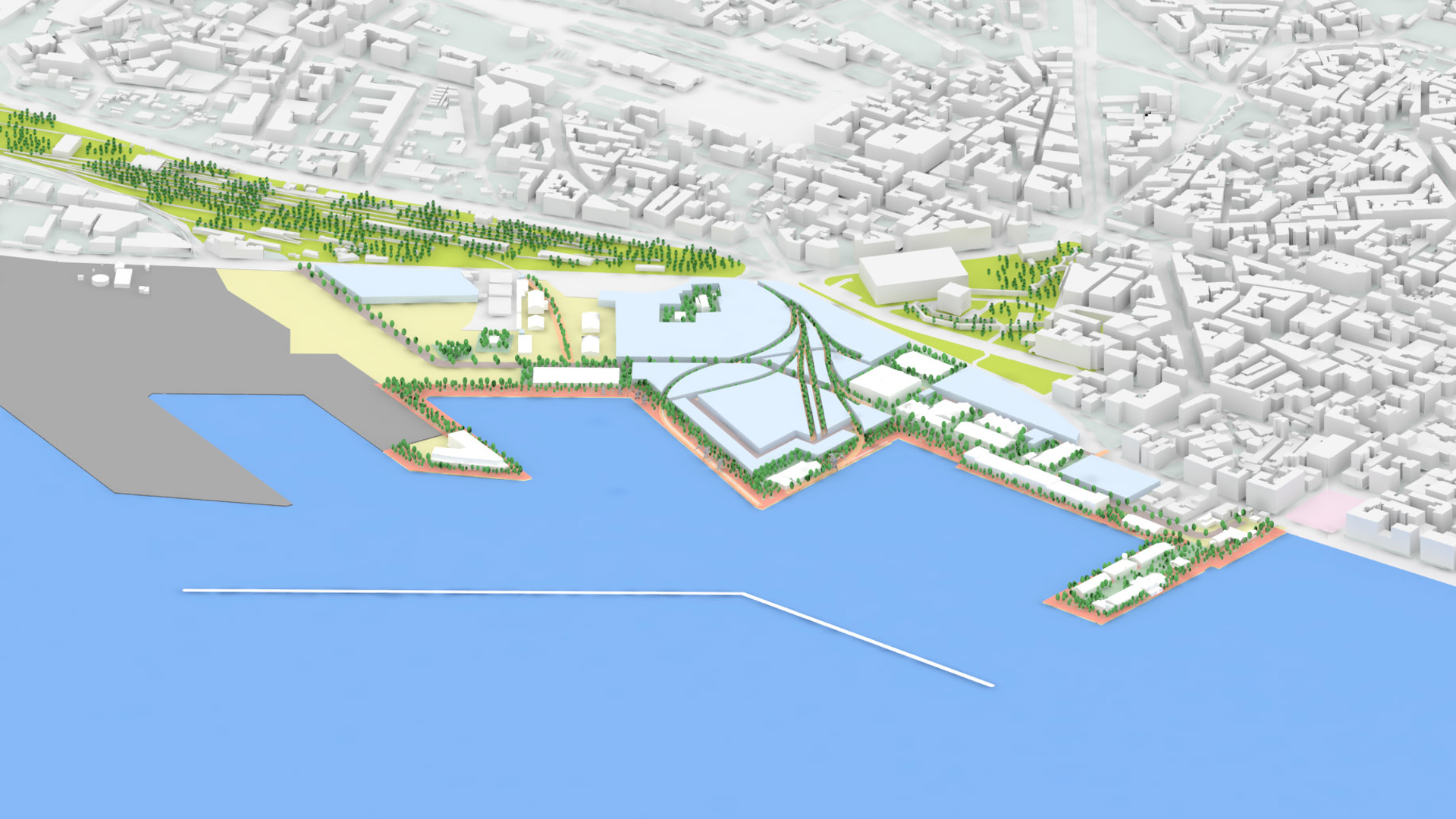
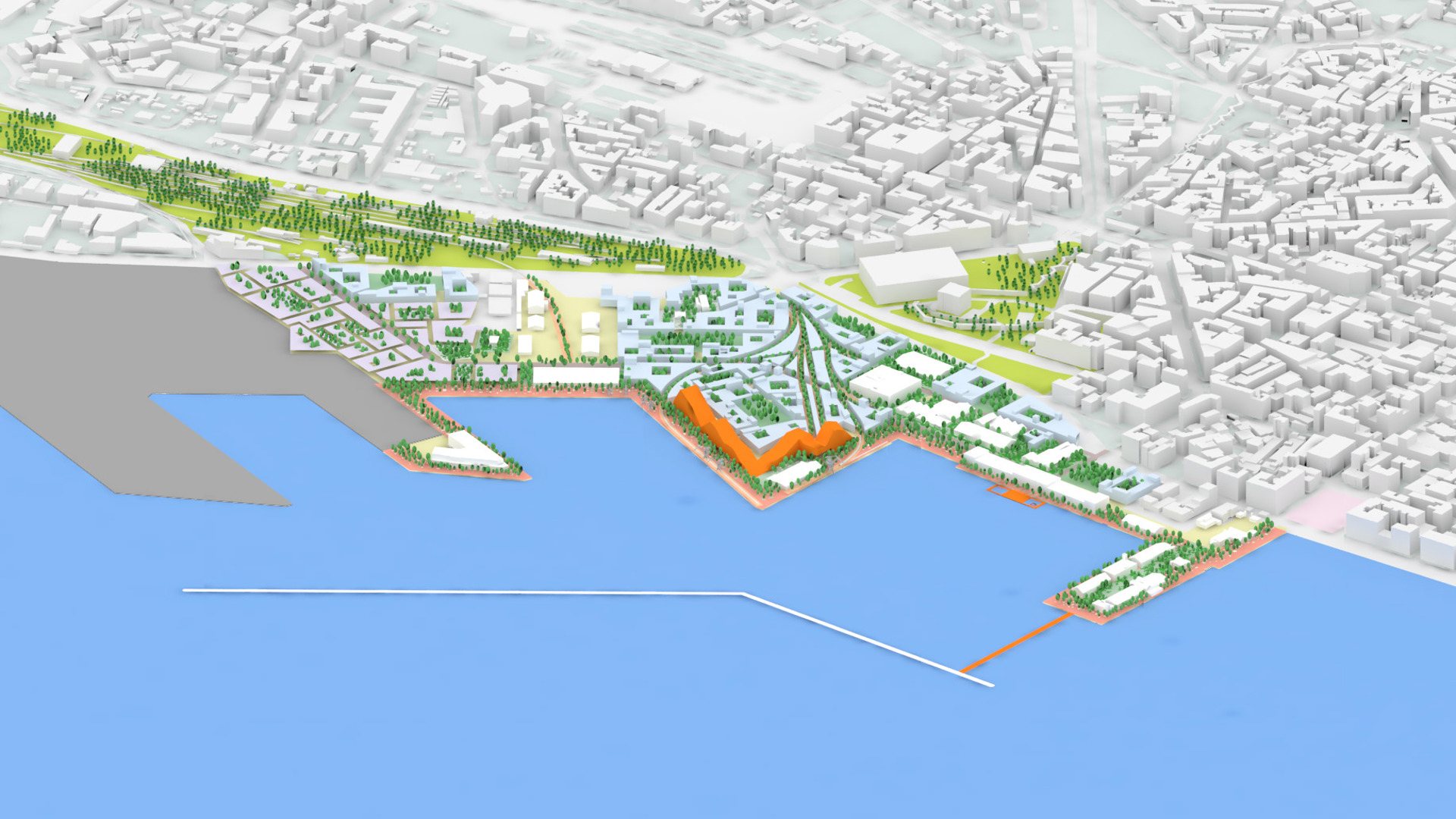
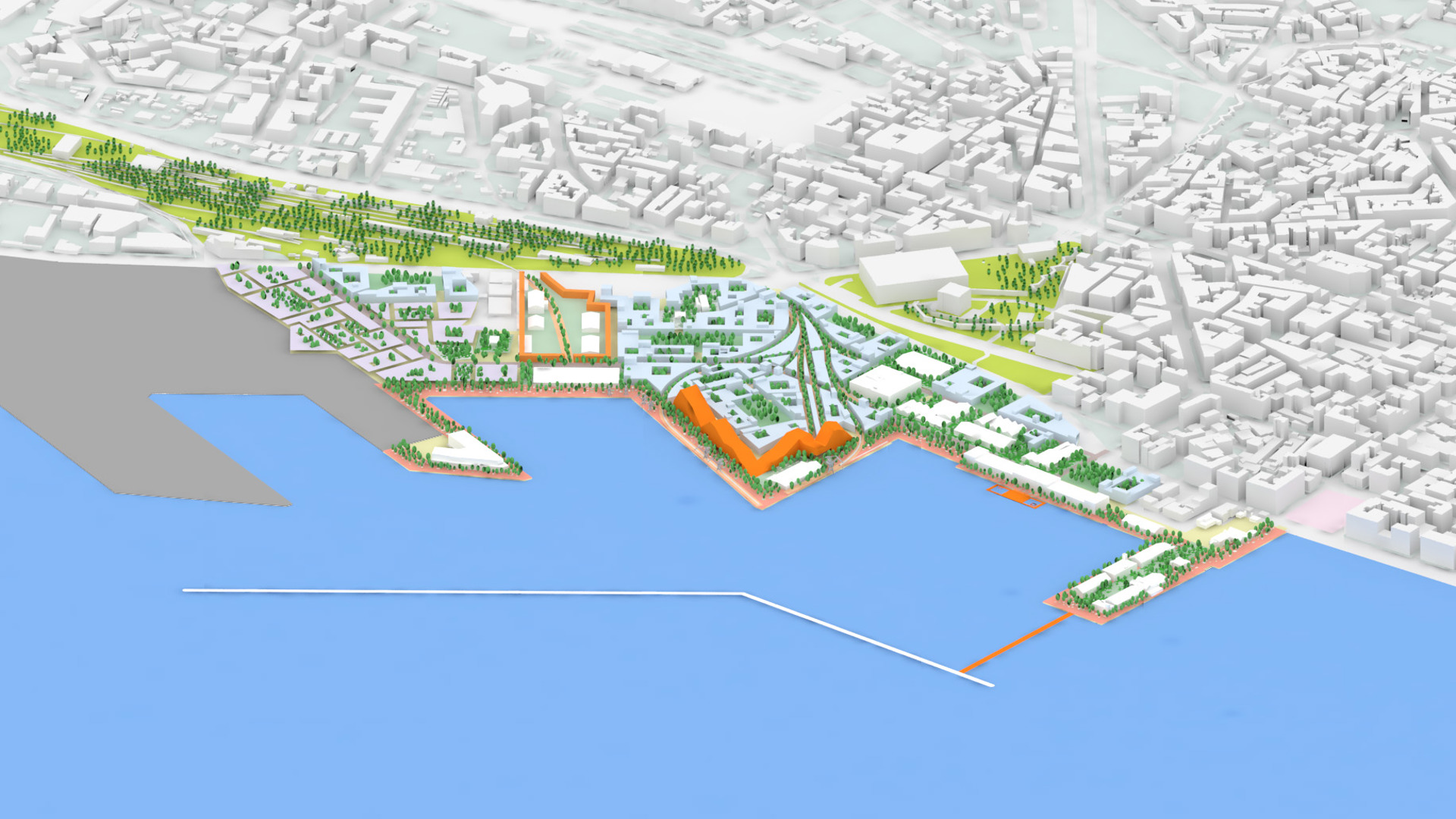
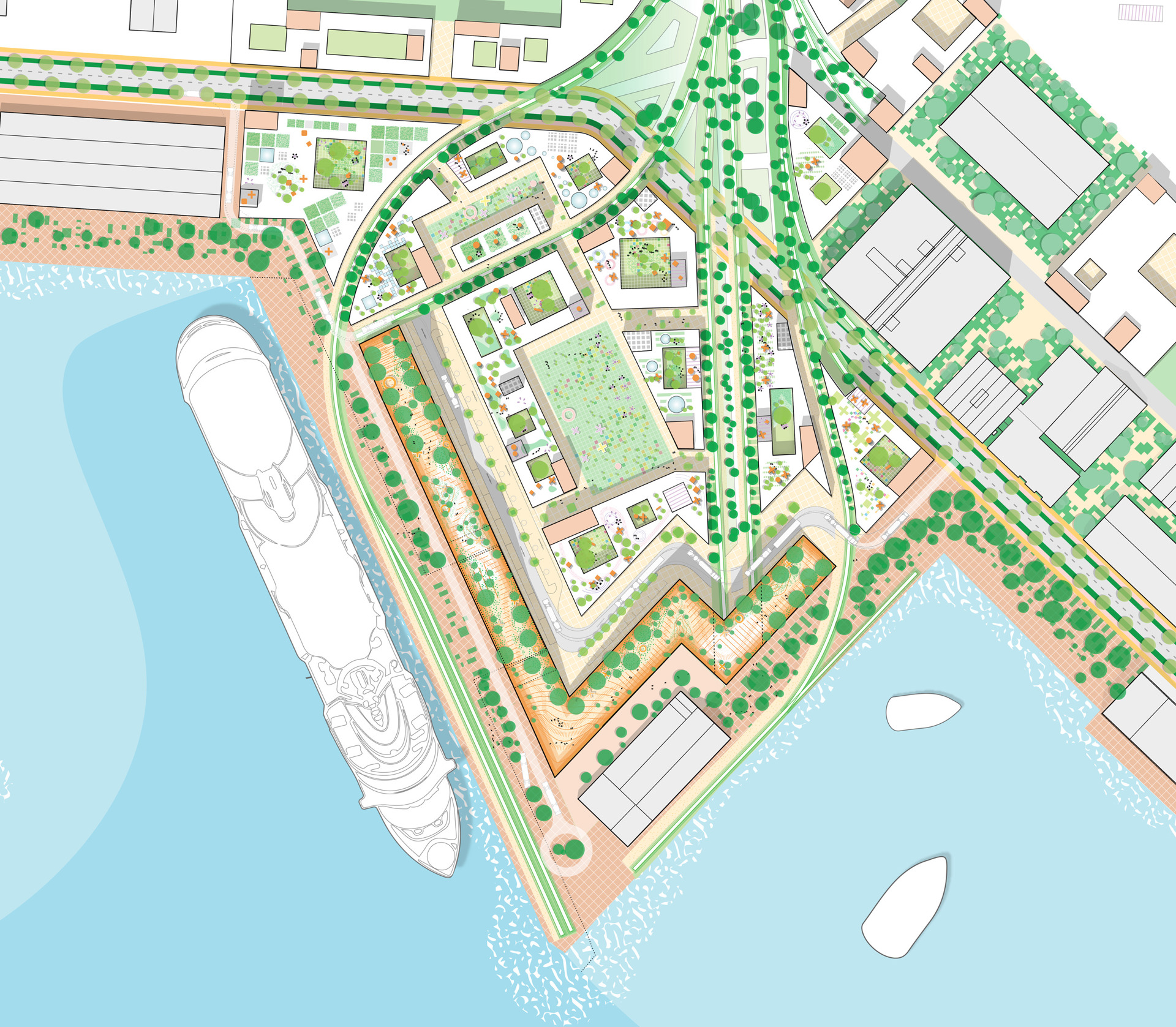
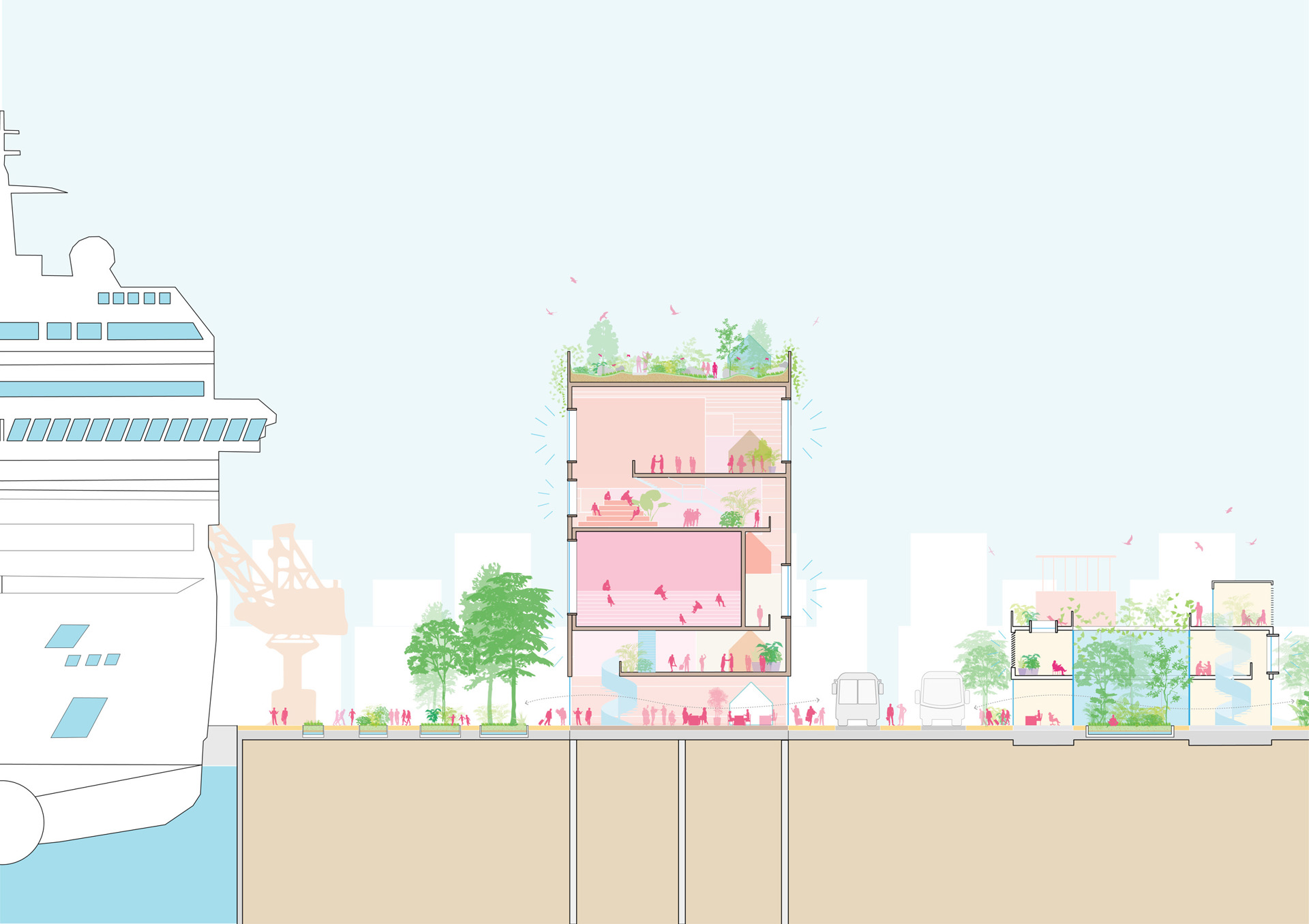
more informationThe study proposes five special features that create a series of functional attractions, while giving the district an attractive mix of functions. The most striking of these five “specials” is a mountainous hotel and cruise terminal that lines the edges of Pier 2. Inspired by the port’s views of Mount Olympus, this building helps to activate the waterfront, and its roof slopes down to ground level at the corner of the pier, allowing visitors to climb its peaks for spectacular views of the Gulf of Thessaloniki.
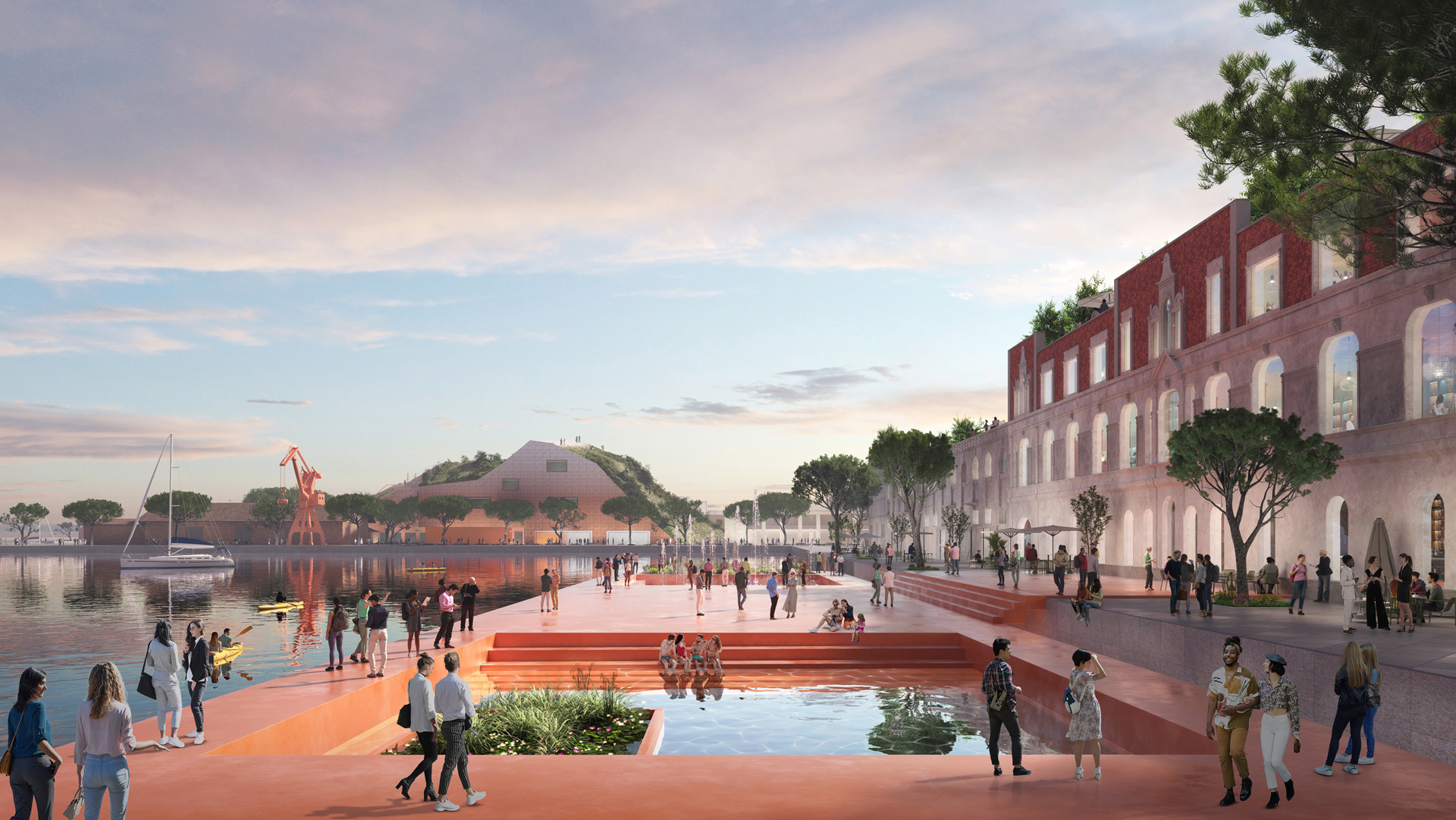
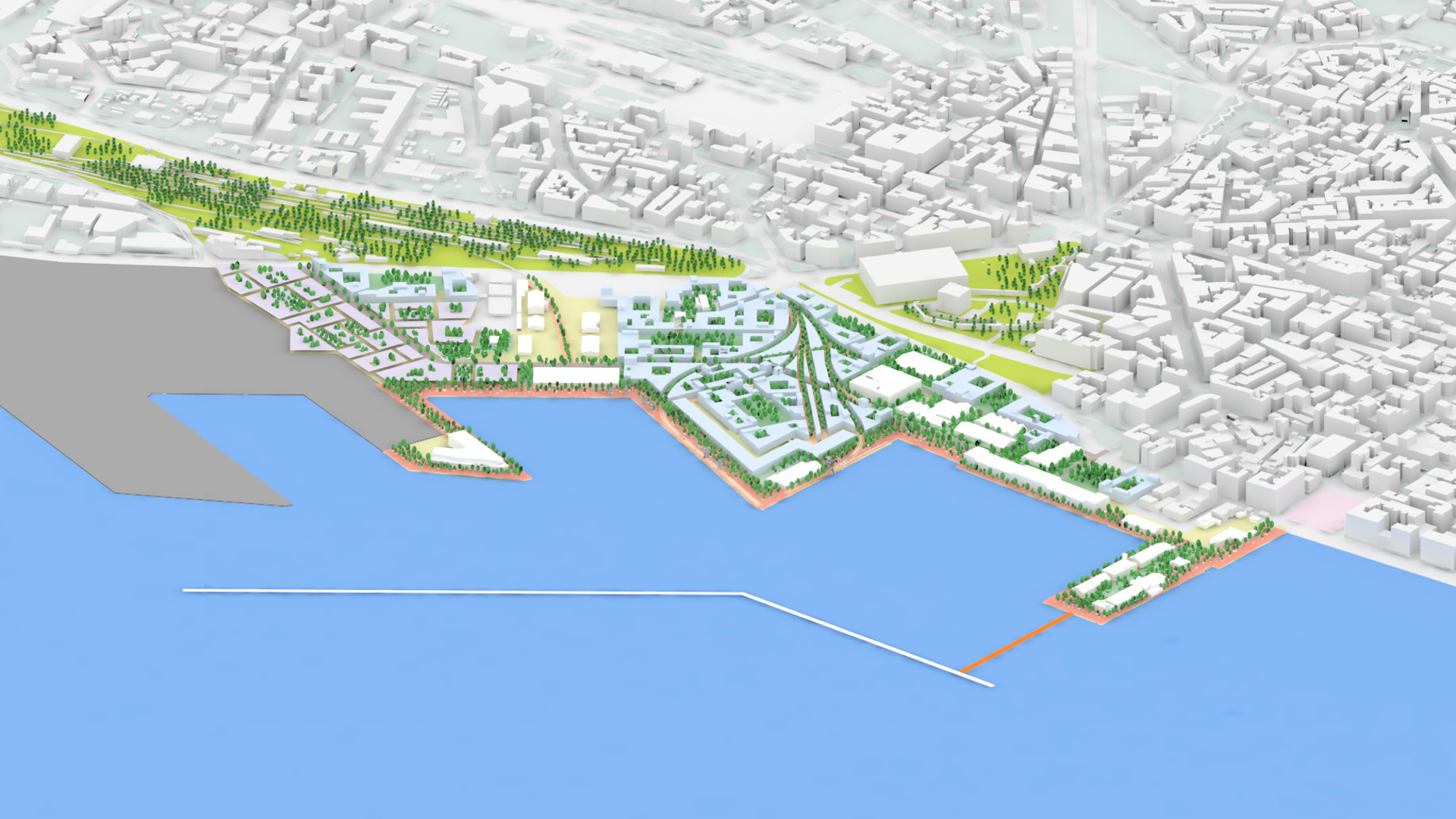
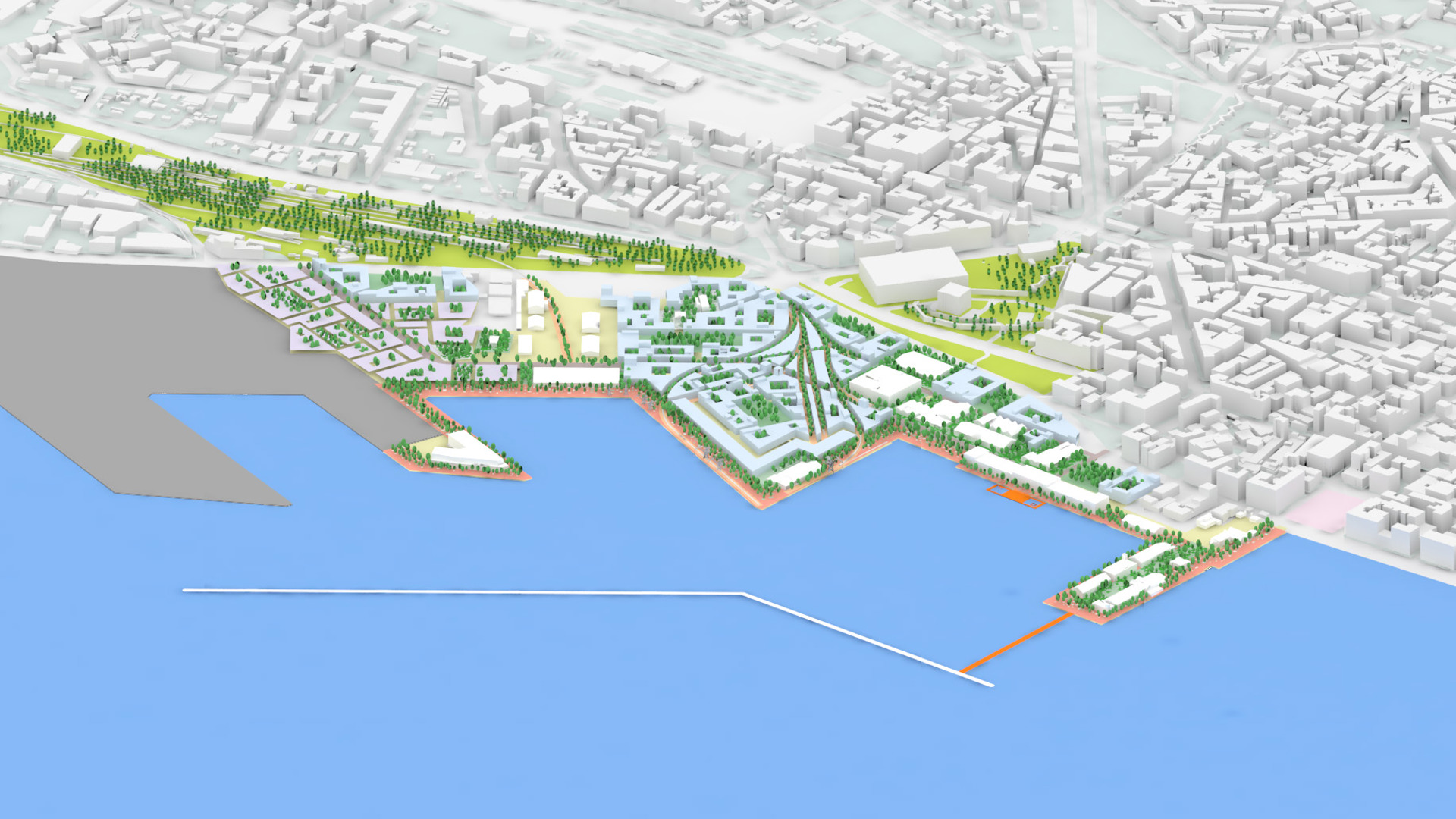
Also activating the waterfront are the changes to Pier 1, which the study proposes as a leisure zone, with a floating bridge that projects from the end of the pier to the breakwater, creating a promenade out into the bay more than a kilometre long. Between Piers 1 and 2, the historic Customs House would be renovated as a retail centre, and a new plaza will be added above the water, allowing visitors to relax by the water and giving a better view of the monumental front façade of the Customs House.
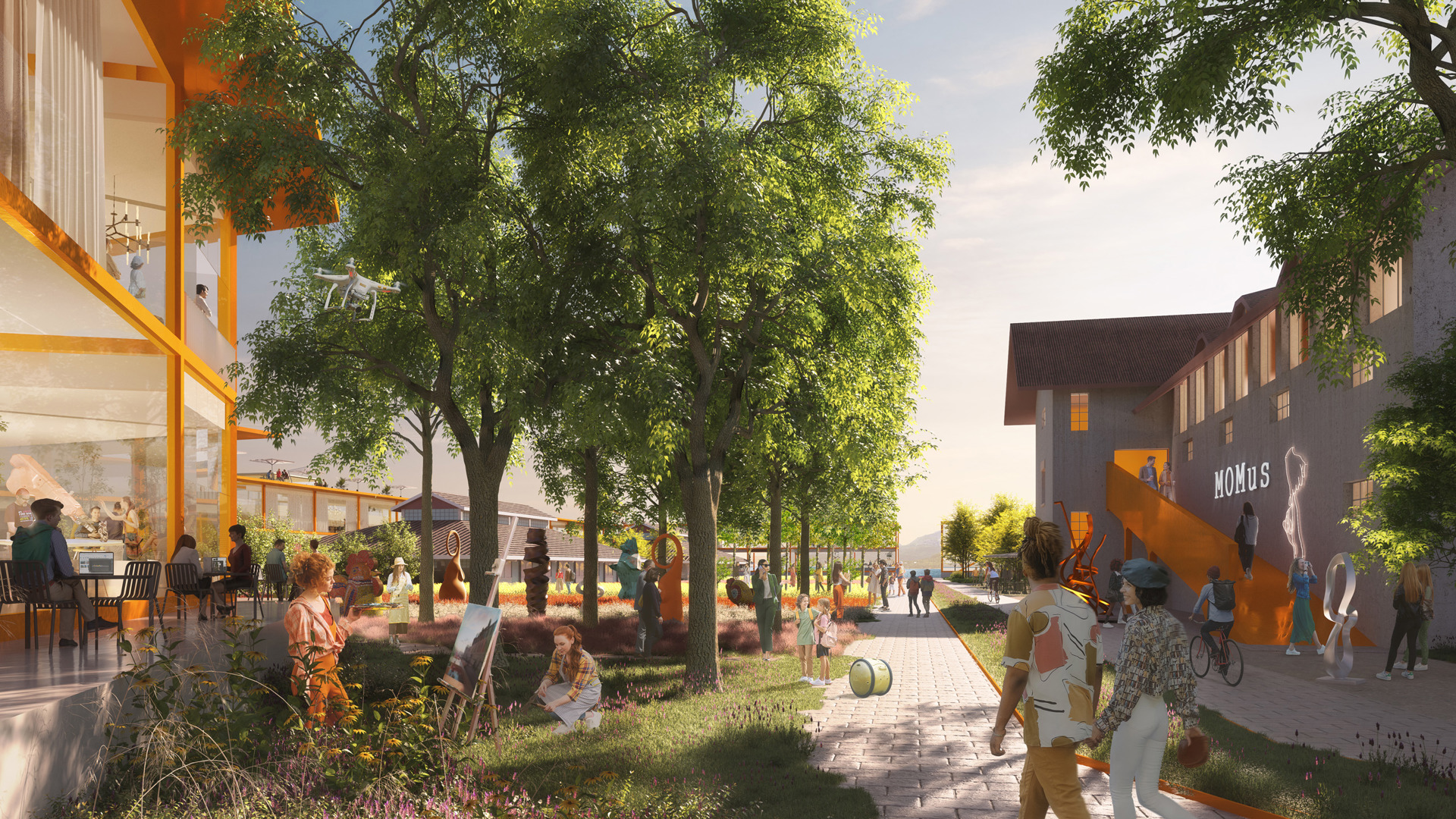
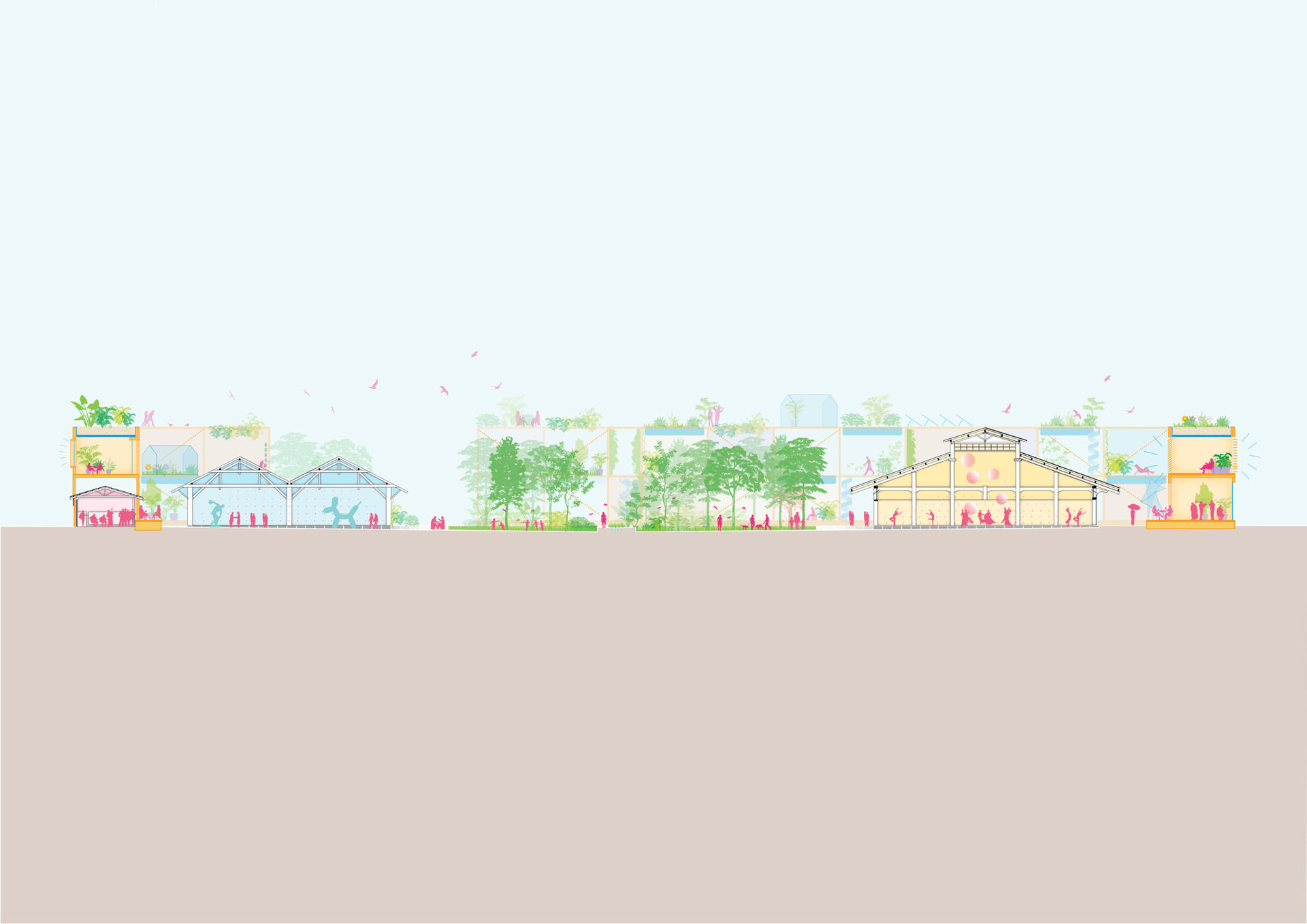
Further from the waterfront, the study brings greenery and open space into the heart of the district with the Innovation Square, forged from the densest part of the web of railway tracks. This public space can host functions such as cafés and restaurants, or an exhibition centre that showcases the work being done in the district. Finally, the study proposes to create a narrow perimeter building enclosing what was once the port’s stables, turning the historic buildings into a cultural zone complete with lush greenery.
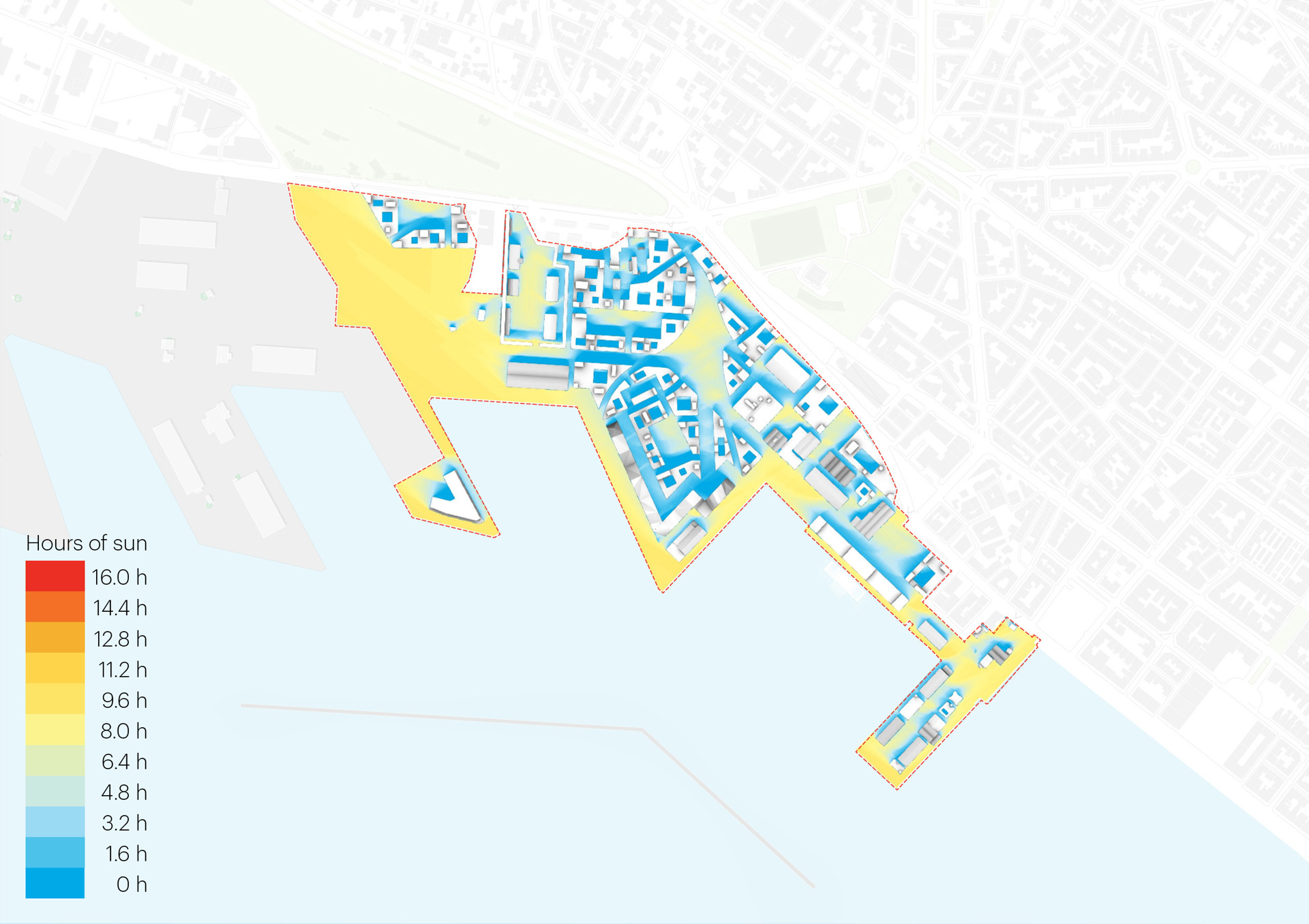
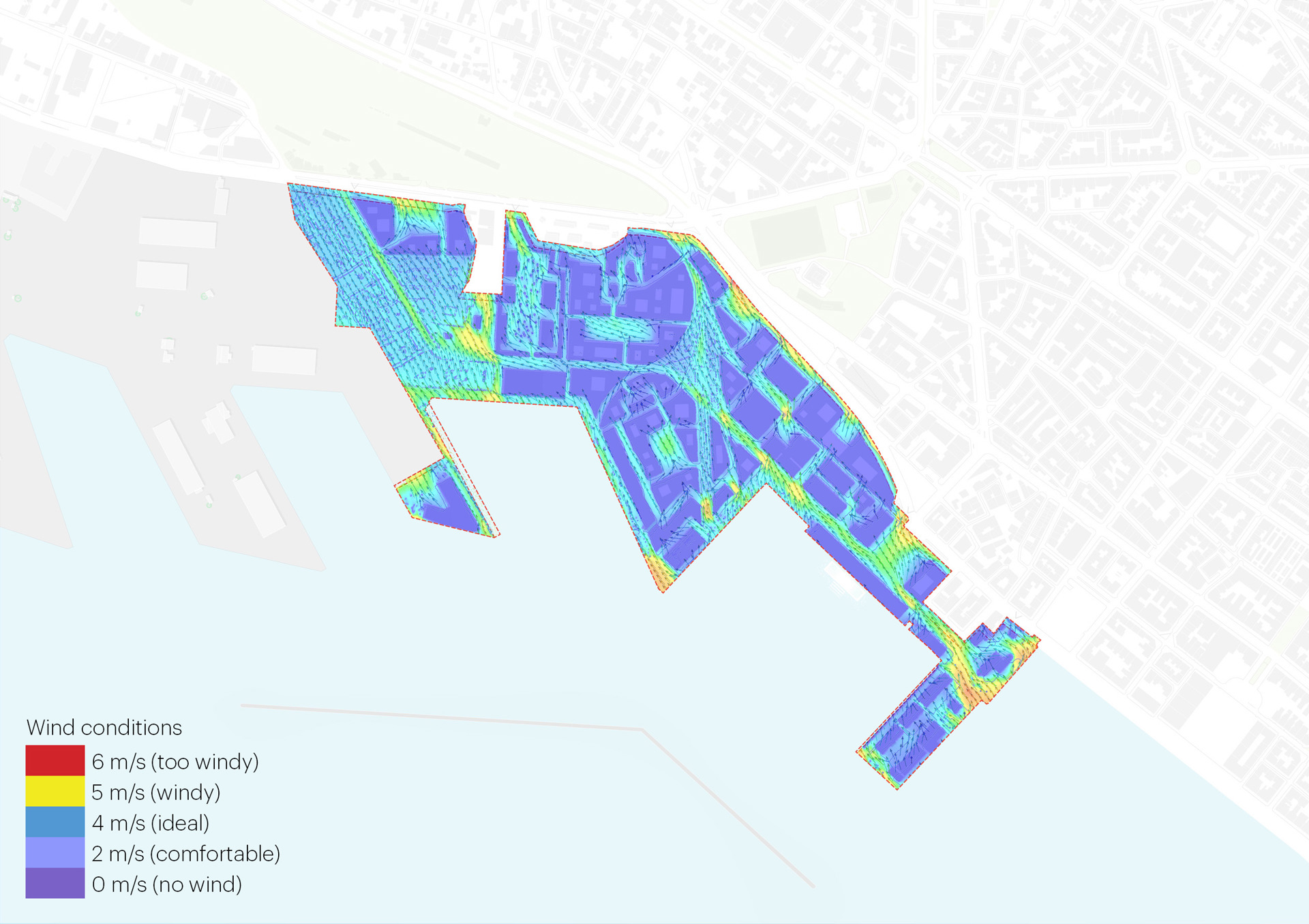
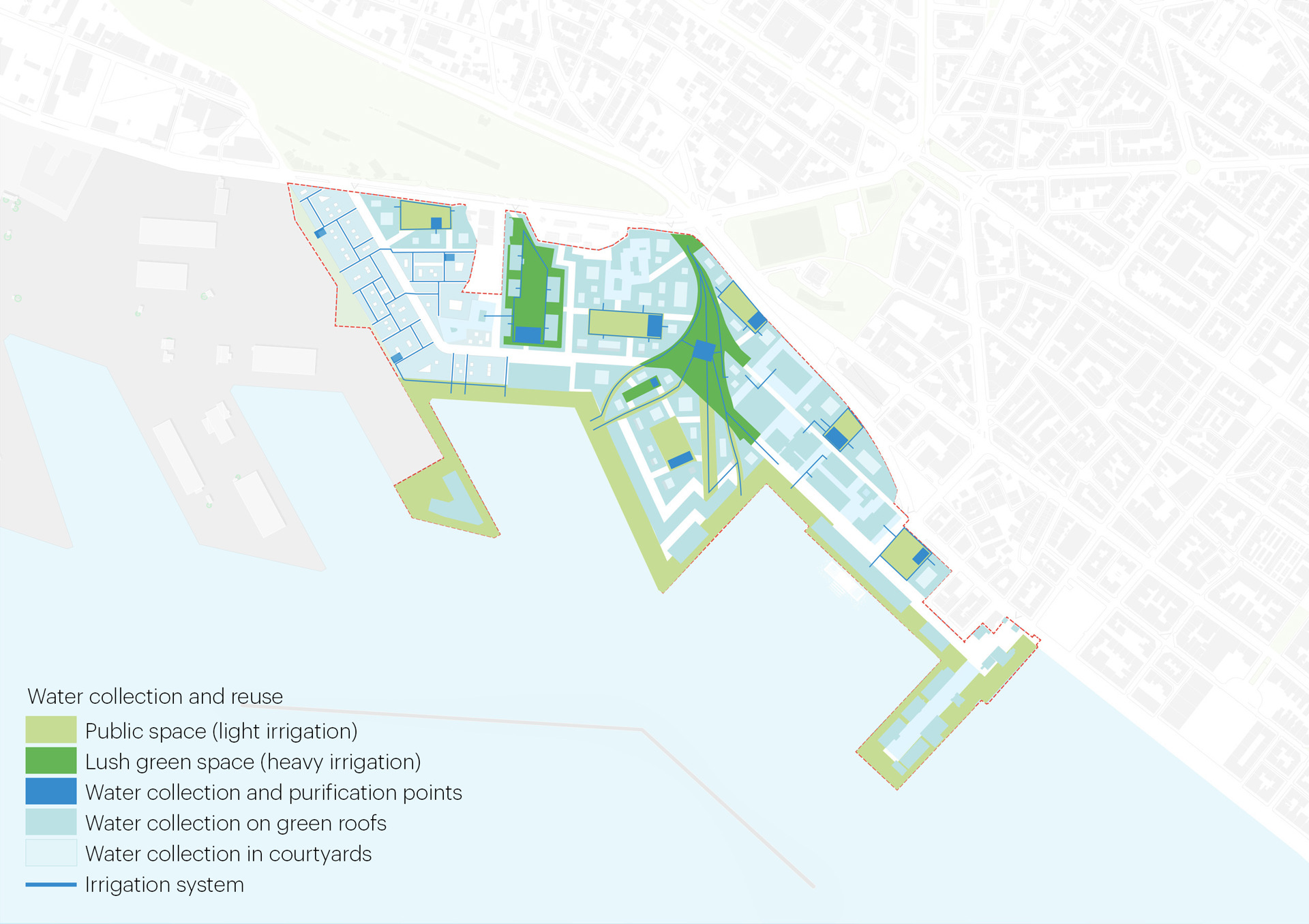
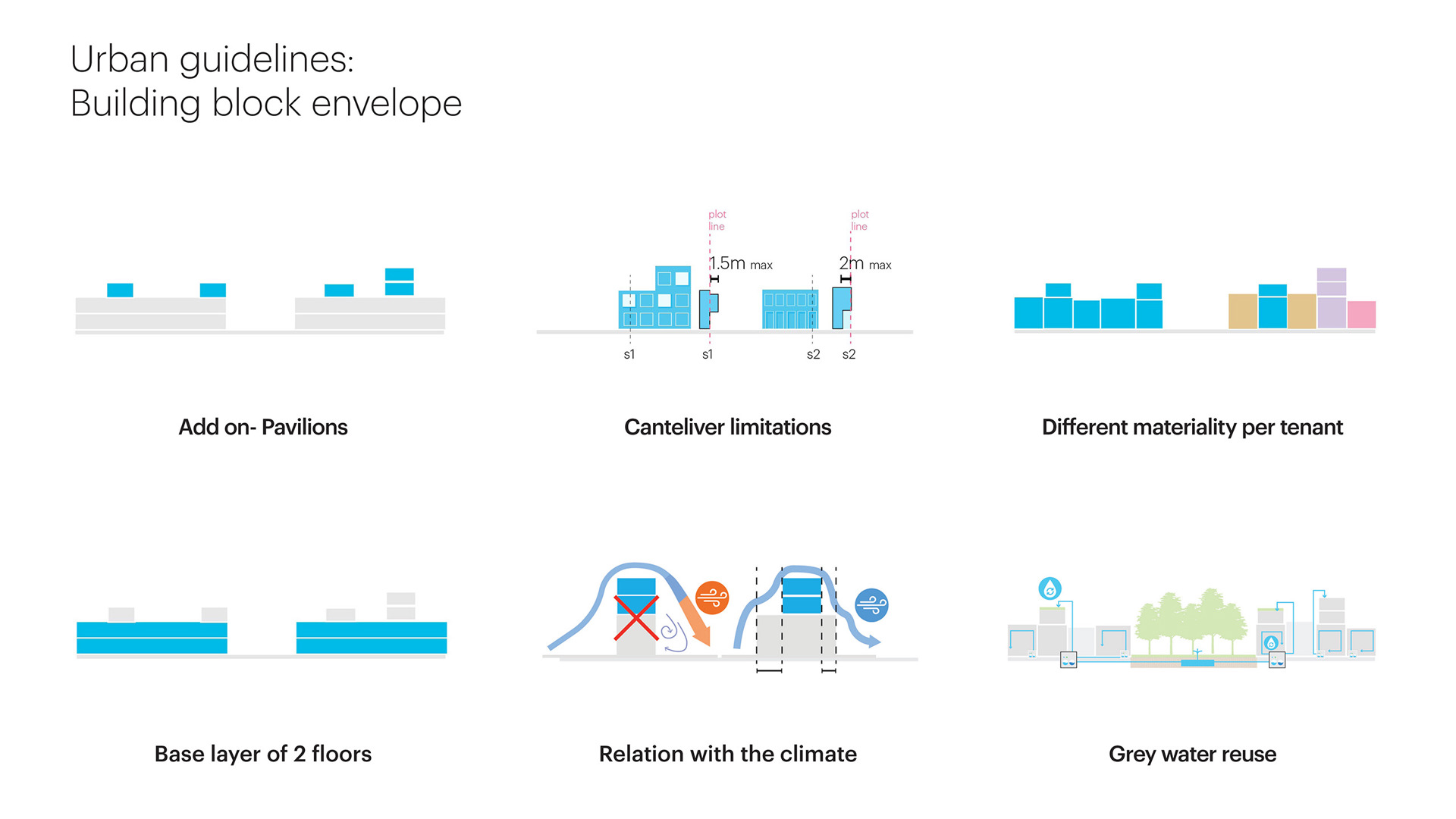
The study also proposes a series of guidelines for the district’s basic elements. These include guidelines for existing buildings, such as when to restore compared to when to add extensions to accommodate planned functions. Guidelines for the new blocks focus on ways to ensure a coherent yet vibrant district. Climate comfort and activity throughout the day are key considerations, with a focus on techniques such as water retention and reuse, and porous building blocks that will remain well-ventilated in hot weather.
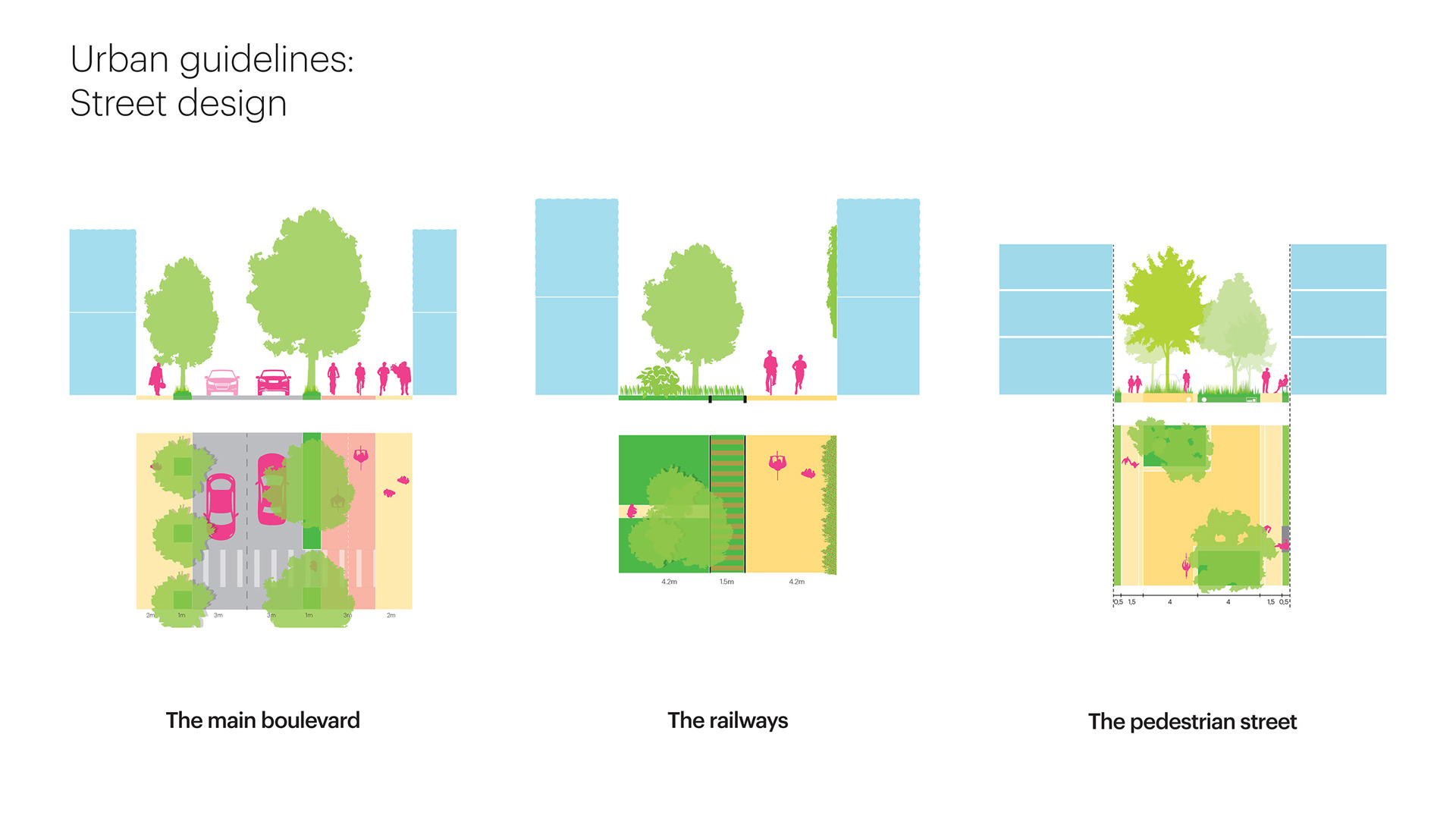
Recommendations for the construction of the buildings also focus on sustainable and efficient construction methods, elaborating on the use of roofs and the inclusion of green patios, to further enhance comfort and to ensure a lively atmosphere with resilient design. The construction guidelines also emphasise the topics of flexibility, modularity, and reductions in both embodied and operational carbon to make the new port district sustainable. Finally, guidelines for the public realm aim at ensuring spacious and green outdoor spaces.
Following the completion of the Non-Core Port Development Study, MVRDV collaborator ROGAN Associates went on to design the current masterplan for the area.
Gallery
Render
Render
Render
Render
Render
Render
00 Site
01 Assess structural viability of existing buildings
02 Demolish non-viable buildings
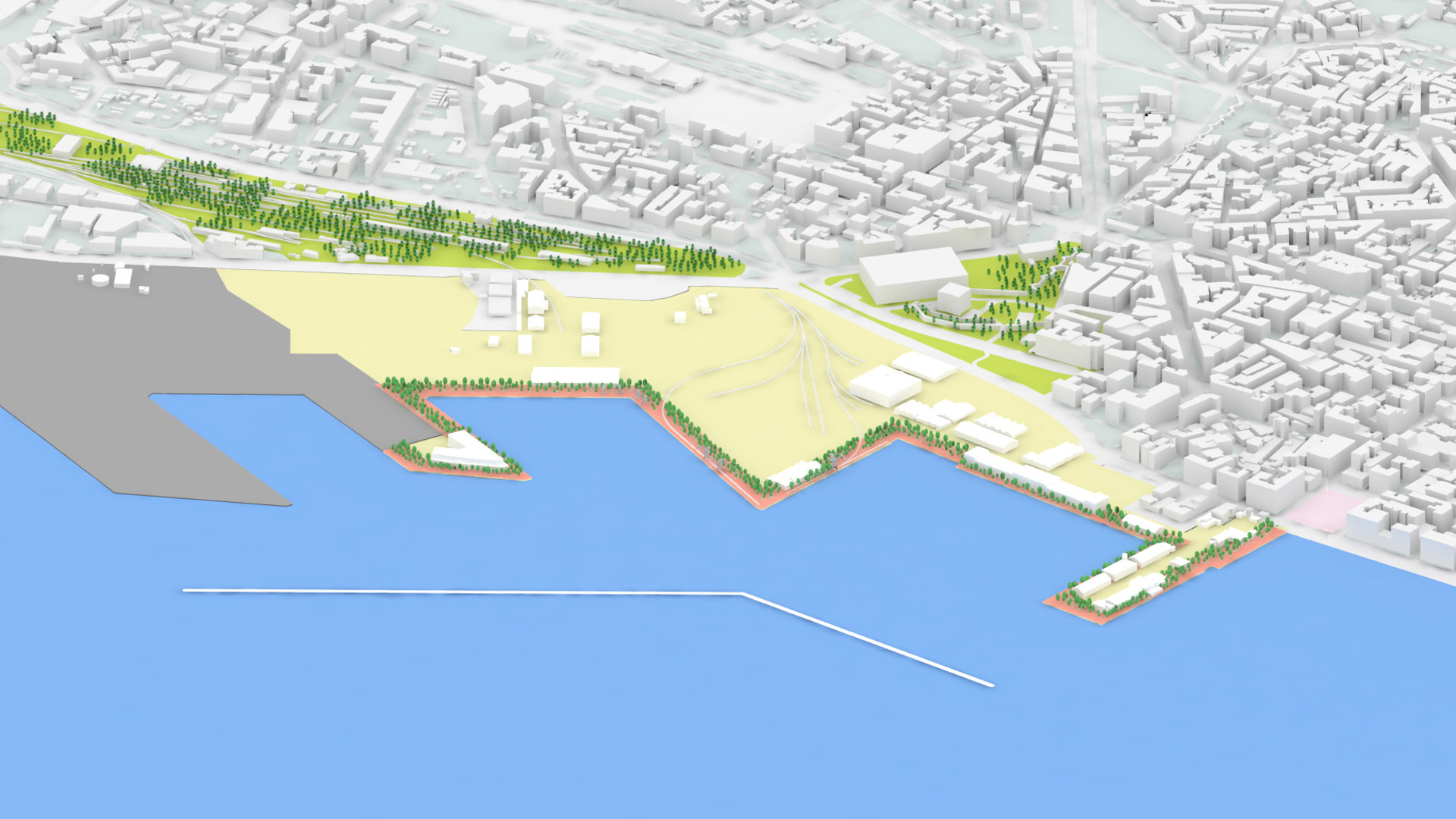
03 Define waterfront promenade
04 Preserve railway routes
05 Define central boulevard
06 Create offset around existing buildings
07 Define buildable area
08 Define blocks
09 Add courtyards
10 Add rooftop pavilions
11 Add canopies to parking areas
12 Add bridge to Pier 1
13 Add waterfront plaza next to Customs House
14 Create iconic hotel and cruise terminal at Pier 2
15 Create perimeter building around stable complex
16 Add green landscape to stable complex
17 Define Innovation Plaza
City Ex-Port - Urban plan
Plan, Pier 2
Plan, stables
Section, hotel building
Section, stables
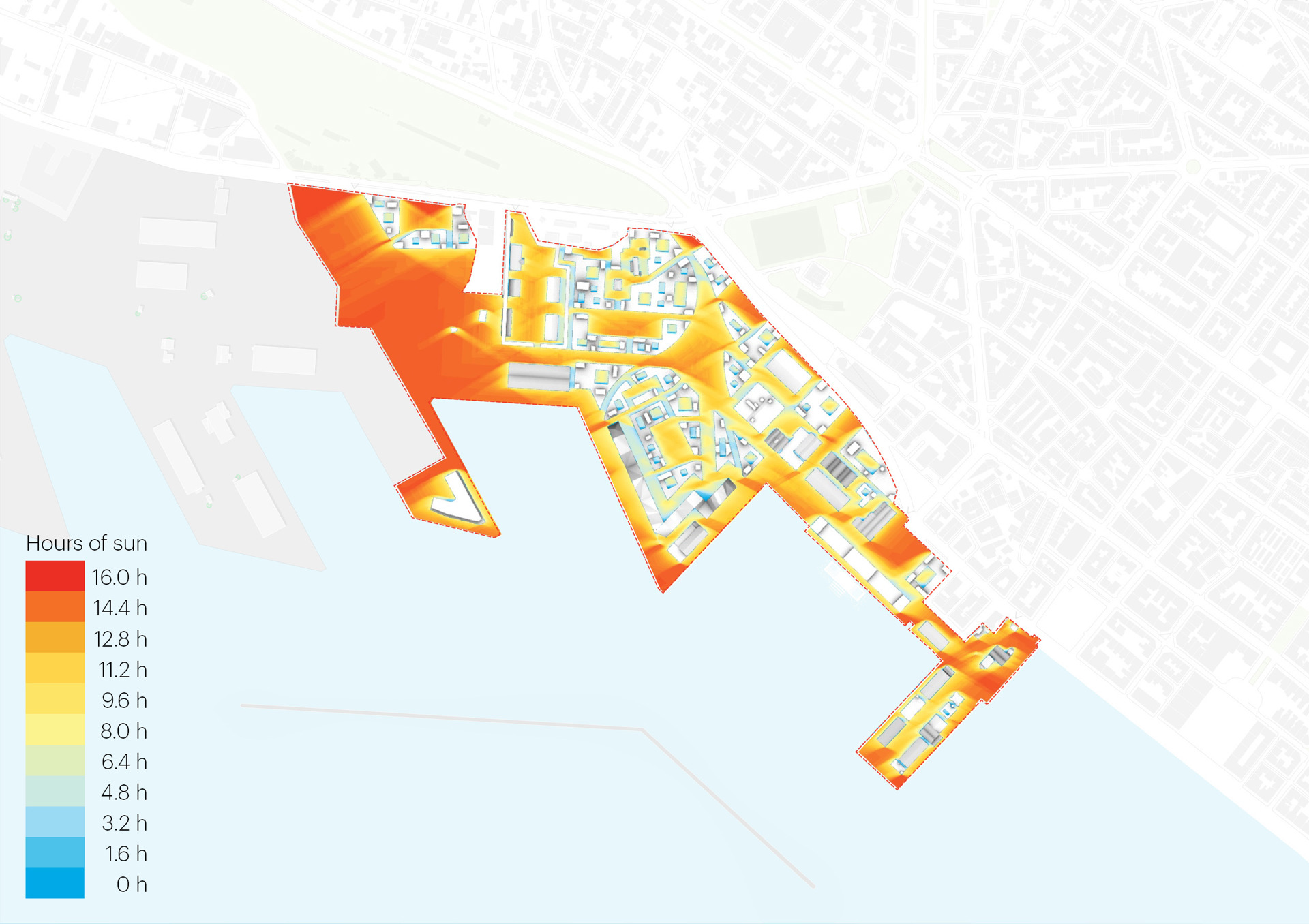
Sun hours (December)
Sun hours (June)
Wind analysis
Water collection and reuse
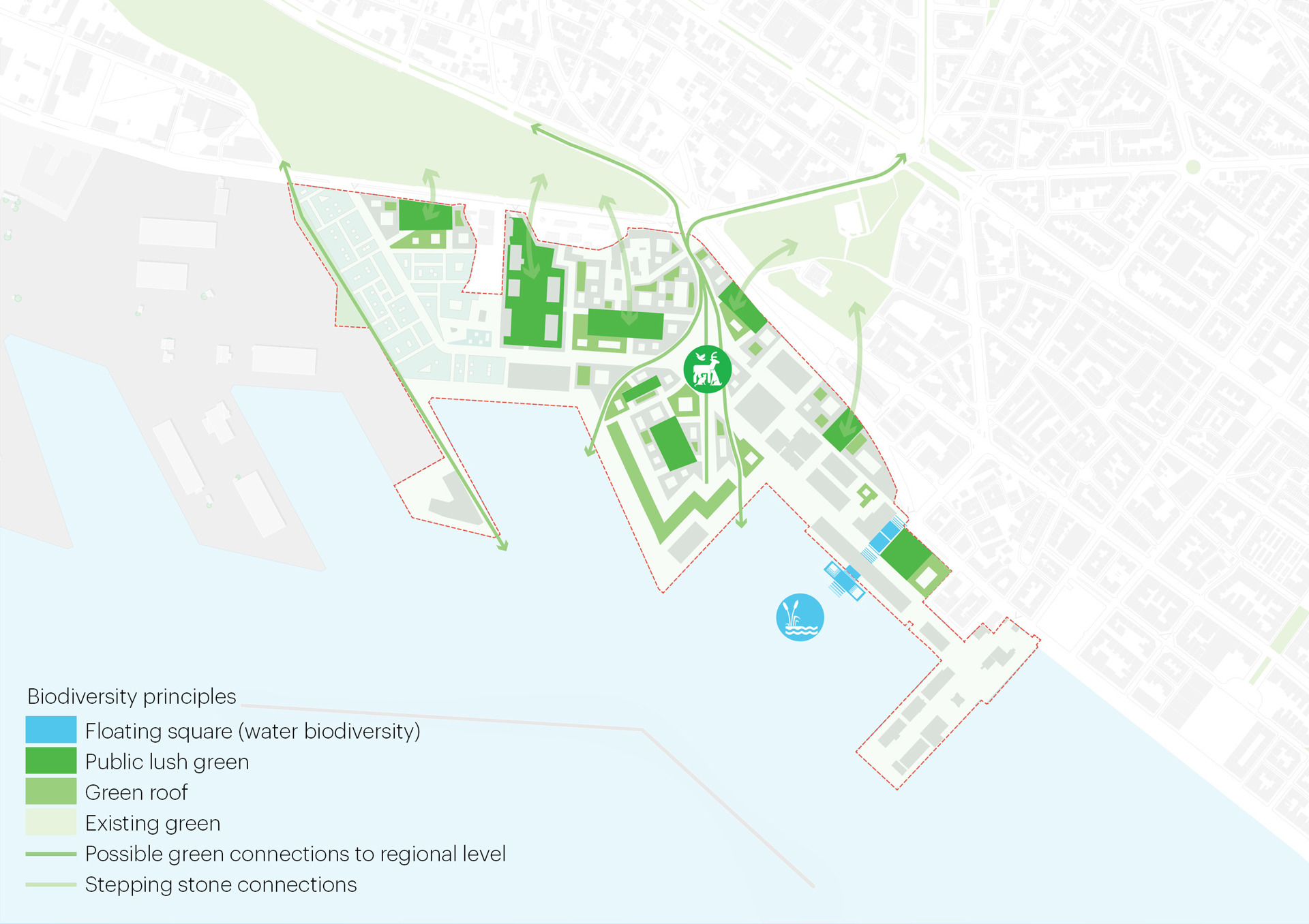
Biodiversity principles
Urban guidelines: Building block envelope
Urban guidelines: Street design
Past events
.jpg?width=300&height=300&quality=75)
.jpg?width=300&height=300&quality=75)
Credits
- Architect
- Founding partner in charge
- Director
- Design team
- Partners
- Local architect:
- Maria Deda / Deda & Architects
- Local engagement consultant:
- Maria Sitzoglou
- Technical design:
- ROGAN Associates
- Sustainability consultant:
- Enveco
- Financial strategy & Programme consultant:
- Deloitte
- Cost estimation:
- Konstantinos Mitsios
- Technical consultant (Phase 1):
- WSP
- Programme consultant (Phase 1):
- Drees & Sommer
- Financial advisor (Phase 1):
- Rebel