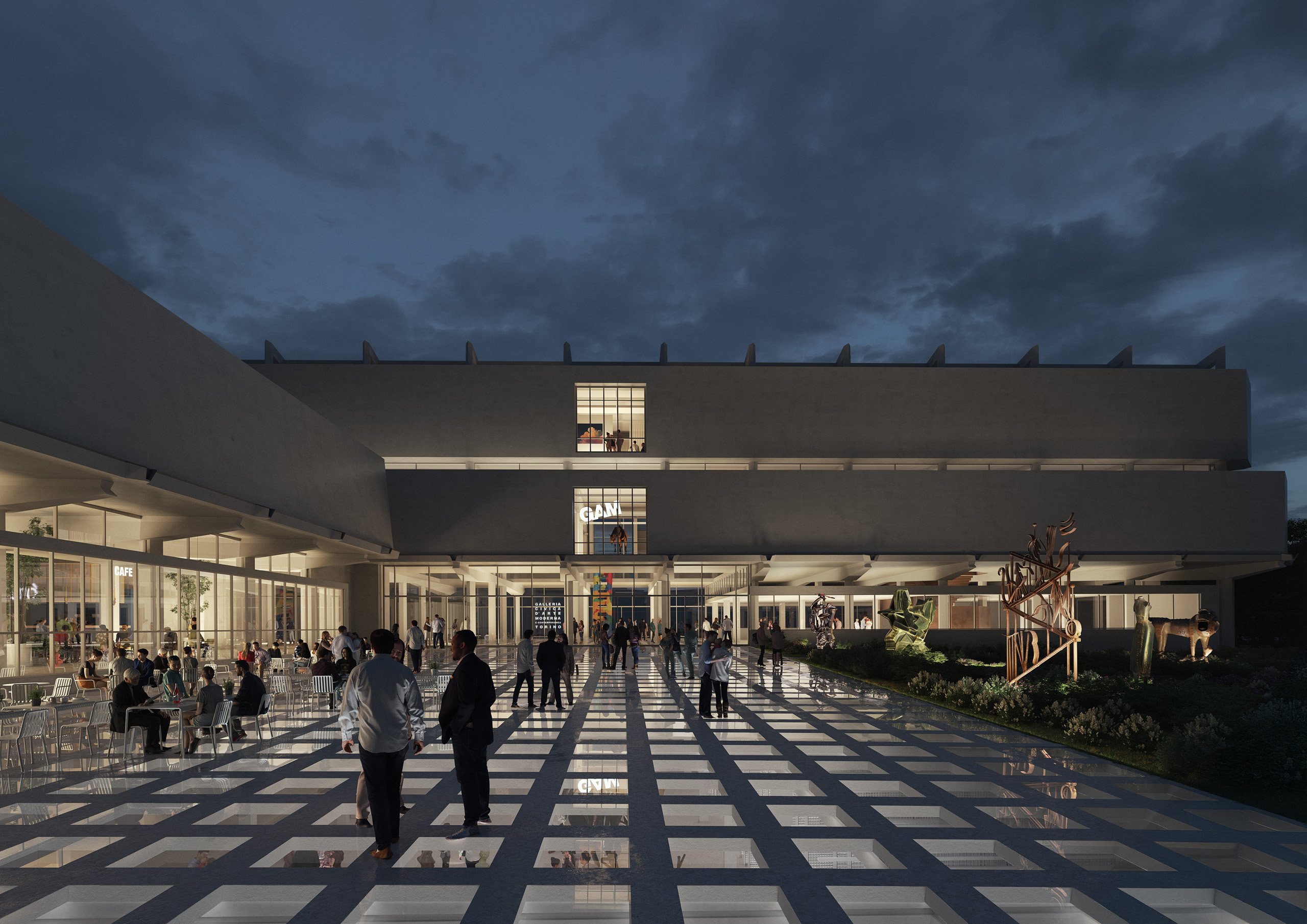
GAM Torino
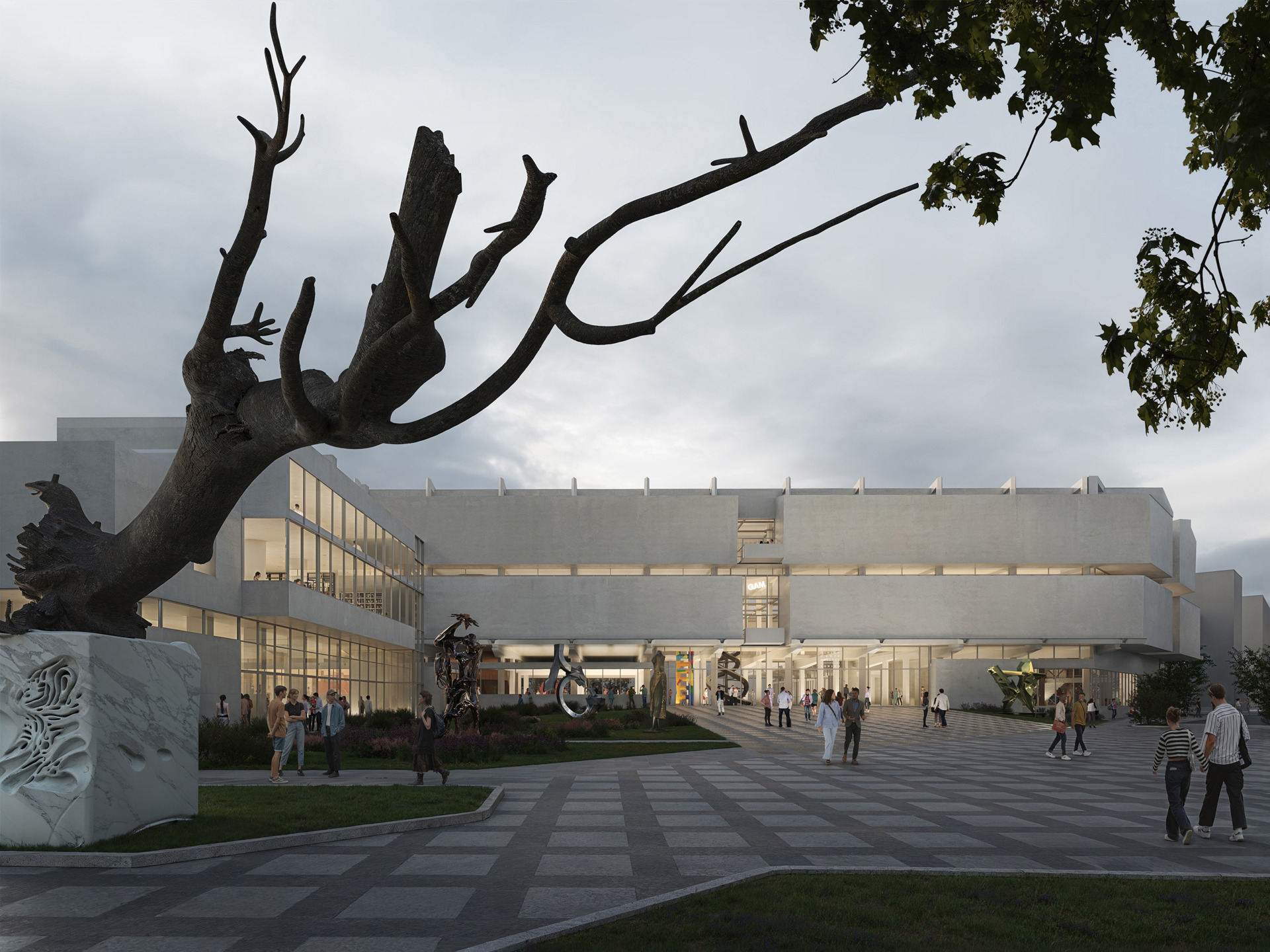
The design for the renovation of the Civic Gallery of Modern and Contemporary Art in Turin (GAM Torino) by MVRDV and Balance Architettura, which was selected through a public competition in December 2025, aims to restore the qualities of the building from 1959 while transforming it with the quintessential features of a 21st-century museum, making it more open and including publicly accessible storage, a highly adaptable display system, and spaces conceived with the active engagement of the public in mind.
- Location
- Turin, Italy
- Status
- In progress
- Year
- 2025–
- Surface
- 18140 m²
- Client
- Fondazione Torino Musei, Fondazione Compagnia di San Paolo
- Programmes
- Educational, Cultural, Bar-restaurant, Auditorium
- Themes
- Architecture, Public, Transformations, Culture
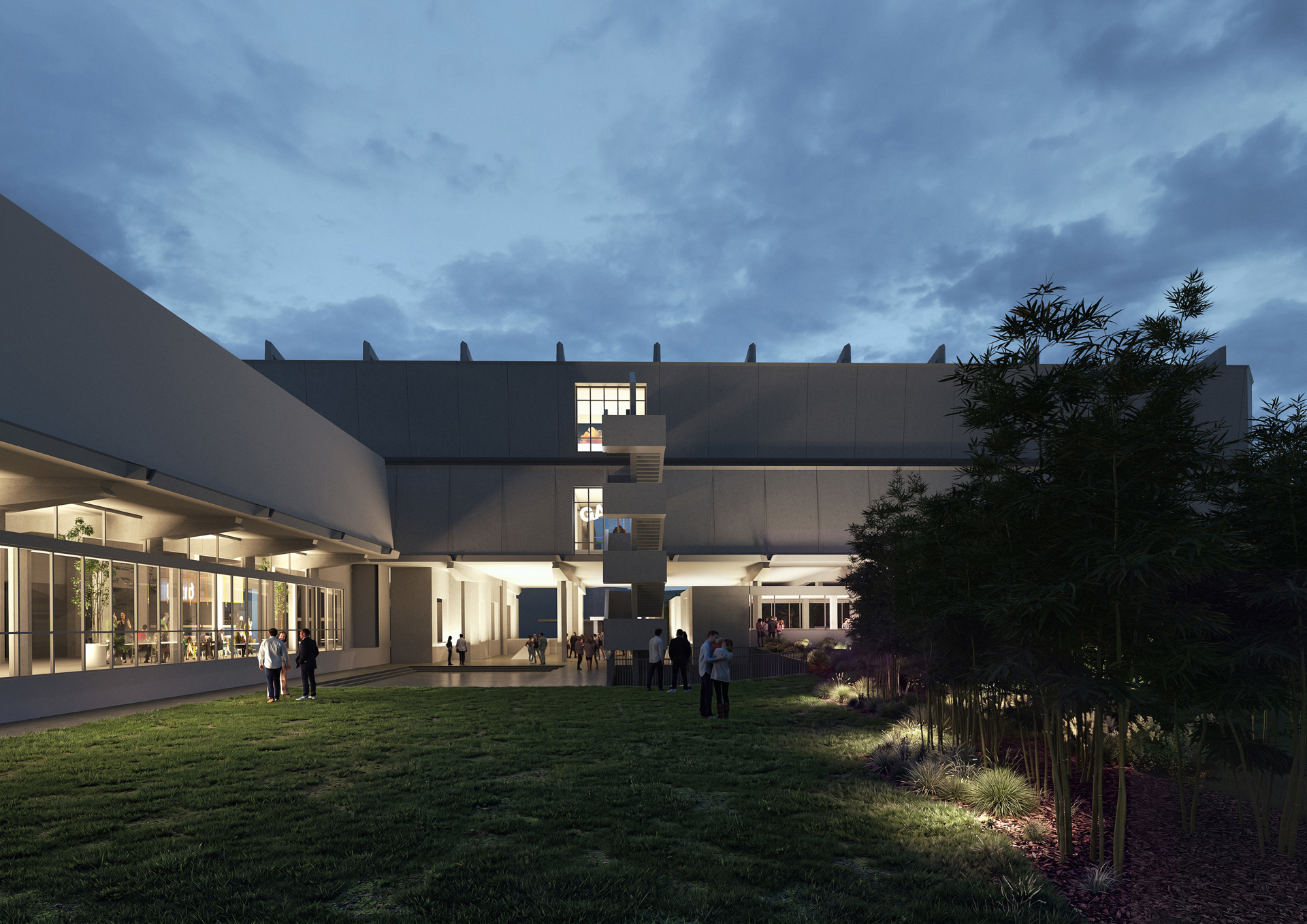
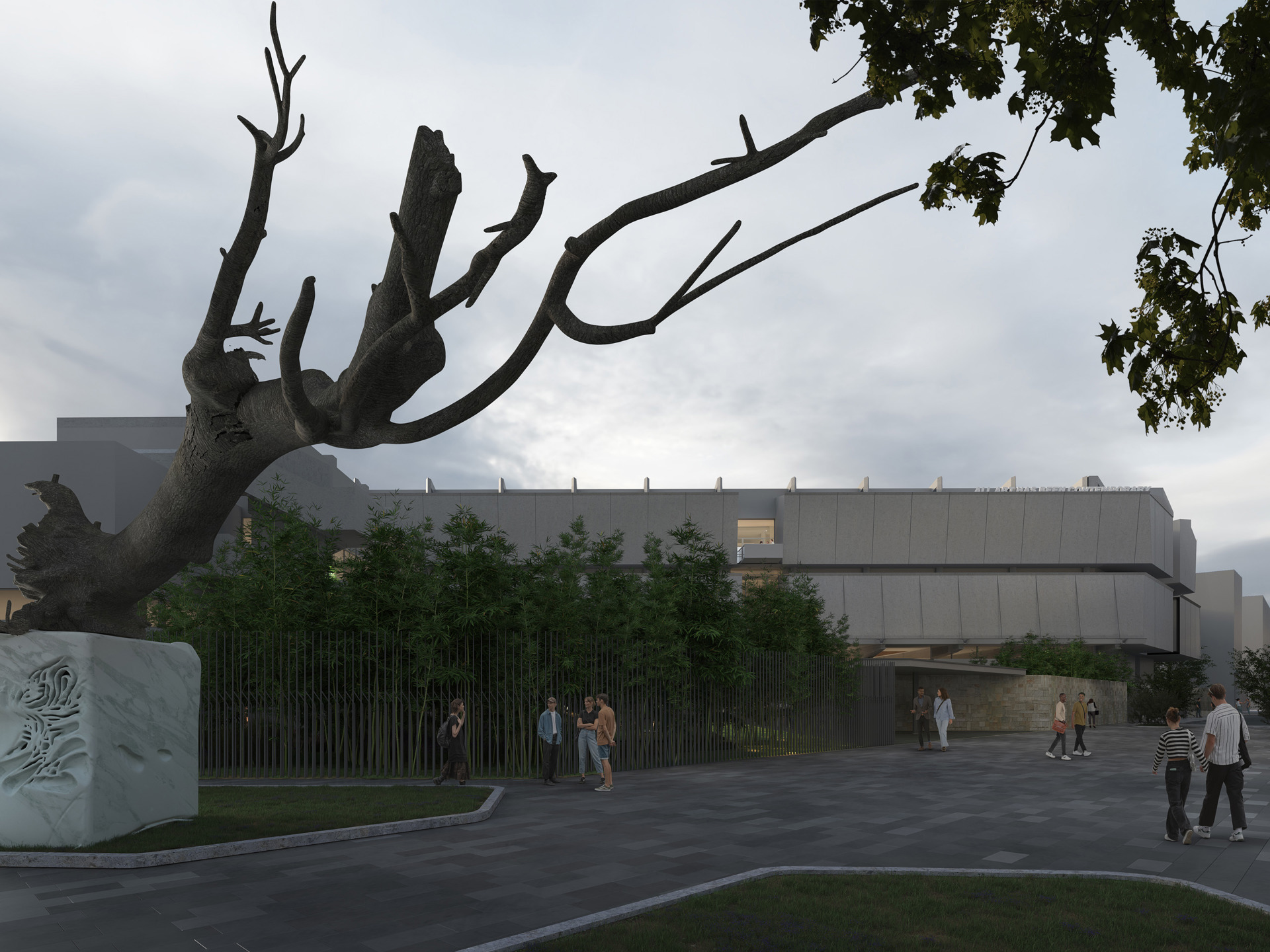
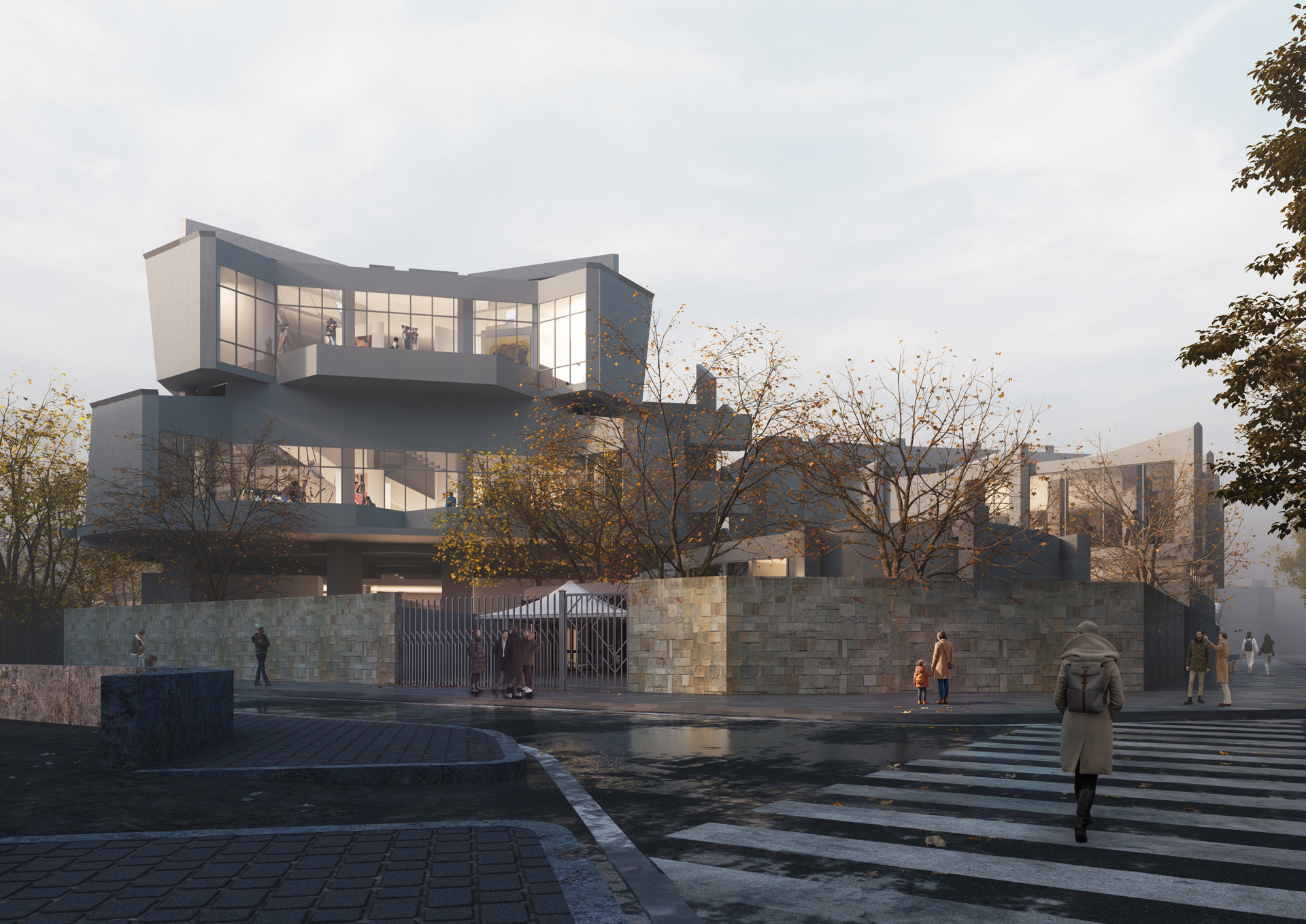
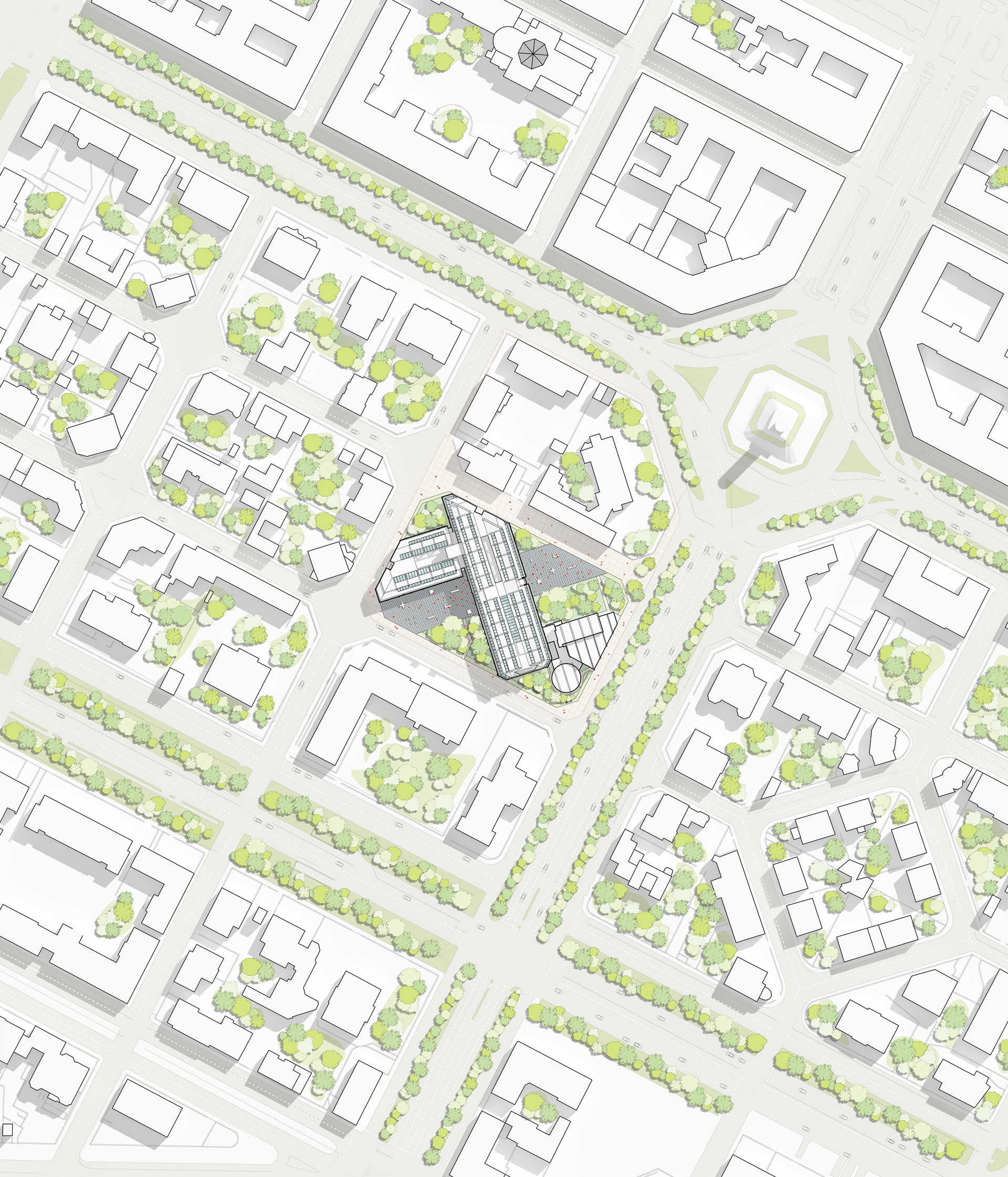
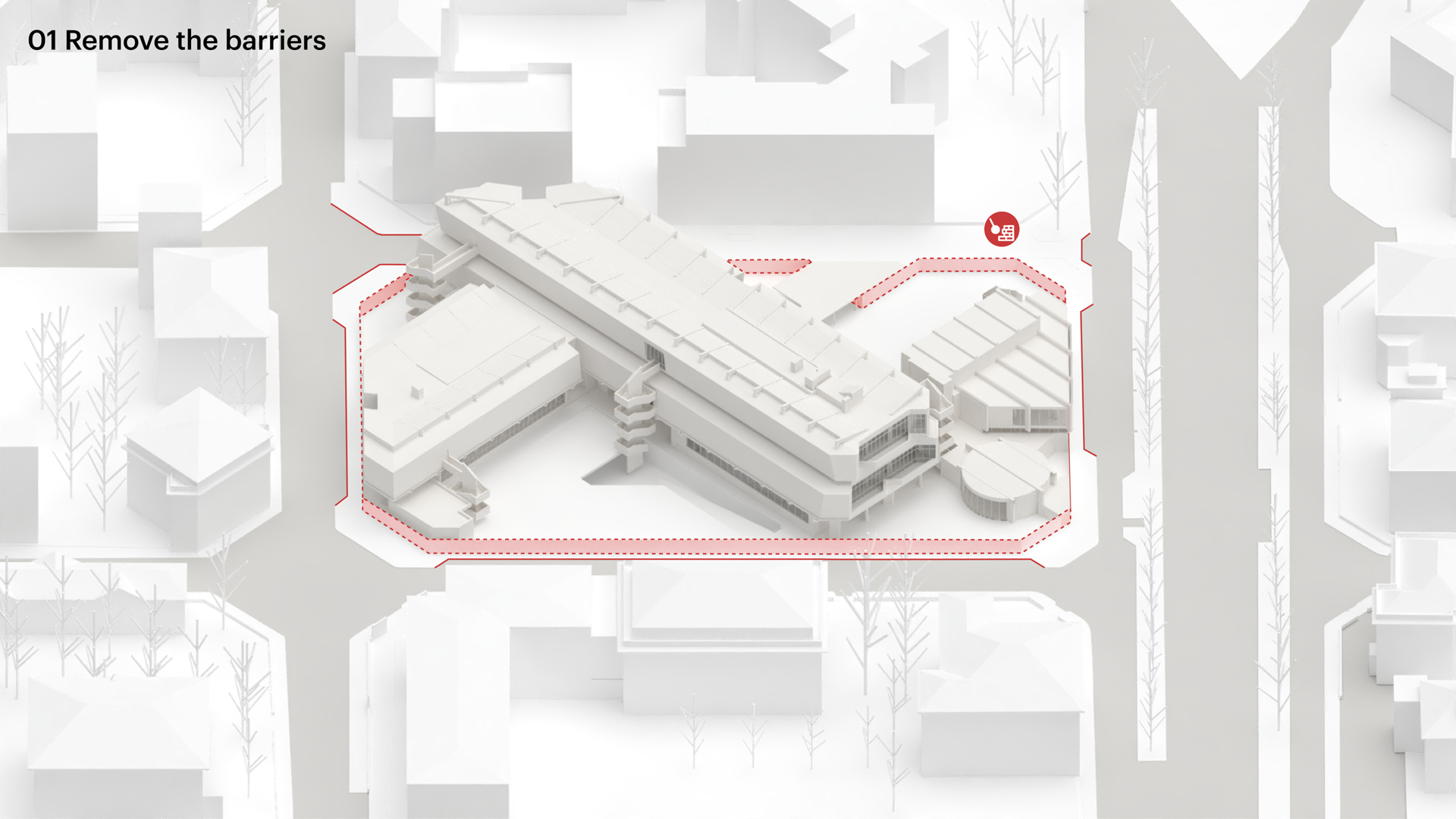
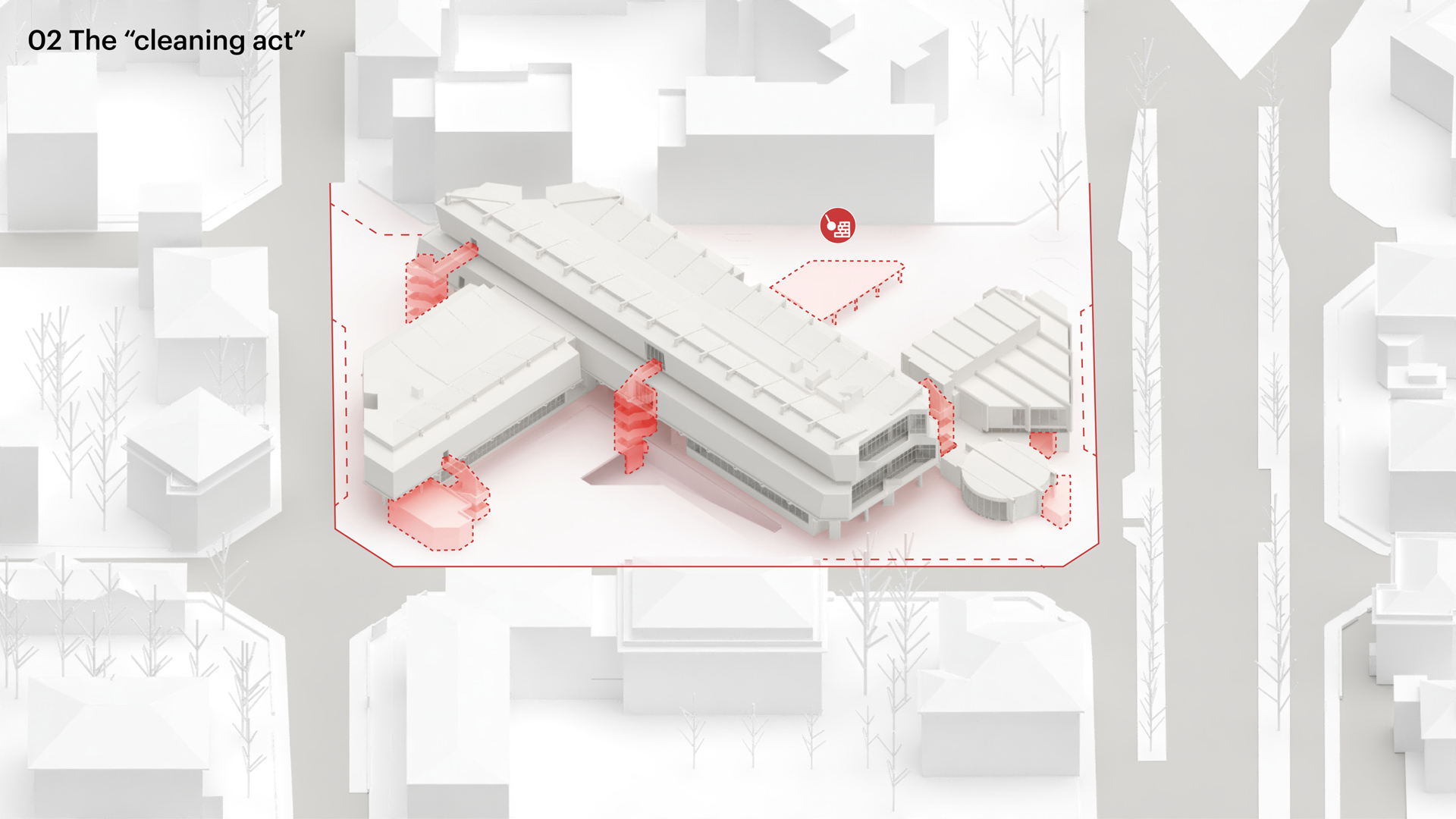
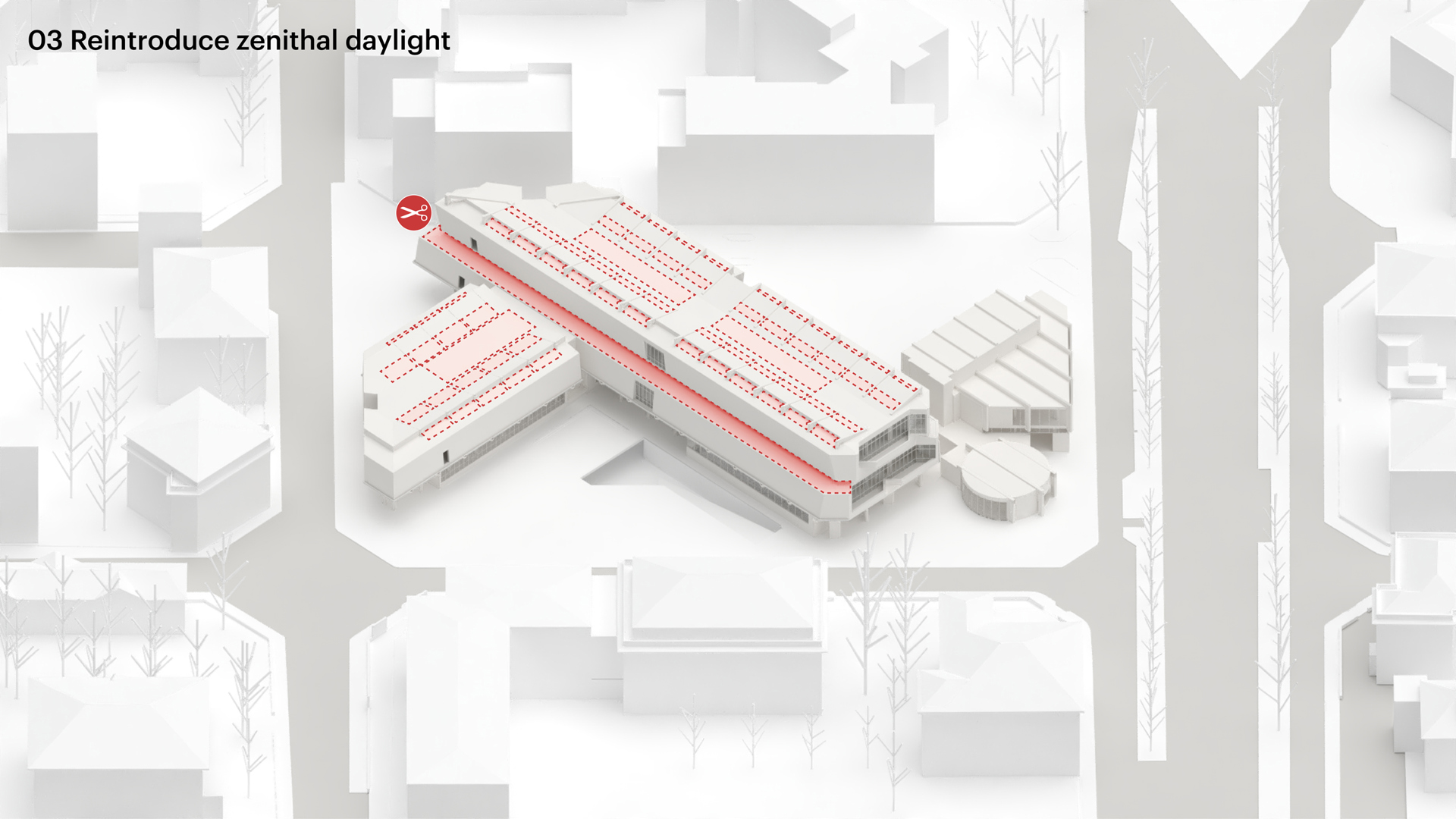
The current building of GAM Torino was completed in 1959, designed by the architects Carlo Bassi and Goffredo Boschetti. From the outset, this remarkable building was an exemplar of modern thinking: its main volume is oriented diagonally within the urban block, breaking with Turin’s orthogonal street grid to provide uniform light exposure throughout the day, while its interior was designed according to a free plan, allowing for flexibility in exhibition design. However, over the years the original clarity of the design has been lost, as interventions to meet new safety requirements and museum standards altered the relationship between the building, the visitors, and the city. The museum’s gardens are now fenced off and overgrown with bamboo; its skylights have been closed in favour of artificial lighting; a number of fire escape stairs are placed on the exterior; and a proliferation of internal divisions have made its once-open interiors more fragmented.
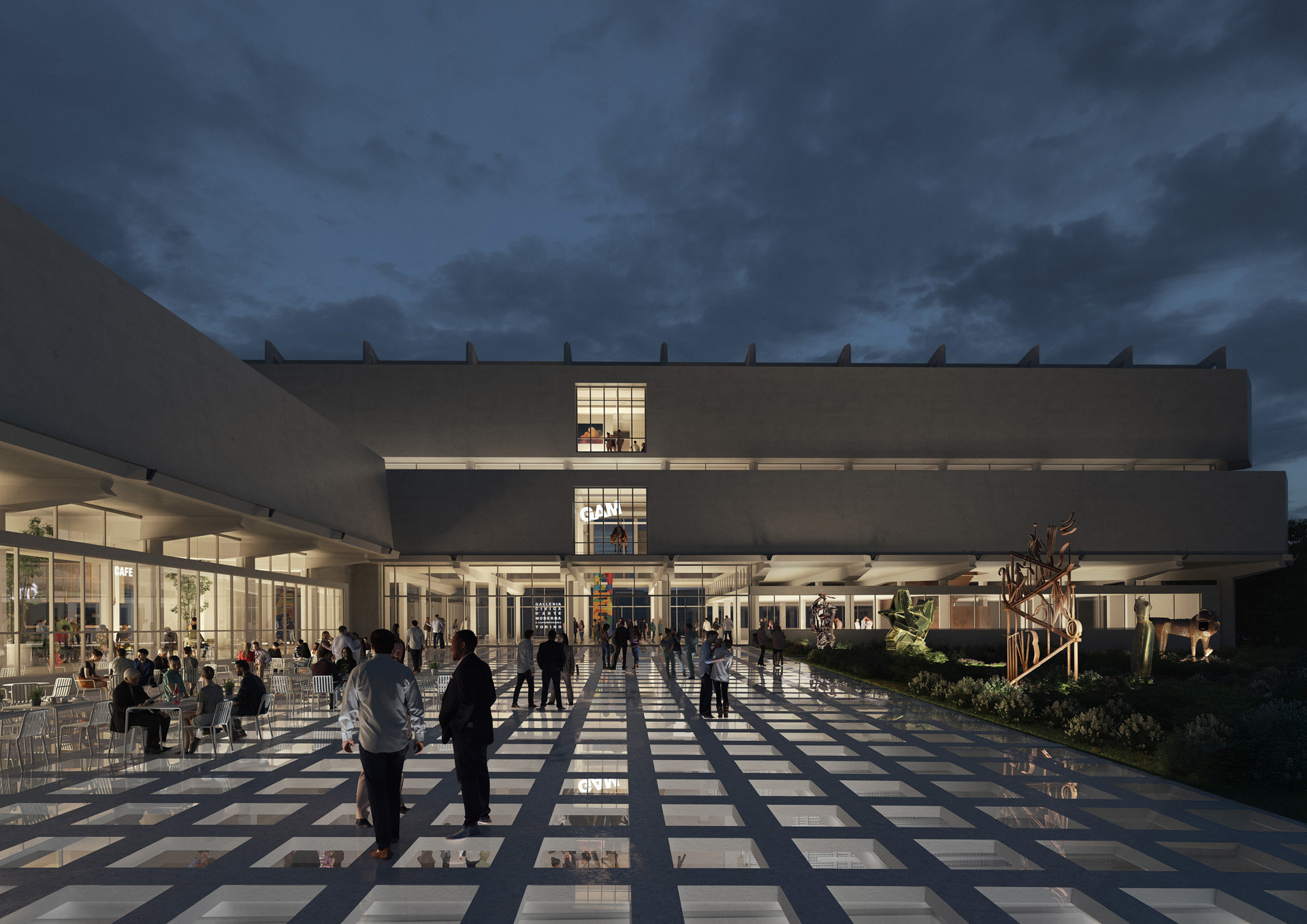
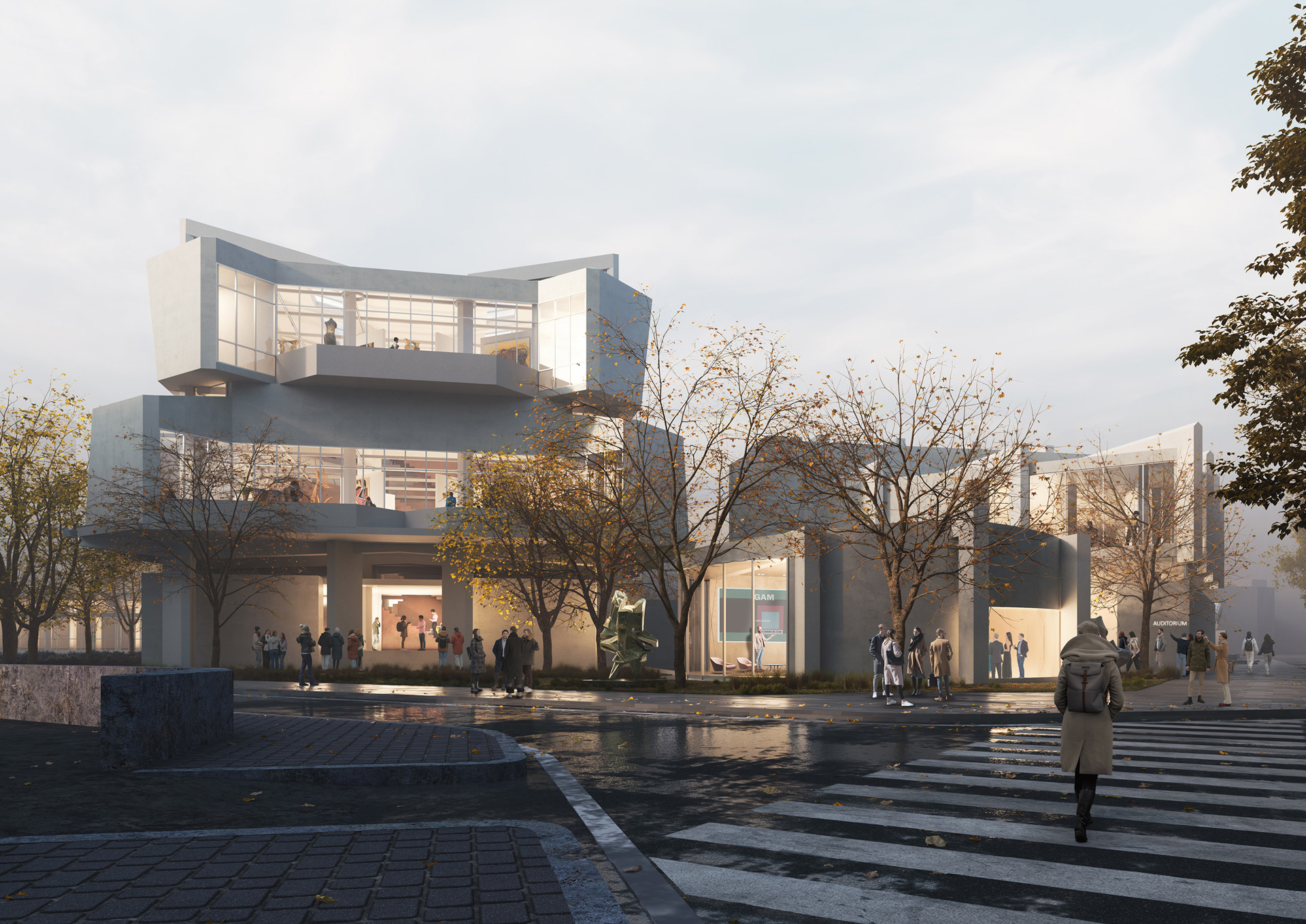
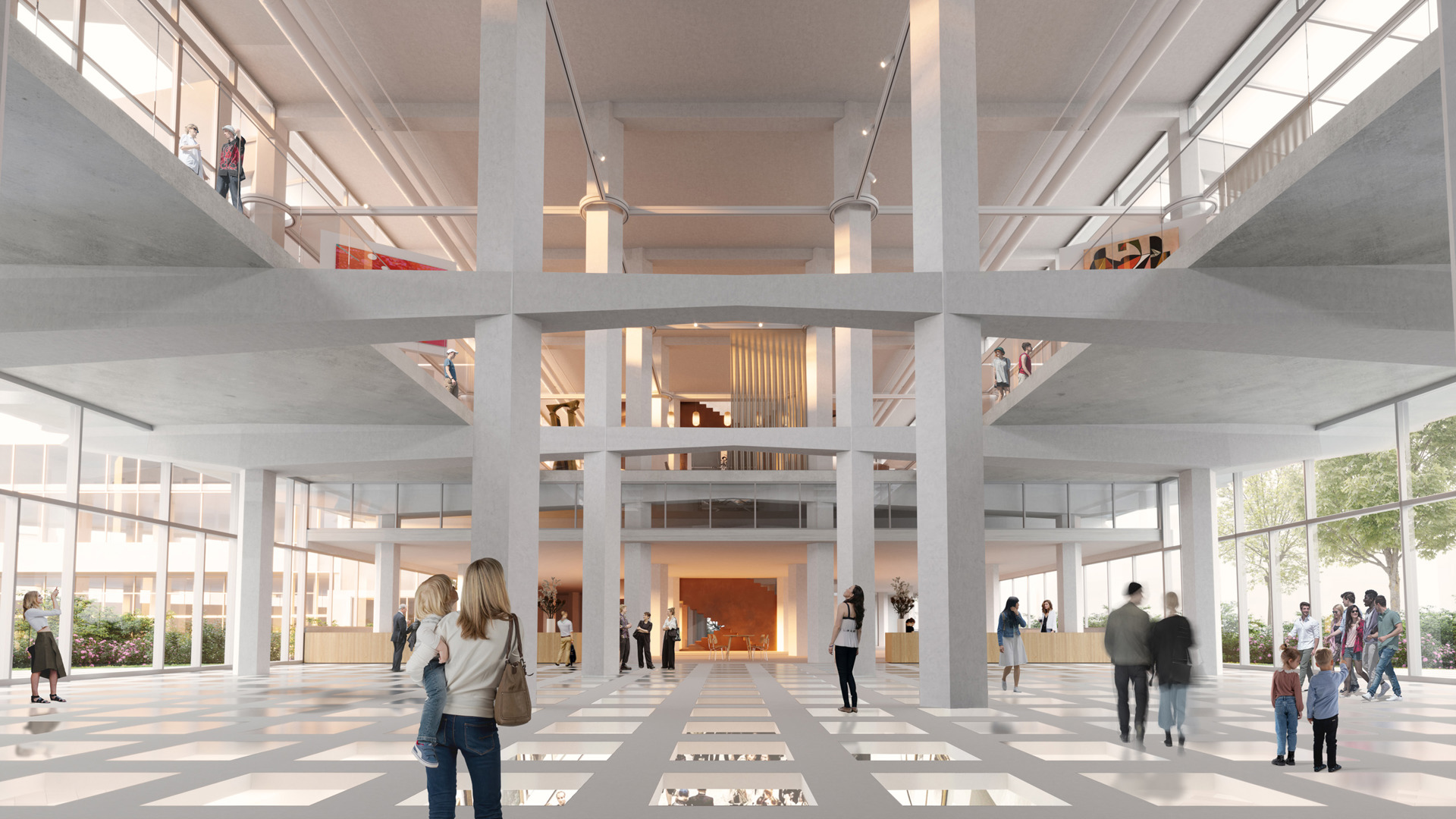
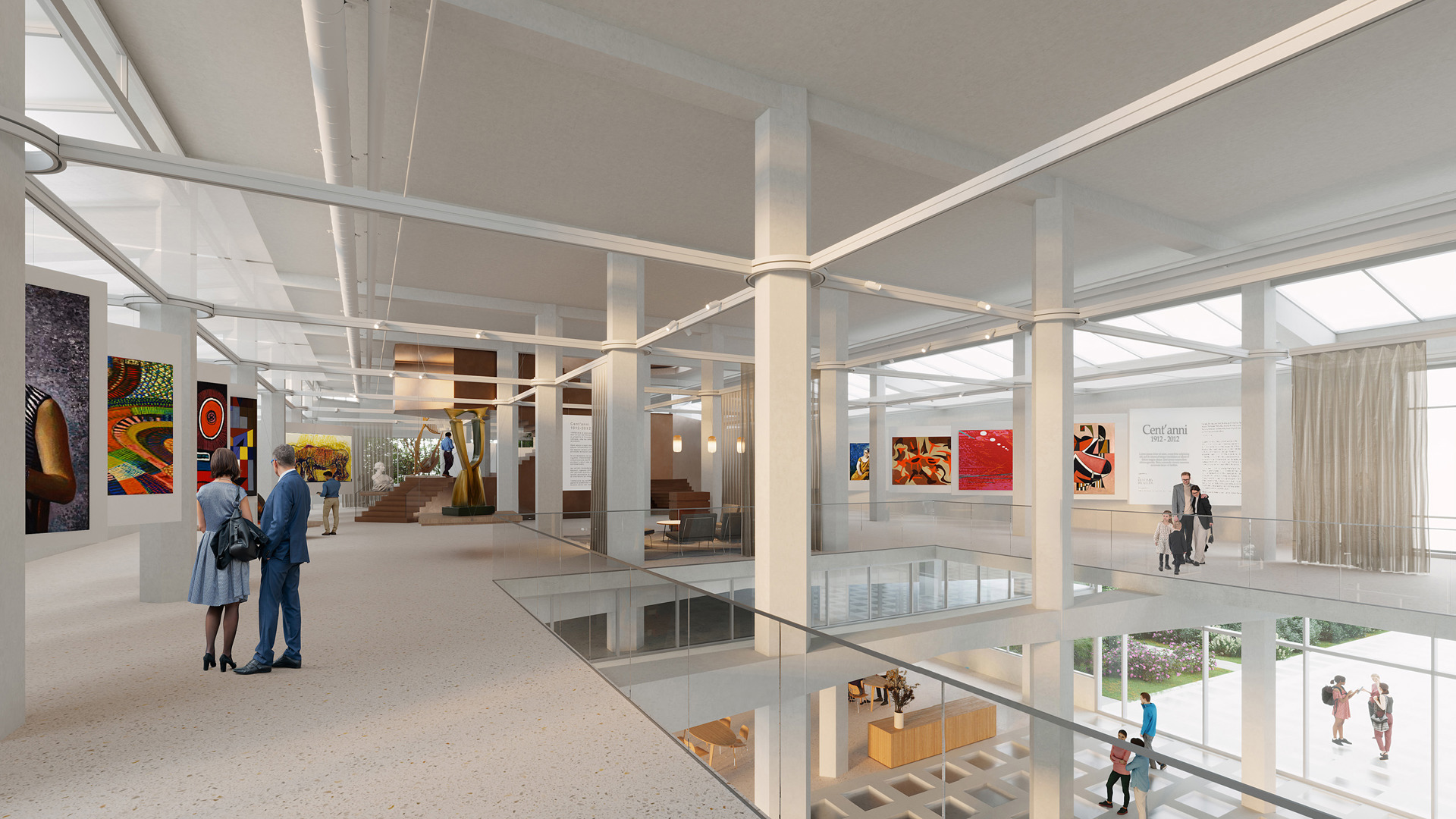
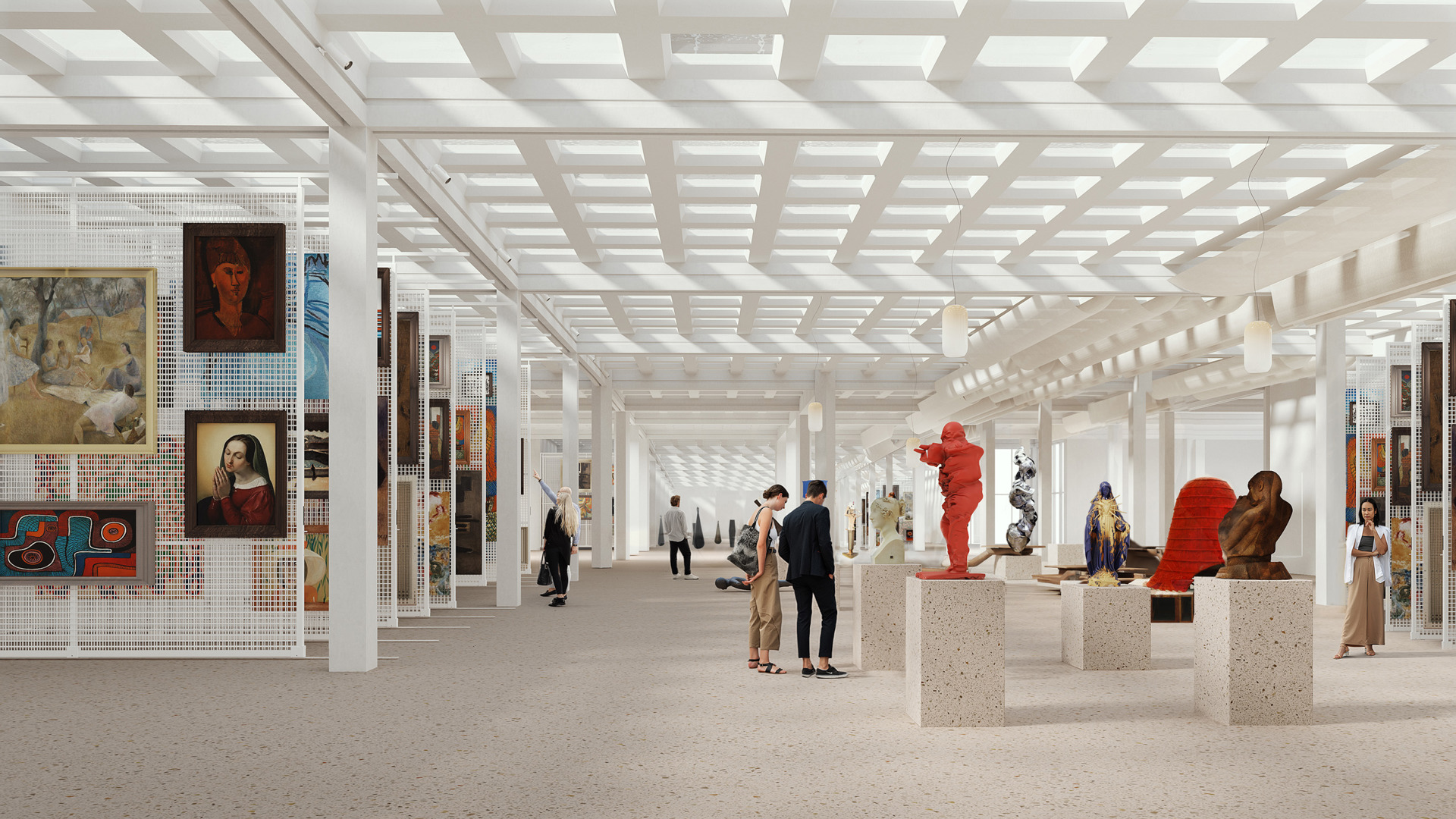
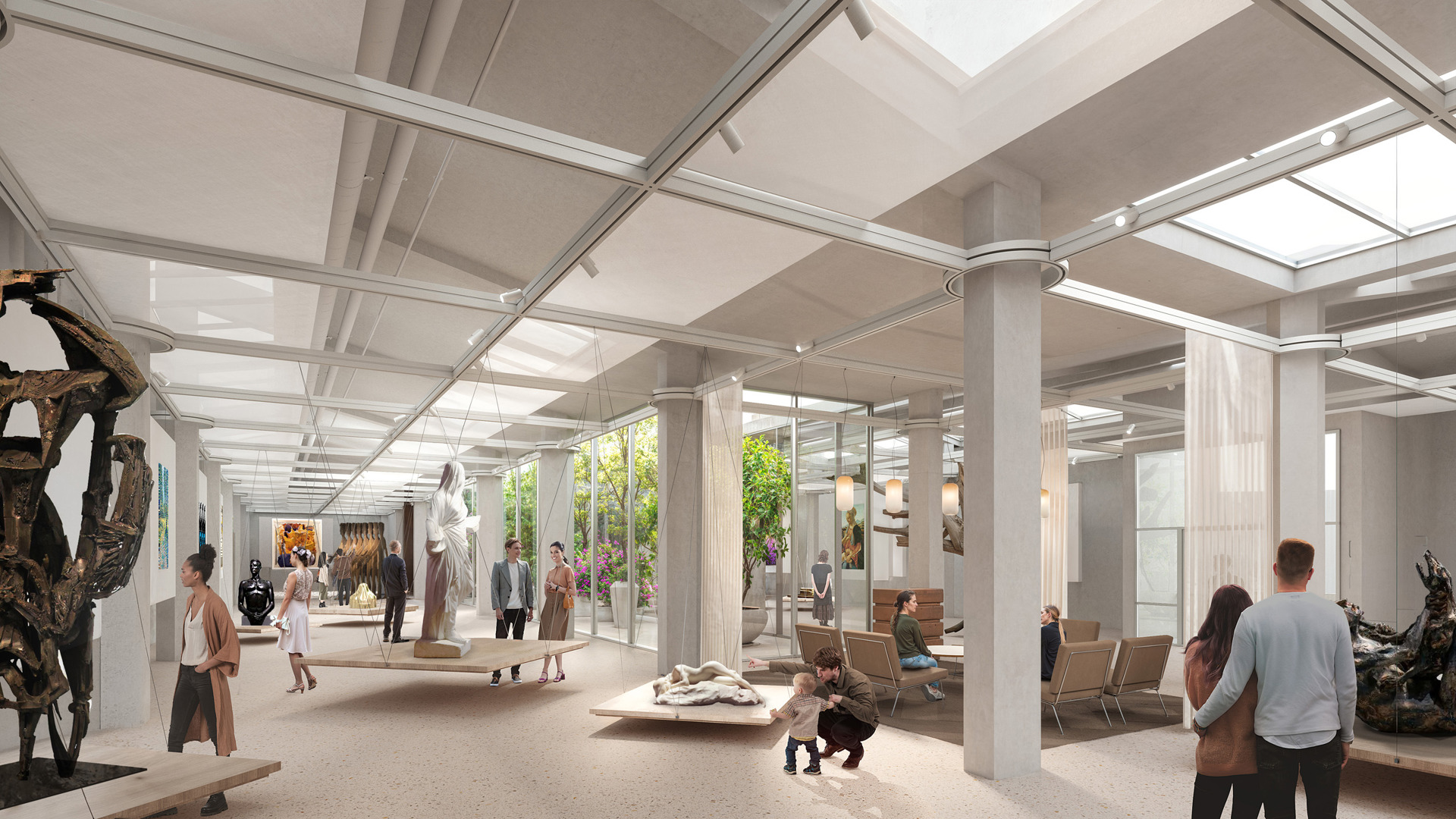
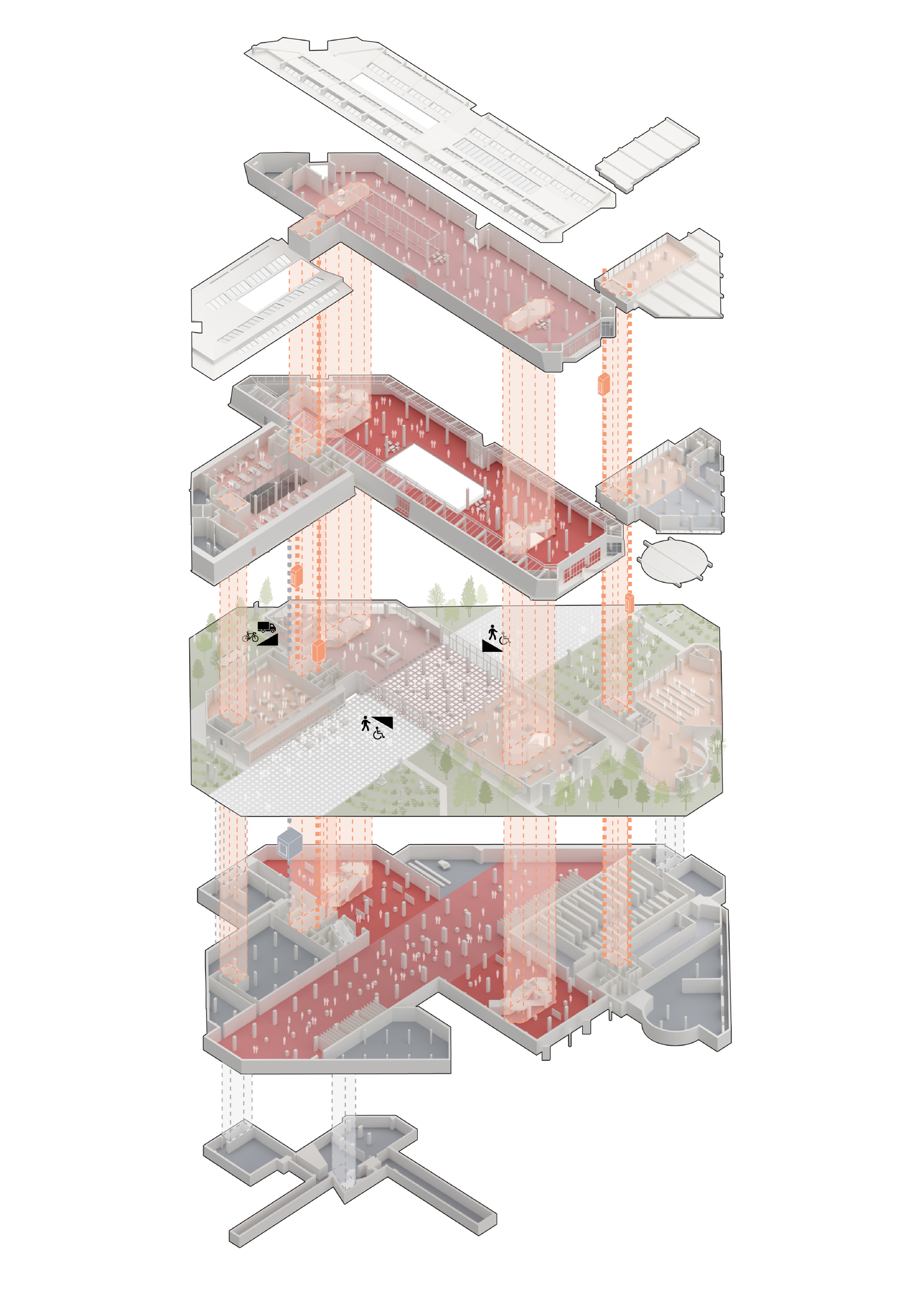
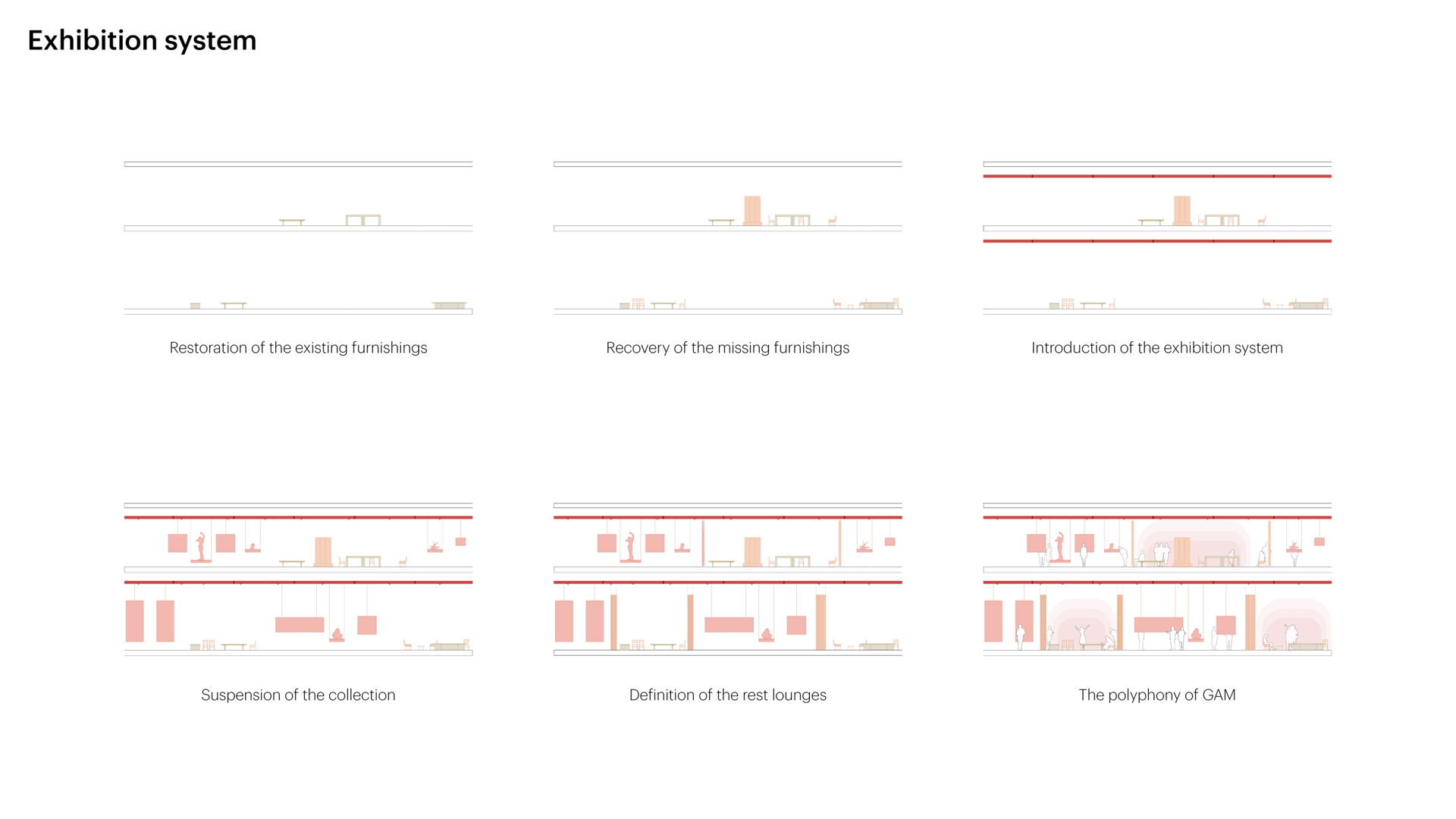
The design by MVRDV and Balance reverts many of these changes, honouring the original vision of Bassi and Boschetti. The proposal reopens the skylights and discards almost all of the internal partitions throughout the building, making the galleries bright and spacious once again. The external fire escape stairs are removed in favour of a new escape staircase inside the building, which mirrors the building’s original staircase in the floorplan. In the now-open-plan galleries, a grid of railings spans between the building’s structural columns, allowing display walls, dividing curtains, and other exhibition modules to be suspended from above – providing museum staff with a simple system to shape and reshape the layout of the galleries on demand.
News
MVRDV wins competition to renovate Turin’s Civic Gallery of Modern and Contemporary Art with open storage and adaptable displays
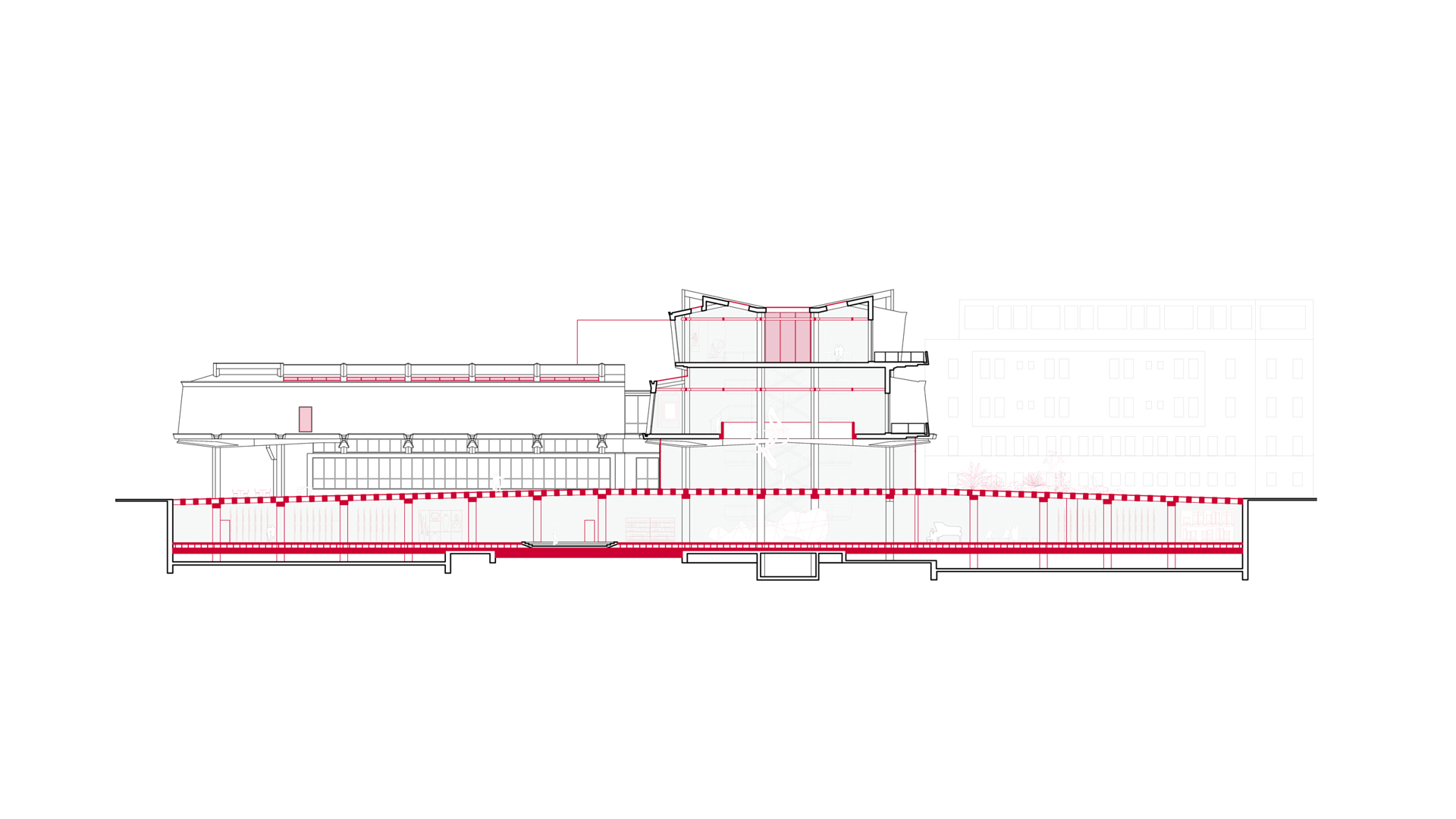
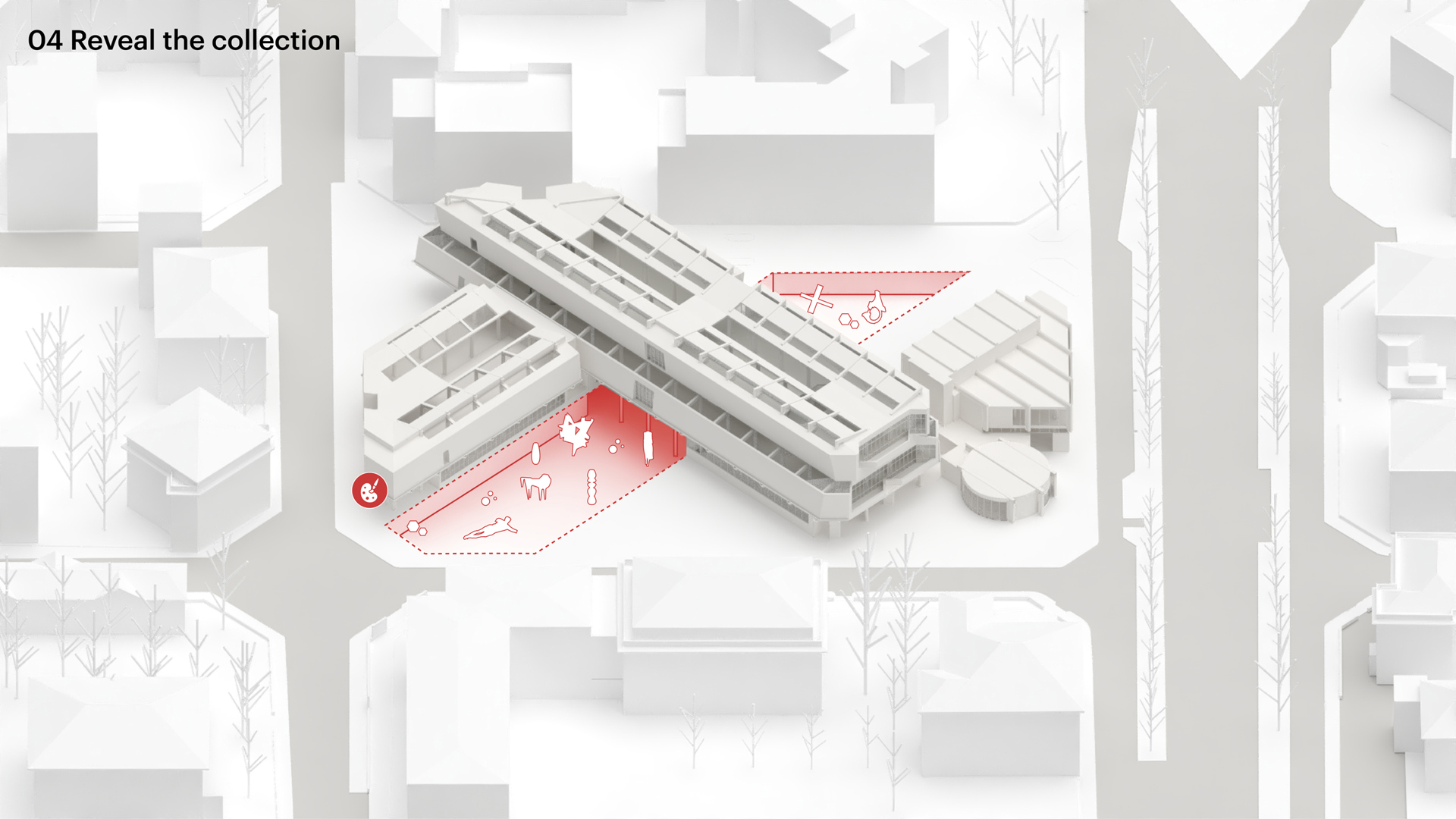
more informationThe most significant update to the museum will take place at ground level and below. The basement will be converted with an open storage approach, allowing the public to glimpse behind the scenes of the museum’s operations and see the entire collection. This new museological approach returns GAM Torino to the cutting edge of museums worldwide, joining institutions such as the Depot Boijmans Van Beuningen in Rotterdam – also designed by MVRDV – and the V&A East Storehouse in London, which have pioneered the practice of large-scale open storage in recent years.
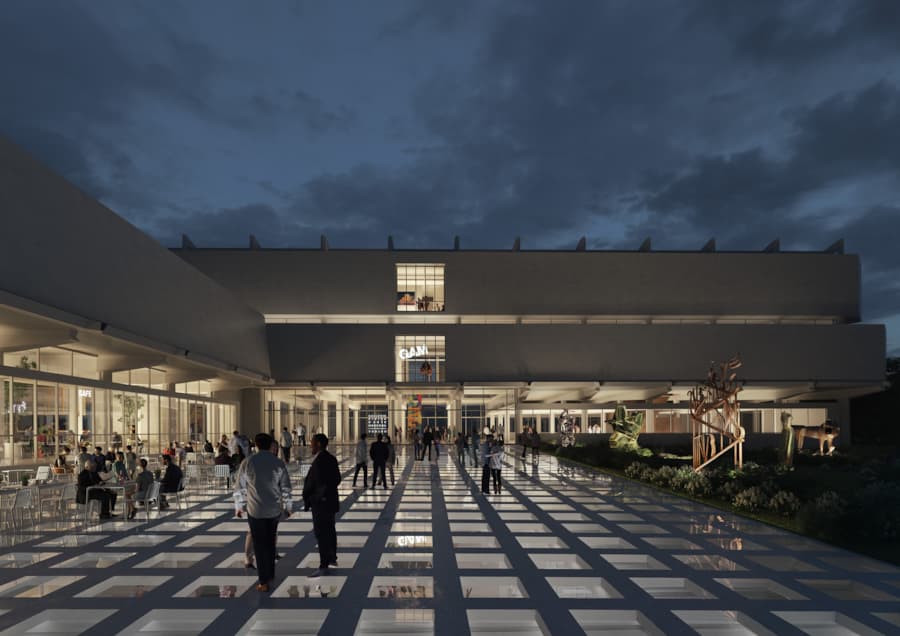
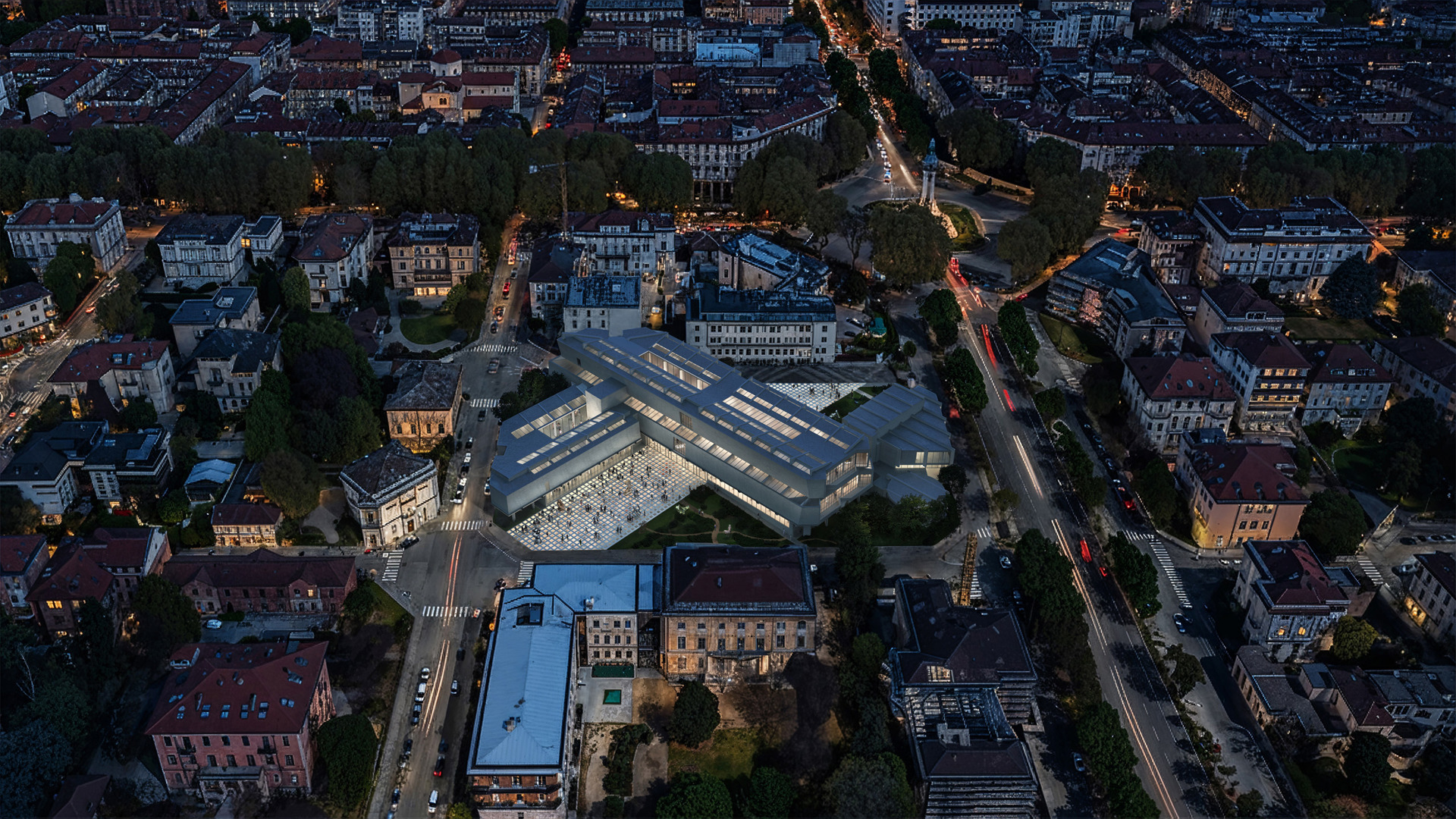
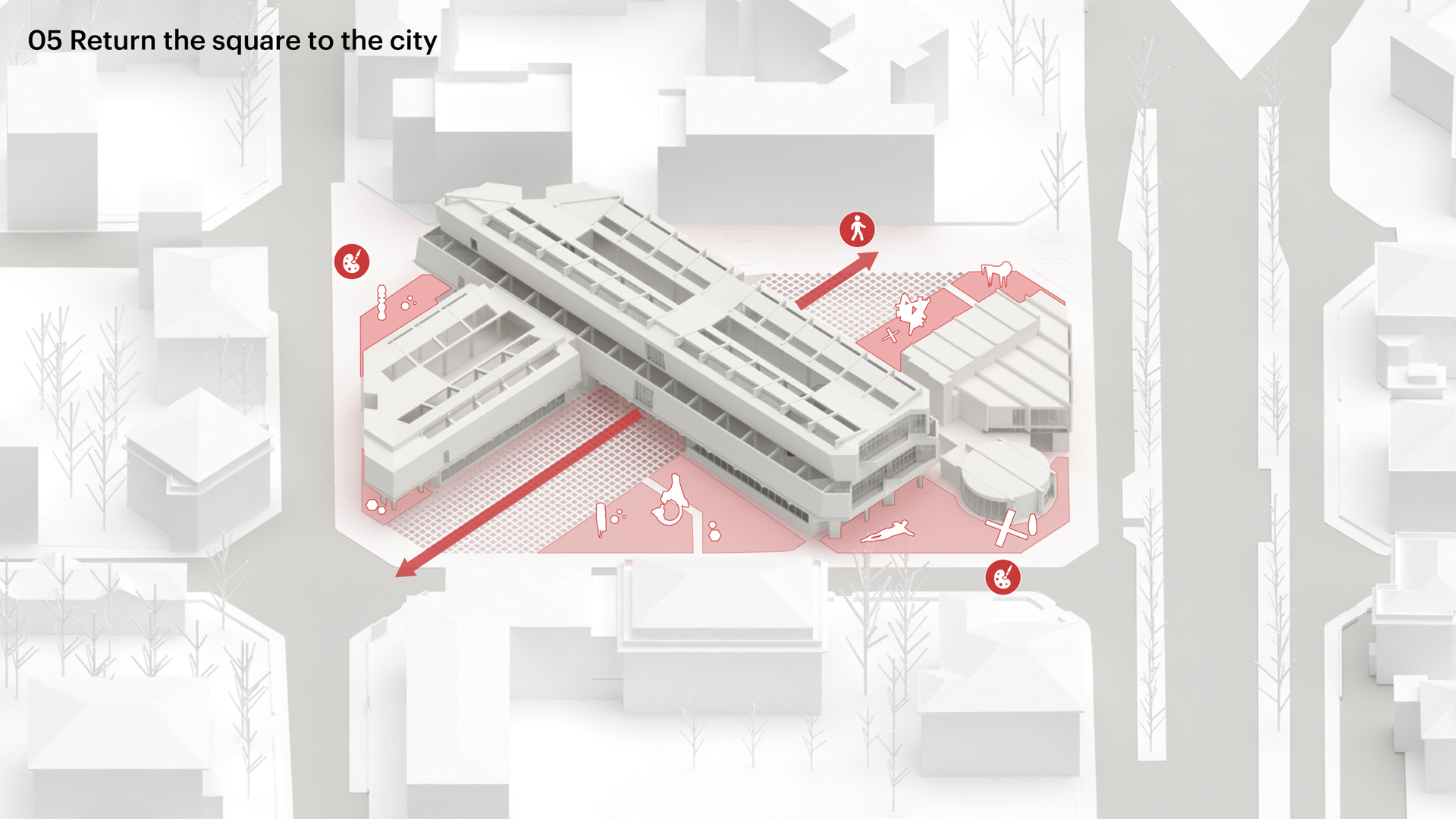
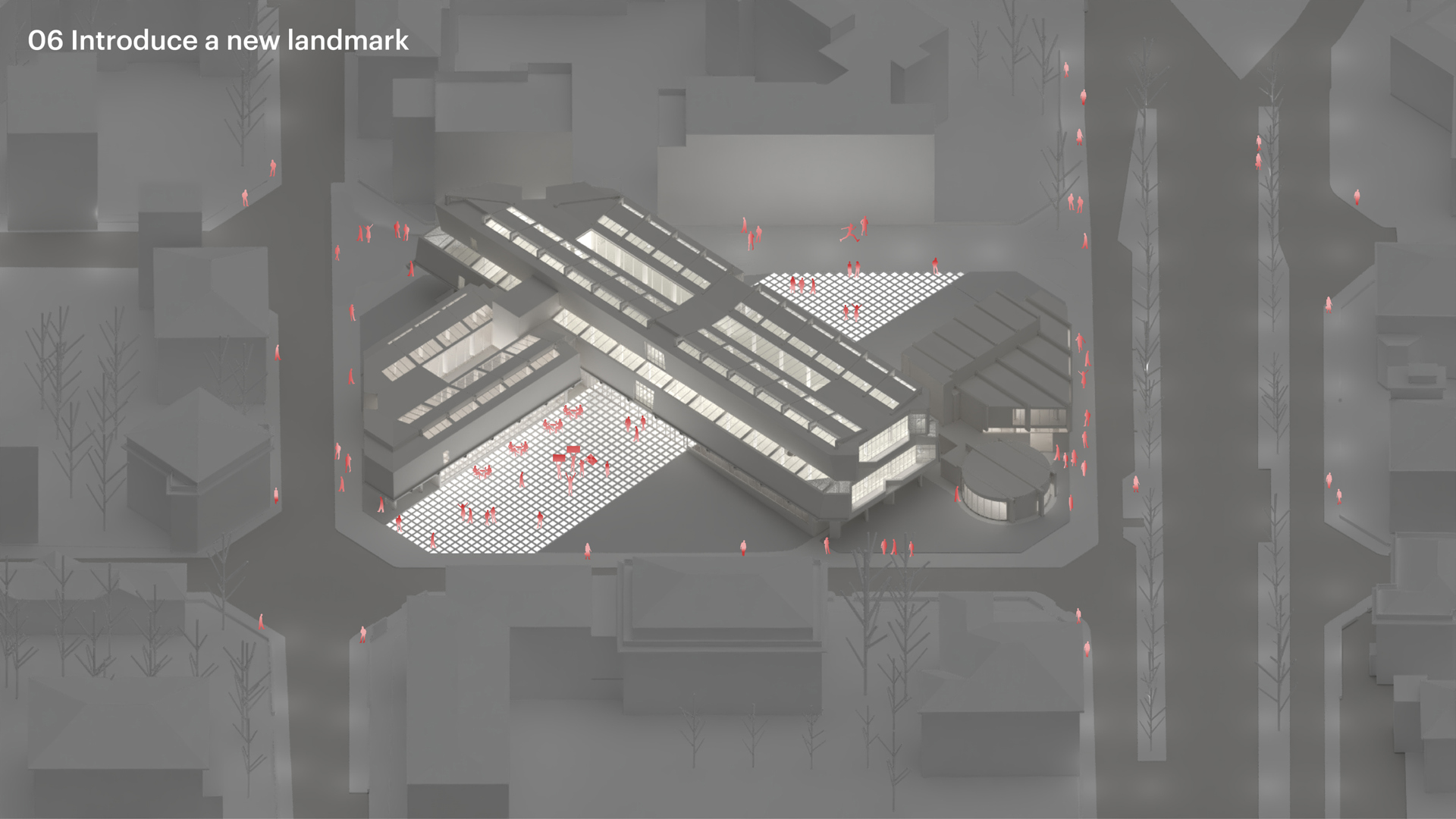
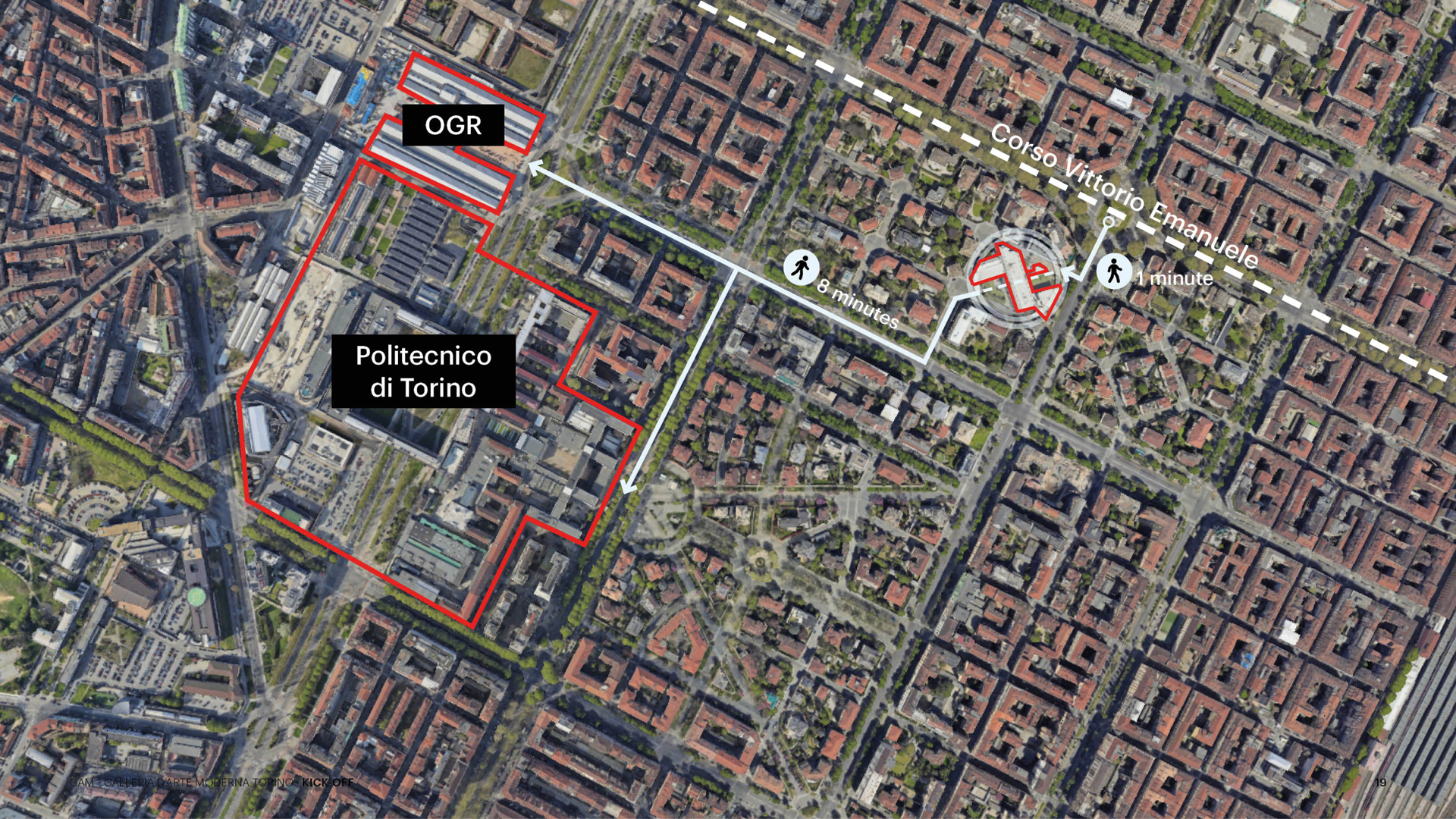
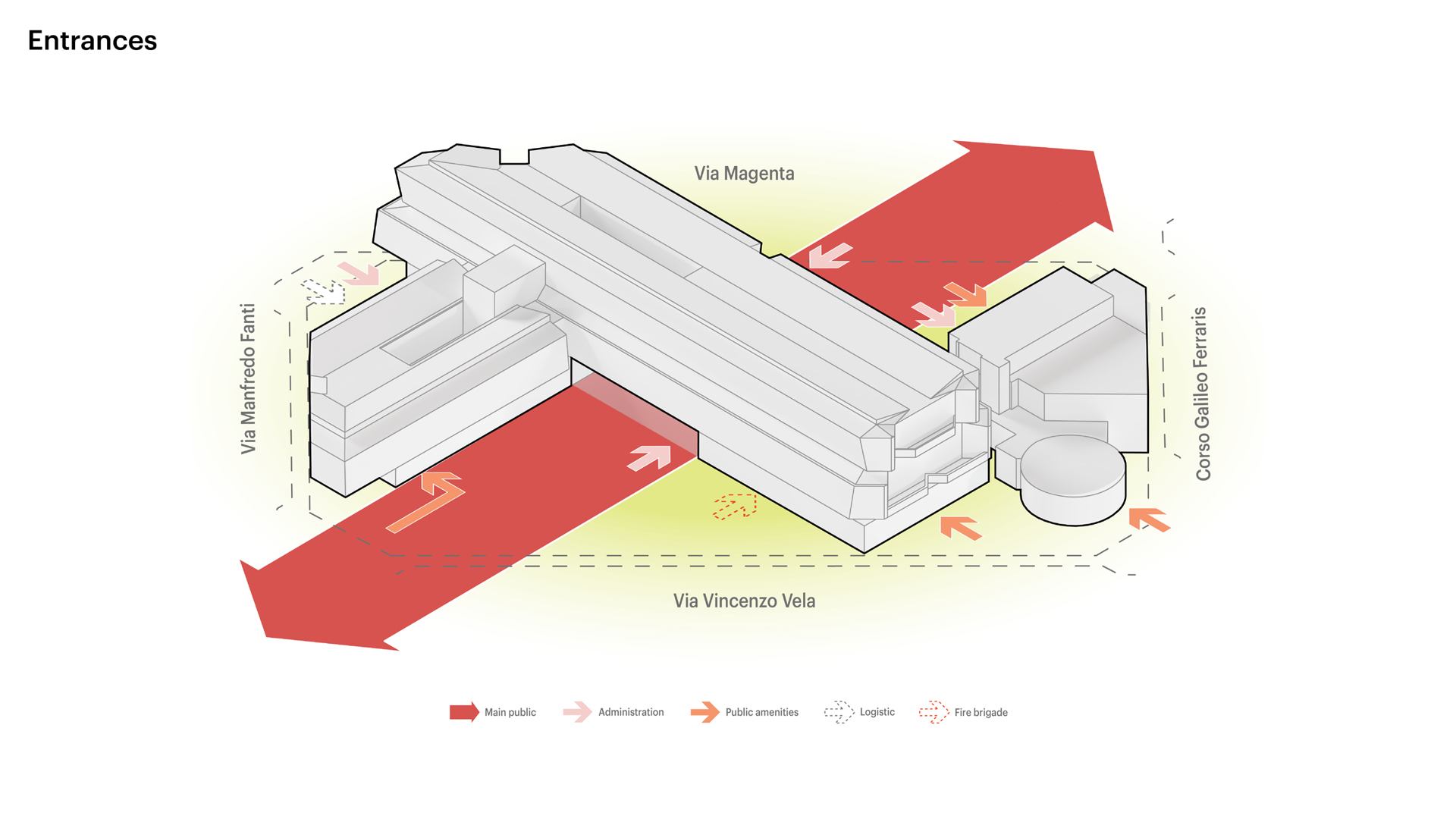
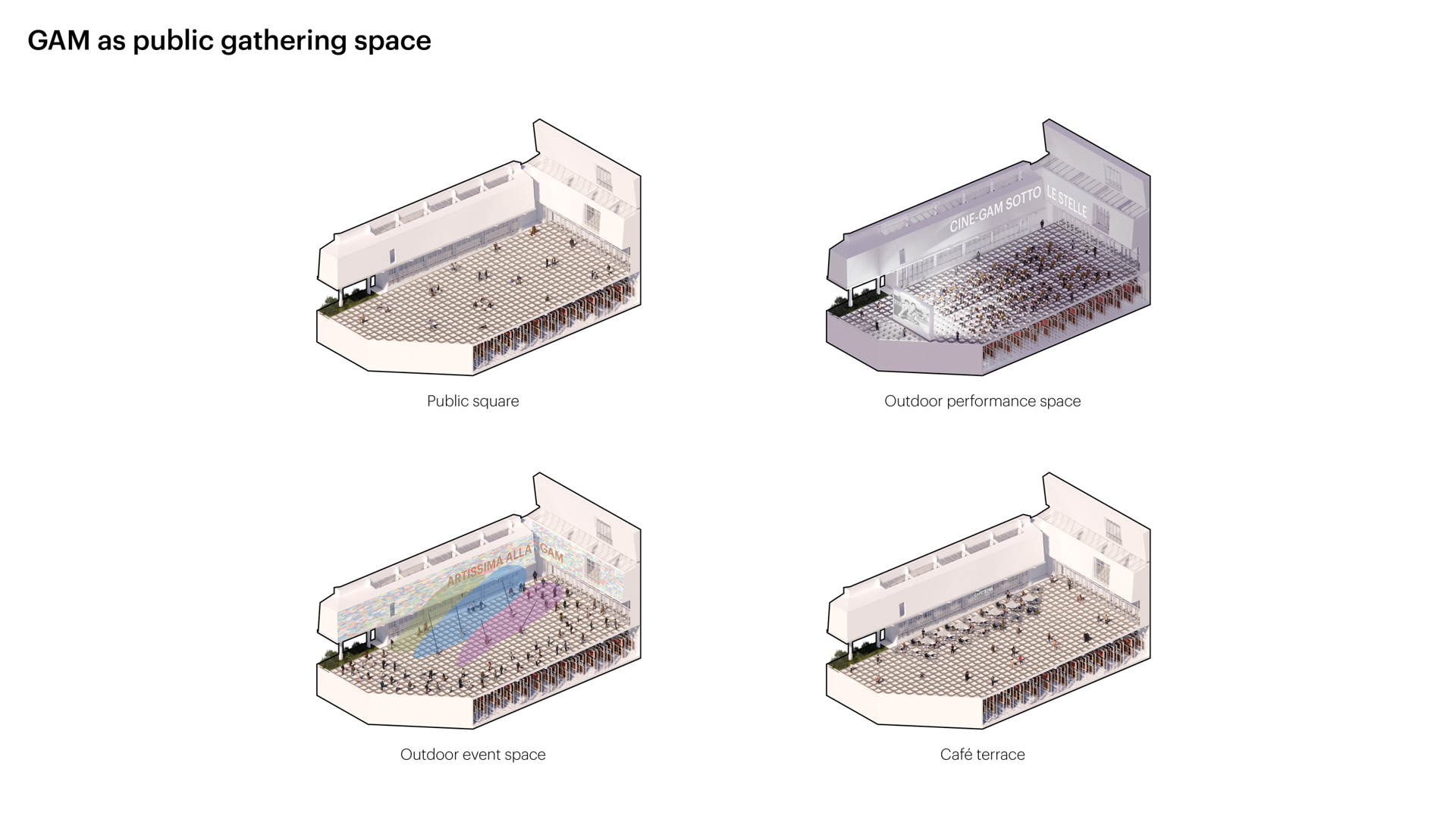
Above this basement level, the design opens a broad diagonal pathway through the museum grounds, passing underneath the main gallery volume. Incorporating large amounts of glass, this route brings in natural light and offers views into the subterranean space, while at night the lights of the storage below mark the path with an ethereal glow. This eye-catching feature offers much more than a simply visual change: The new pathway doubles as a public plaza, allowing for a wide variety of public activities. In addition, by creating the diagonal cut-through, GAM Torino becomes part of the shortest route between Turin’s city centre and both the Polytechnic University of Turin the exhibition spaces of OGR Torino. Thus, the new route becomes a key tool for the museum to engage with the public, ensuring long-term relevance and success.
“In many ways, our design revisits the ideas and the optimism that were central to the creation of this building 70 years ago”, says MVRDV founding partner Winy Maas. “We aim to clean up and to open this now-enclosed building as much as possible. It creates a dialogue between the past and the future. I’d hope that if Carlo Bassi and Goffredo Boschetti could see our proposal today, they would be impressed at how new technology, materials, and ideals could take their ideas even further than was possible in the 1950s.”
Inside the building, the majority of the furniture will be original pieces, both restoring the original items that were already in use in the gallery, and reintroducing furniture that has long been in storage. This approach not only honours the original design, it also contributes to the renovation’s sustainable features. Other measures taken to improve the building’s environmental performance are to improve the performance of the glass skylights, and to reuse materials from demolished elements in the newly constructed features.
Gallery
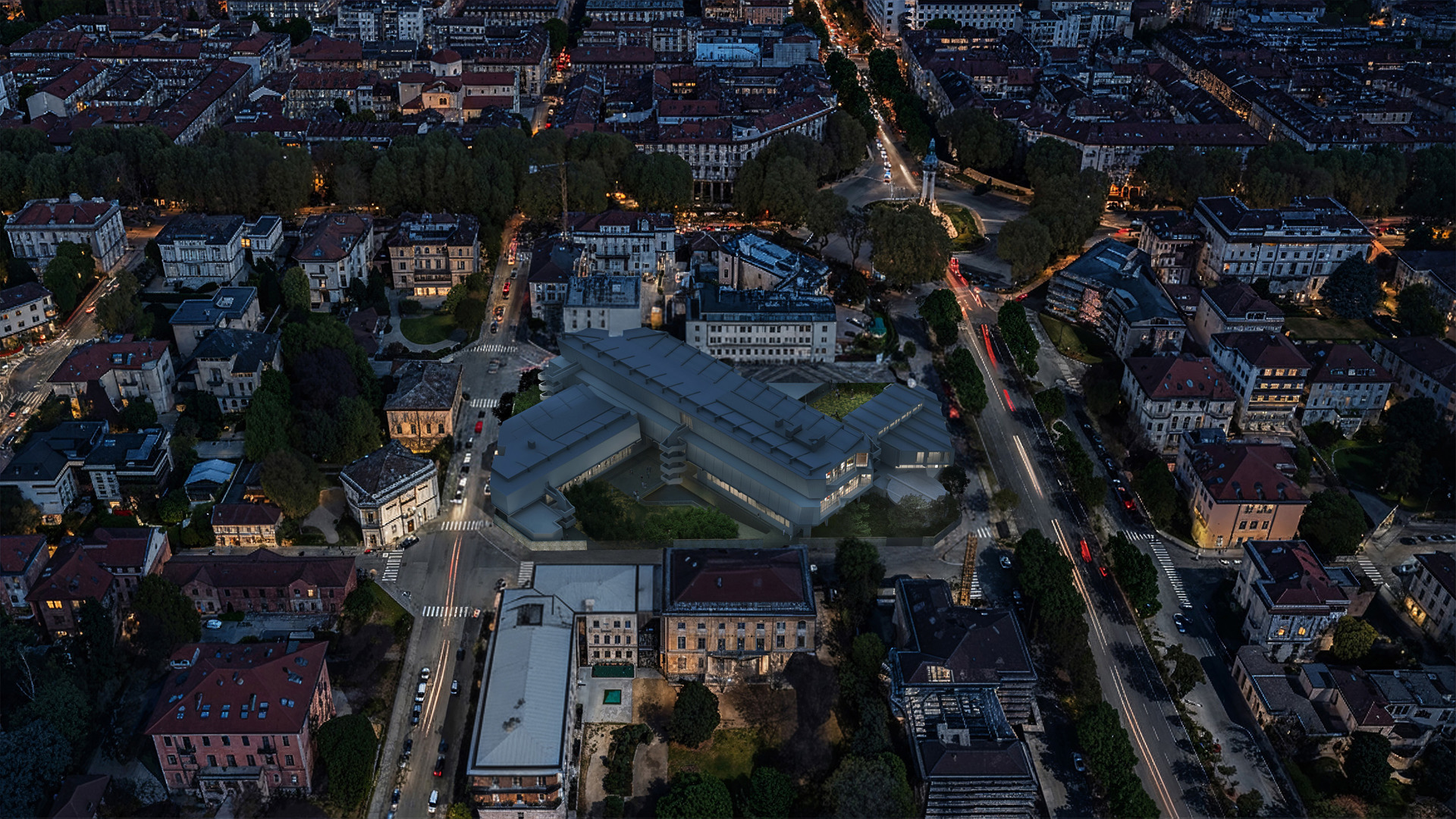
Aerial view (before renovation)
Aerial view
Entrance 1 (before renovation)
Entrance 1
Entrance 2 (before renovation)
Entrance 2
View from the street (before renovation)
View from the street
Entrance atrium
Exhibition space
Basement open storage
Exhibition space
Site plan
Longitudinal section
image
image
image
image
image
image
image
image
image
image
image

Credits
- Architect
- Founding partner in charge
- Partner
- Design team
- Competition design:
- Patrizia Bucciarelli
- Federico Fiorino
- Miguel del Campo Grijalbo
- Strategy & development
- Partners
- Co-Architect:
- Balance Architettura
- Structural Engineer, MEP, Environmental Advisor, Cost Calculation:
- EP&S Group
- Energy consultant:
- Busato
- Geologist:
- Di Gioia Michelangelo